

Argentina, the man in a hole
Notes on love, hate, social media, and narratives after the World Cup

What a World Cup! Many moments of joy and some others of tension, sadness, and, above all, so much controversy. During the days of the World Cup, we were all focused on pointing them out, until it didn’t anymore.
This is a different topic, a more personal one, and breaking my programmed absence explicitly, because the narrative became so uncontrollable that I couldn’t avoid it anymore, and I feel it’s time to address it.
I’ve already touched on this point many times over the last week because it’s hard to reflect on it. As a Marketing professional, it’s impossible to avoid looking at the big elephant in the room: how supposed opinions stated as fact are helping shape what, for many people, is shifting towards the obvious. An anti-Argentina campaign is spreading worldwide, including social media, mainstream outlets, and online forums.
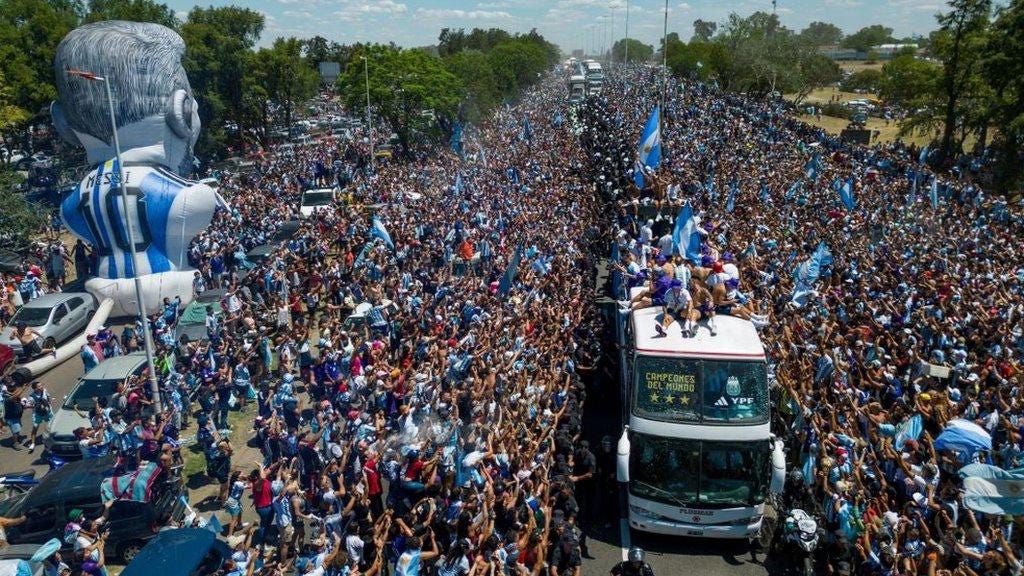
From attacking players because of their thugness (but Marco Materazzi’s provocation to Zidane in 2006, and Bellingham hitting Barco with his hand is not thugness but “fairness”), to the overwhelming claims of a racist nation that made the comedian Eric Andre enter a journey of unmeasured hate about the country, in where he even included AI-generated videos of a supposed “black South America”, that contains a flag I never seen before. Confirmed 100% that it’s not part of the main countries that form South America, and almost 95% sure that does not include Central American countries either.
AI’s job is also shaping the narrative that Infantino claimed that Argentina was his favorite (with several platforms citing it as fact), based on an AI-generated edit of the Netherlands vs. Morocco match.

Another layer lies in with the fact that a morally superior Spain team won, which I don’t really want to lean into, really, since I believe that they were superior in quality and really deserved it, although the comparison between a republic and monarchy that killed the native Americans during the colonisation of the continent is a blatant argument to expose when comparing both. More on this here:

I want to make it clear: There’s room for discussion and improvement. But the tendency is growing tighter and more and more closed.
Now, I’ll kick off with a very illustrative example of this shift towards intolerance and close mindedness.
In 2015, I went to Central Europe for my first trip on the continent, meeting wonderful people. One of those was an English guy from Wolverhampton, who, crazy enough, we confused for an Argentinean.
We became great friends because we also thought he was baiting us, saying he would come to Argentina in a year, which proved us wrong. After many years, he married a Mexican and moved to Mexico City.
But the point here is that in the first moments of our friendship, we tackled “the topic”. And let me be honest with you, it wasn’t a conflict at all. It was a space to share our thoughts on a topic, starting with the understanding that we are not going to agree on the position, but we can agree on other layers, such as the fact that not only Argentines but also English people died in that war.
I’ve been thinking about this a lot, remembering my time in London with him and his mates, who treated me wonderfully before I returned to Argentina after a year working in Australia in 2018, pre-COVID times.
What I feel has changed dramatically is the inability to debate, to open the floor to others' opinions or facts. Where positions of hate and, in some cases, plain xenophobia make an excuse for people to target others.
On the “echo chamber of thoughts”
An additional clarification, I’m not saying that some claims cannot be debated thoroughly, like the racist chants. Or the style of play, which, on a lighter note, I invite you to watch the Copa Sudamericana, which starts this week. Watch it and let me know your thoughts, please. It would be an interesting pre-read for further debate.
But there are two issues here that help shape the hate narrative: the first is exclusivity, and the second is the lack of fact-checking (like in the Eric Andre video). And it’s also problematic if you don’t cite official statistics or documents from Argentina. It’s not more true because you’re citing a book. What matters are the official sources, and because Argentinean history is ours, the sources are here.
Talking about perspective: this also happened during the WC:
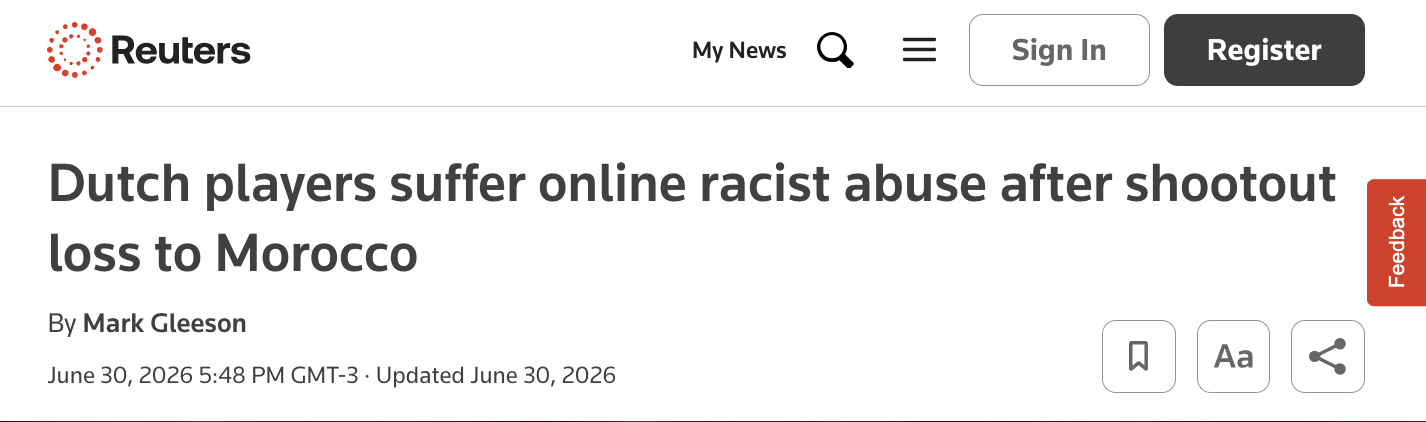
I haven’t seen any writers pointing this out, on Substack or on mainstream media. None. No journalist pushed this forward, apart from the source and a few others, like Al Jazeera. This is clear proof that you too, reader or writer, fell into the narrative.
On being objects of fabricated narratives
It’s hard for people to admit that they are falling into a narrative that is fueled by social media and newspapers, and rightfully so. I’ve seen so many people that I respect (or used to) on Substack pushing any of these narratives. And of course, many of them are very educated and cultivated. So, of course, it’s hard to admit that it can happen to you, too.
But it did. It happens to you, it happens to me. Our blocking bar of acceptance and fact-check has fallen.
You can read this wonderful post about how the lack of reading is affecting critical thinking and some other aspects of the human mind: The End of Reading is Here.
As the article mentions:
According to the National Endowment for the Arts, which conducts the most comprehensive survey of the nation’s reading habits, fewer than half of all adults reported having read a book of any kind in 2022. Only 38 percent read a novel or short story. A study analyzing 236,000 responses to the American Time Use Survey found that the proportion of Americans who read for pleasure on any given day fell from 28 percent in 2004 to 16 percent in 2023. (The study looked at people who had read a book, magazine, or newspaper; listened to an audiobook; or read an e-book.) Gambling has become a more common leisure activity than reading a book: Last year, 57 percent of Americans placed a bet.
Confirmation bias is not a less important topic that influences consumer trends and critical thinking:
Personalisation algorithms tend to serve content that reinforces existing beliefs, creating what Eli Pariser famously termed “filter bubbles” in his 2011 book. And recent research by the Pew Research Center (2024) found that 68% of Americans regularly consume news that primarily aligns with their preexisting views.
I don’t want to escape the focus of the article, which is: how narratives and audience tendencies can influence how people are perceived and, later, positioned in the market.
The tendency toward entitlement and the buy-in to misinformation is nothing new, but, as I mentioned before, it’s affecting real people’s lives. For example, it can affect the lives of the people of Jujuy, which is also part of Argentina, and a great part of their community is of native descent. It can affect the communities of black descendants and black immigration, like the Senegalese and Cape Verdian, who live freely and happily in Argentina, and probably you won’t be aware of them. And, of course, it affects the lives of any other Argentine who is involved in this campaign.
On moving public opinion
But let’s take marketing. I’m now sharing this great article by rosie (I asked her before sharing it because she, like me, shares the same profession, and her perspective touches on points like mine).
I found myself in the challenging task of summarizing the best ideas because the whole article is just perfect for me to explain much of my thoughts, so I’ll try my best. Thanks, Rosie, for your perspective:

The article tackles the cost of moving public opinion: how these campaigns start, how they spread, why they work on your brain, and why the next one will run much faster.
Stage one: the flip: how social media turned Messi (and, for many people, subsequently, Argentina).
Four years later, social media has somehow turned him into the villain.
Citing here: “the only thing that really changed was the distribution layer: the algorithms behind Instagram and TikTok, and whatever decided that Messi-as-villain edits perform better this cycle than Messi-as-legend edits did last time.”
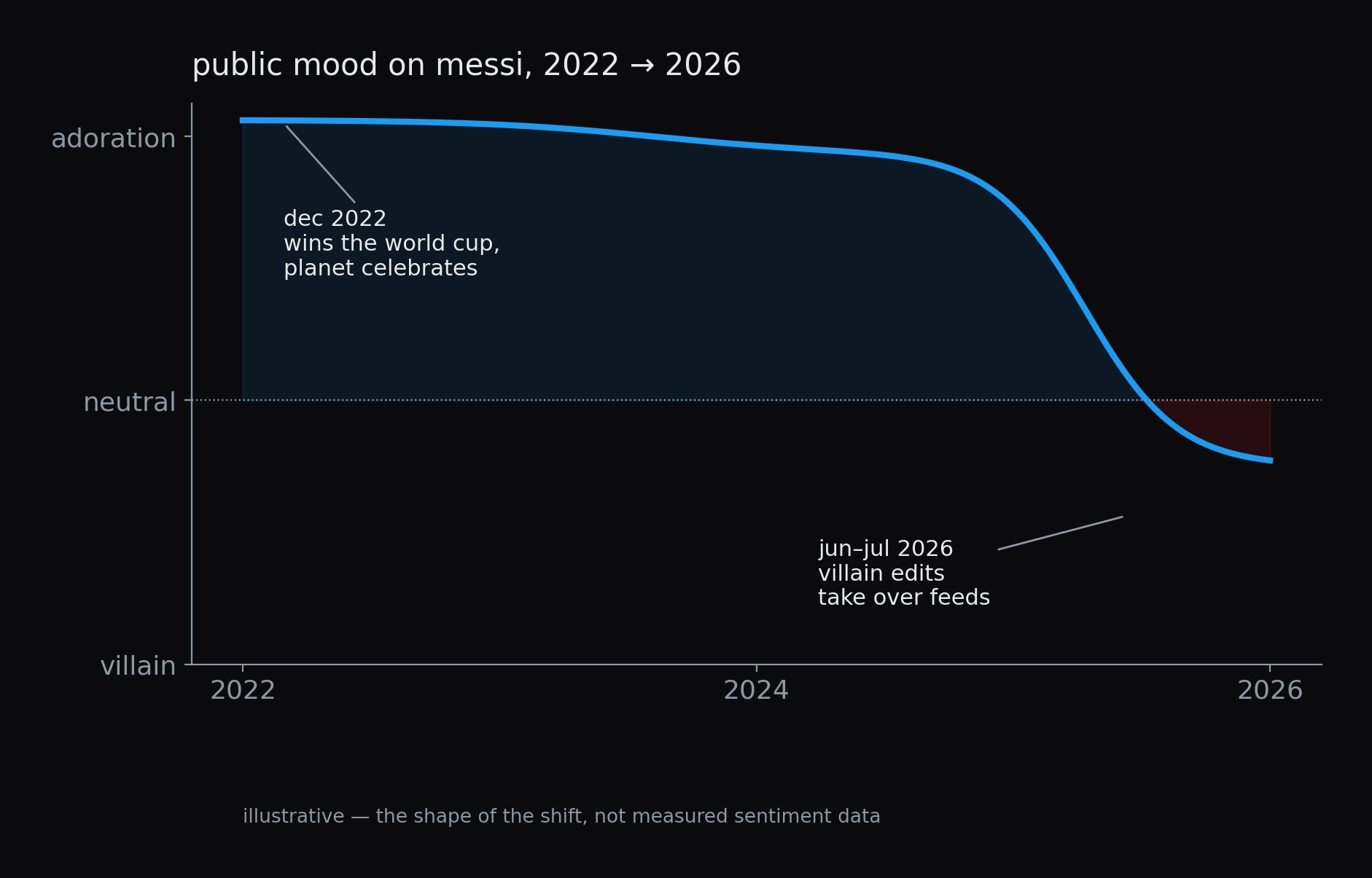
The second stage is about how a campaign starts, and this is key to the discussion:
“they usually start with something real. a foul with the buildup cut out. a referee decision without the replay that explains it. a clip that’s technically accurate, but missing just enough context to tell a completely different story. then the algorithm takes over. Thousands of versions compete for attention, the ones that get the most engagement survive, and everything else disappears. after a while, the surviving clips stop feeling like isolated moments and start becoming talking points. eventually, they become “common knowledge”.
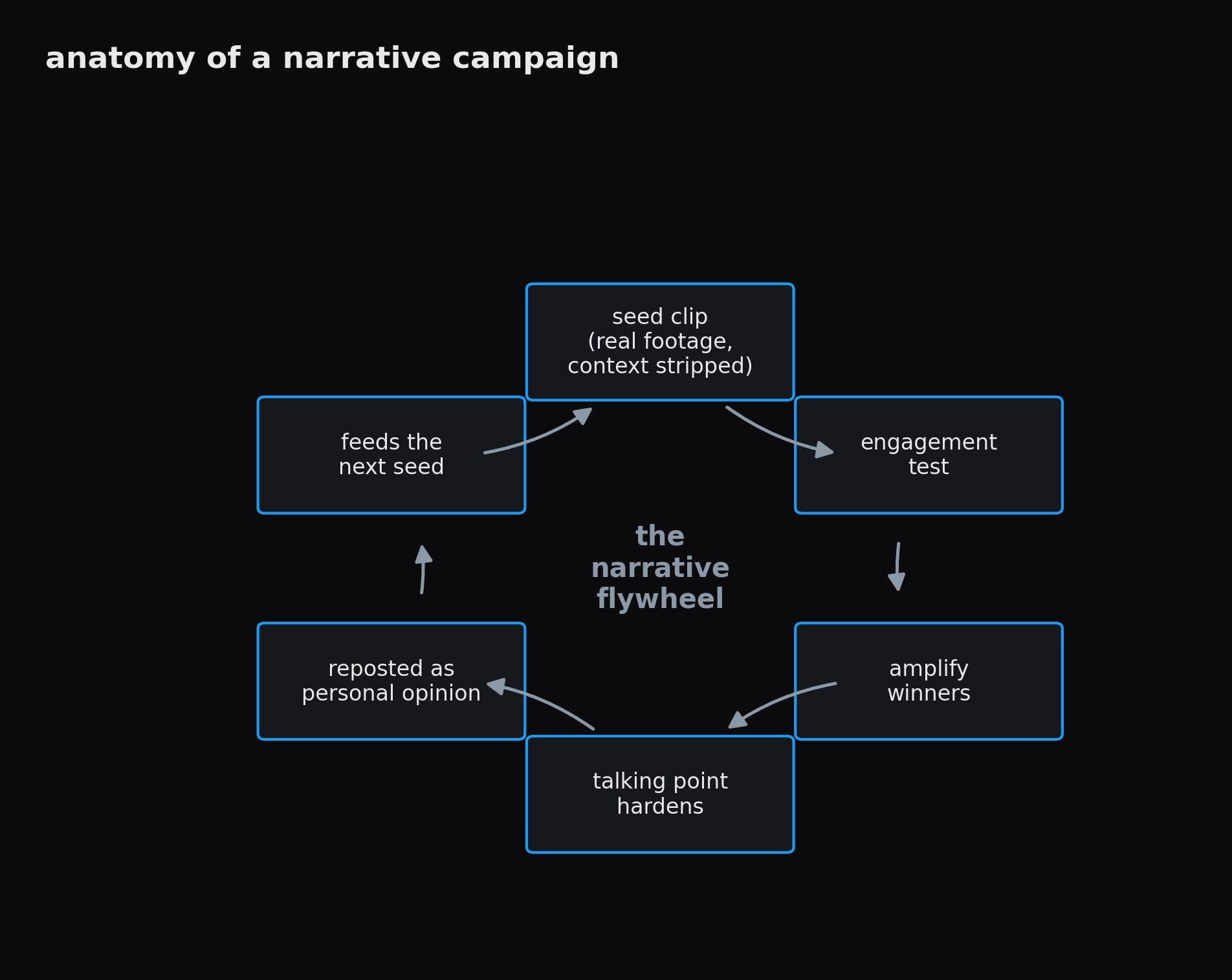
Additionally:
“one MIT study looked at around 126,000 claims shared by roughly 3 million people on twitter over an eleven-year period. Across every category they studied, false stories spread farther, faster, deeper, er and more broadly than true ones. On average, the truth took about six times longer to reach 1,500 people, while falsehoods were 70% more likely to be retweeted.”
Stage three: the paid layer, and it’s one of the most interesting, because it’s something that people are avoiding confronting: many of the claims that are being pointed out as organic fan content aren’t actually organic.
But the stage four is connecting this perfectly: the question about why this works on human behavior, and how
“psychologists call part of this the illusory truth effect, one of the most consistently replicated findings in psychology. Studies have shown that simply seeing a claim once makes people more likely to judge it as true later, even if it’s false. The effect can last for days, survives fact-check labels, and shows up even when the claim contradicts something people already know.”
Stage five: the control group is the perfect example of why narrative is so important: we have evidence of almost 2 decades of football (if we use Messi as the turning point), but the narrative still beats the evidence.
It’s interesting to shift back and forth between Argentina and Messi, because he’s been kind of an outsider to the official narrative. But now, as this post by The Athletic via NYT:
“Messi had an exchange of words with Marc Cucurella, and the Spaniard briefly appeared to cover his mouth. That is a red card offense if used to conceal insults during a confrontation, but Messi’s reaction, turning to raise his hand and request an intervention from the referee, brought to mind how a child might behave when seeking to tell tales to a teacher.”
Interestingly, the only two players affected by this new rule were South Americans.
The latest stage is the acceleration. And that’s what the World Cup did. From the first post of the Washington Post asking themselves, “Why are there no black players on the national team?”, mixing concepts of blackness with actual heritage and historical context, until now, what has changed is the magnification of the narrative shaped by these many forces.
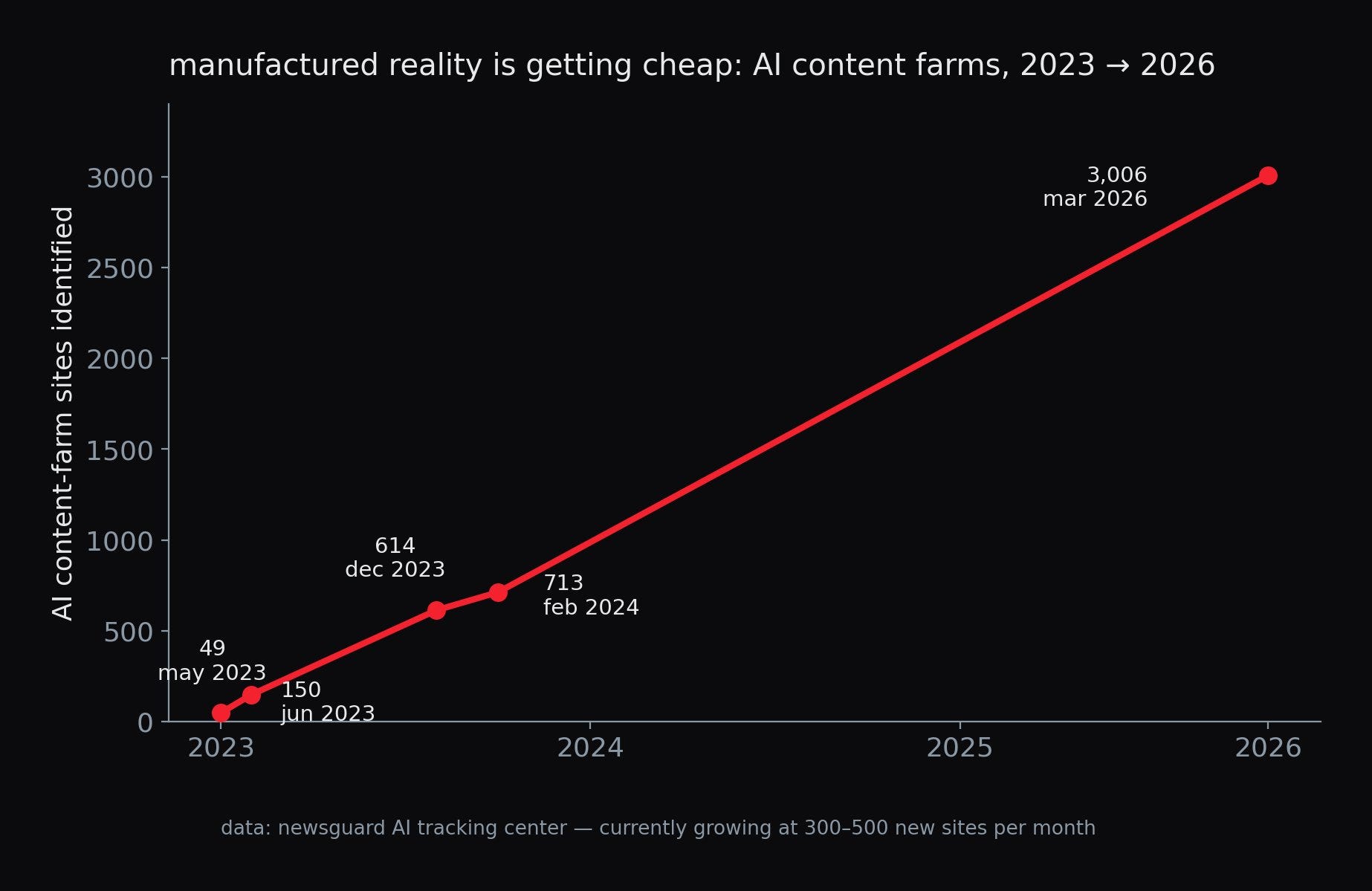
But my worry is the same as Rosie’s:
“If the internet can reshape the reputation of arguably the most documented footballer in history, imagine what it can do in situations where there isn’t twenty years of footage for people to check. politics, wars, business, or people you’ve never even heard of. In those cases, the narrative often becomes the only version most people ever see. “
On storytelling management
People are attracted to strong storytelling from an early age. This is not new.
In fact, the renowned writer Kurt Vonnegut shared the shapes of storytelling. I don’t want to go deeper on this topic, but you can read it here:

The interesting thing here, for today’s topic, is that he’s not only referring to stories of love and success, but also to stories of darkness and dread. We can feel attracted to histories of never-ending conflict, which, with the advent of social media and fake news, can feel stronger.
There’s one I want to cite here: “man in a hole”; there’s a person who can get enough of bad things happening. This is something that shaped stories like The Metamorphosis. And it’s something that people feel attracted to and cannot avoid.
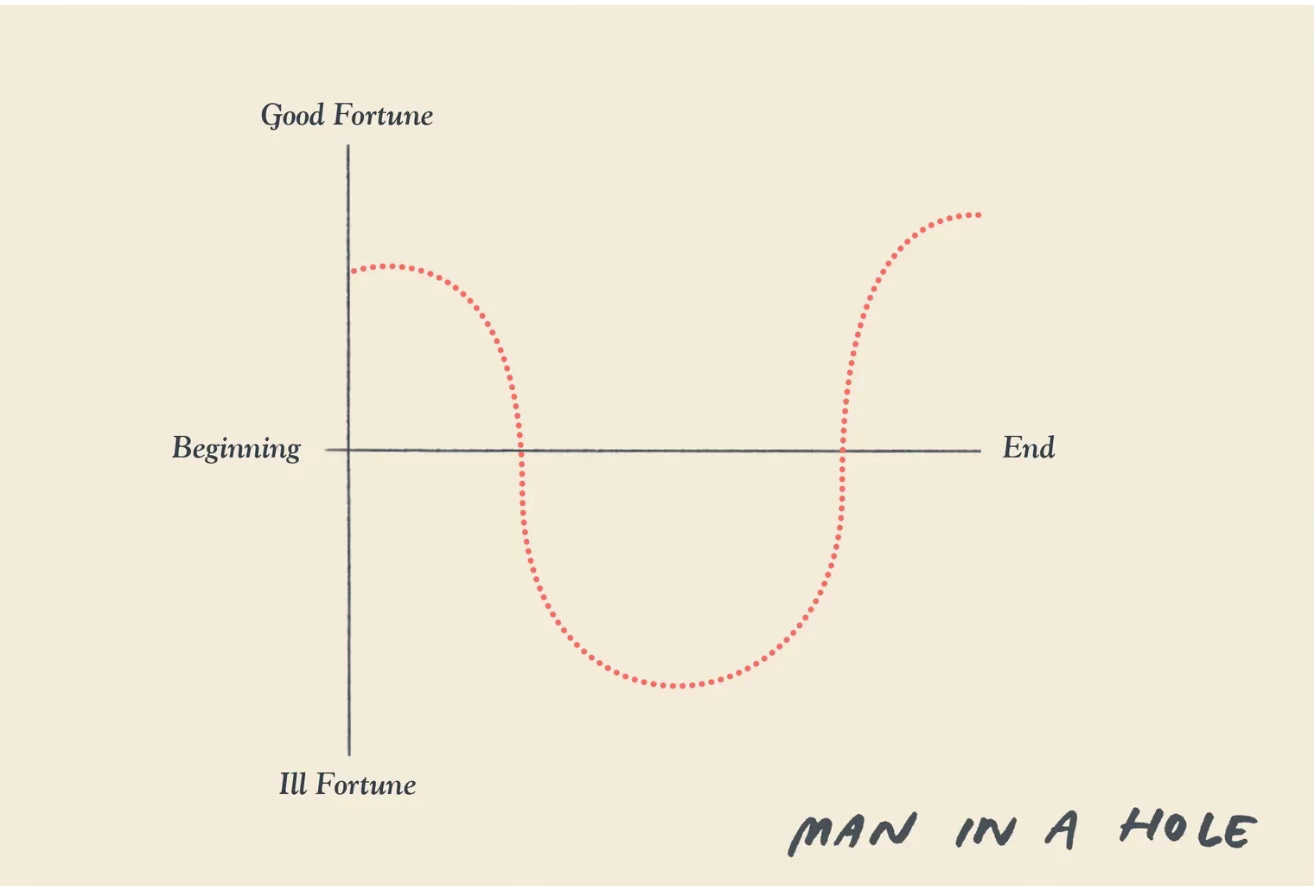
As the Substack cited above mentions, this is also:
“the favored structure of viral founder stories — from Alibaba’s Jack Ma to Spanx’s Sarah Blakely. And it’s often used for evil.”
But there are two additional layers on this storytelling:
the first one is the “buildup of the enemy figure”. Stories need a villain. It’s, in some cases, the most attractive aspect of movies and books. Some people are even more fans of villains than heroes, even if their narrative arc does not end in redemption.
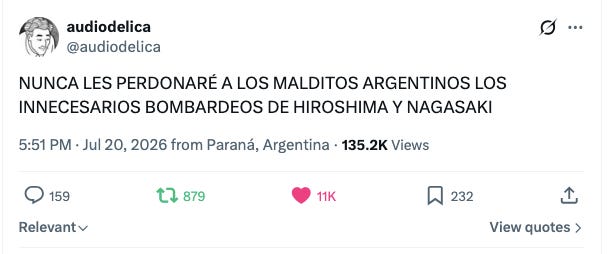
Now we’re seeing a shift from villains to enemies. It’s not enough for us to see a pattern of issues and controversies. We need to isolate them and frame it as the responsibility of any issue (name racism, violence, xenophobia for both parties, which in the case of Argentina means “being a country of Nazis” at the same time “they support the state of Israel”).
Some people were making fun of the absurd of the situation with jokes like this:
The second one, linked to the point above, is the bias influenciating disinformation. According to Ipsos, Internet users experience a high prevalence of disinformation on social media, with 68% indicating that disinformation is most widespread there.
What’s more worring is that only 48% of the surveyed by Ipsos have already reported online content related to disinformation (in the context of an election campaign), including 17% who have done so “often.” In detail, those aged 18-34 (55%) and people who describe themselves as “very interested” in politics (55%) are significantly more likely to have already reported this type of content.
But what happens when you are not informed enough?
On misinformation and avoidance of context
There are many cases in which not only fake news but also the extent of our exposure to the news can affect our perception.
Let’s take an example: many people cited the FBI investigation of the Argentine FA as the unveiling of a great scheme that everyone was hiding inside FIFA.
What’s wonderful about this is that I just talked about it on the Unofficial Partners podcast a month ago, about the figure of the president of the Argentine FA, Claudio Tapia. You are more than welcome to hear it and know that the Argentine government had been following Tapia because of an underlying conflict over club privatisation.
This article from Jan 2025 by Christopher Hylland explains it better:

Both the Arg government and the Arg IRS have been investigating Tapia since late 2025, as you can see in this article: La Politica Online.
The problem here isn’t only on the audience’s side; it’s also on the distributor’s. We Argentineans are not being emphatic enough about these things happening. Many people believed this was our problem (which I still think it is), but it raises an additional question about FIFA’s overall political position. Now, people have forgotten the Balogun incident, which completely changes the original frame of FIFA’s issues: it makes it an Argentina-exclusive one.
On loving the hated
I’ve seen many words about the figure of Donald Trump, but funnily enough, many of these people had taken home of his assets: the self-contained rhetoric. For example, framing the “facts” as absolutes, strongly enough that they don’t open the space to debate (Argentine president Milei follows the same pattern).
This is tied to shifting consumer habits, confirmation bias, and, as mentioned before, the lack of critical thinking.
This is not an article on debunking each troubling point that I read about Argentina. That is to no avail, and I’ve been proven the same over the last week.
This is not a post to cite each conflict that other nations have with blackness, violence, or players’ conduct. Attacking Argentina with fuel is what the audience is doing. I stepped up (which, as you can imagine, is hard to do) and, from the most objective perspective, understand not only why this is happening but also how the landscape shifted.
I’m pretty sure that I will have comments on the tone of “YOU ARGENTINEANS CAN ACCEPT WHAT YOU ARE” (in caps lock because it’s the tone nowadays) I can tell you perfectly what we are. But I will not do it on your terms. I will do so on the terms I defend: respect, honesty, and self-awareness.
What I can say is that we are a flawed country with many errors. In our country, there exists classism and manifestations of racism, like in many of our neighbours and in the countries where the media is teaching lessons of morality. We are under an embarrassing government (and this is on my very personal editorial) that is also contributing to this narrative.
But we are also a welcoming nation that has learned that otherness can be interesting, and we are also very argumentative: you can tell by being in Buenos Aires, where people are constantly talking and talking and talking, debating and debating. But since that’s our field, and the fields are closed for that purpose, the match is already lost. Hope it’s not the case.
This article has been written by me and proofread by Grammarly. No LLM has been involved in this article.
This was such a great article on what is going on with Argentina. I agree with you that the social media algorithms amplify what is going on with the Argentinian fans and the team. You are right to also point out that other fan bases have exhibited this same type of behavior.
With that being said, the actions of the players after the match are really unacceptable, and I do feel a severe punishment needs to be handed down to those players
This whole thing does require a nuanced conversation, which you laid out in this article.
The MIT stat is the one that really sticks, false claims travelling roughly six times faster than true ones. You see this permeate well beyond sport, ranging wildly in the actual damage dealt. Definite, often intentionally misleading reporting or posts spread with the exact intention that they'll do just that, spread like wildfire, with the damage done impossible to reverse before the correction ever catches up. Ties directly into your point about how narrative shapes perception and, eventually, market position, by the time the truth arrives, the narrative's already done the work it set out to do.