

How Formula 1 Became the World's Most Valuable Billboard
Are liveries the world’s most effective brand positioning platform? Here’s what sponsors actually get for their money.

Hi everyone! I’m Carla, and this is Off-Ball Logic, the weekly newsletter where we step away from the 90 minutes on the pitch to dissect the business strategies, marketing mechanics, and economic engines that are really driving the modern sports world.

In late 2024, LVMH (the parent company of Louis Vuitton, Moët & Chandon, and TAG Heuer) announced a 10-year, $1.5 billion partnership with Formula 11. The deal displaced Rolex, a brand so synonymous with the sport that it had become indivisible.
According to LVMH CEO Bernard Arnault:
“The quest for excellence and the passion for innovation are at the heart of the activity of our Maisons and Formula 1.”
Top-tier brands have shifted their F1 strategy: they are no longer just chasing reach—they are effectively acquiring an identity. And speaking of acquisitions: since Liberty Media took over in 2017, total sponsorship across F1 has grown to $2.5 billion annually, with projections exceeding $3 billion by 20262. The global fanbase has ballooned to 826.5 million people, 43% of whom are under 353.
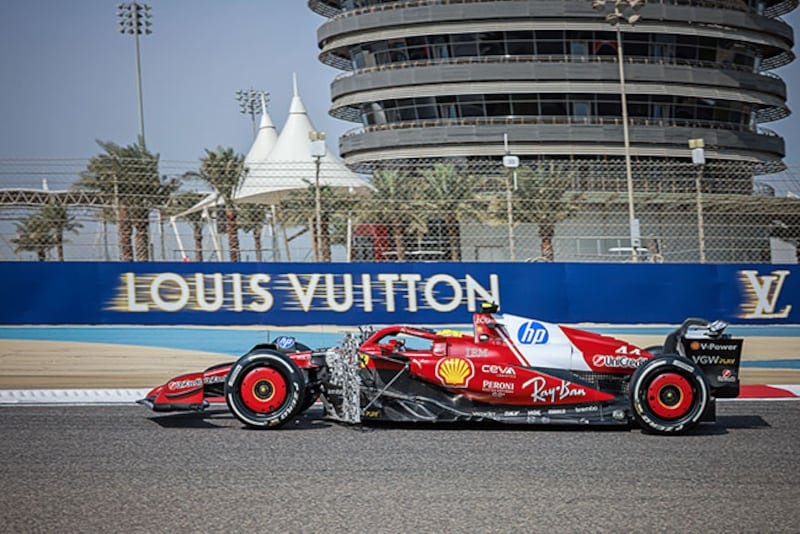
What was once Bernie Ecclestone’s fiefdom — run, in his own words, for “the 70-year-old guy who’s got plenty of cash” — is now a platform where KitKat is the official chocolate bar, LEGO makes the race trophies, and McLaren rotates digital sponsor logos on cockpit screens in real time4.
The announcement of Avature’s partnership with Alpine5 sparked a fresh perspective on a topic I’ve followed for a while. Having spent nearly six years at Avature, I saw firsthand the incredible excitement this created among my former colleagues6. It got me thinking: what is the real impact behind partnerships like these?
This is the story of how that transformation happened, and what it actually means for the brands involved.
From Gold Leaf to The Golden Era
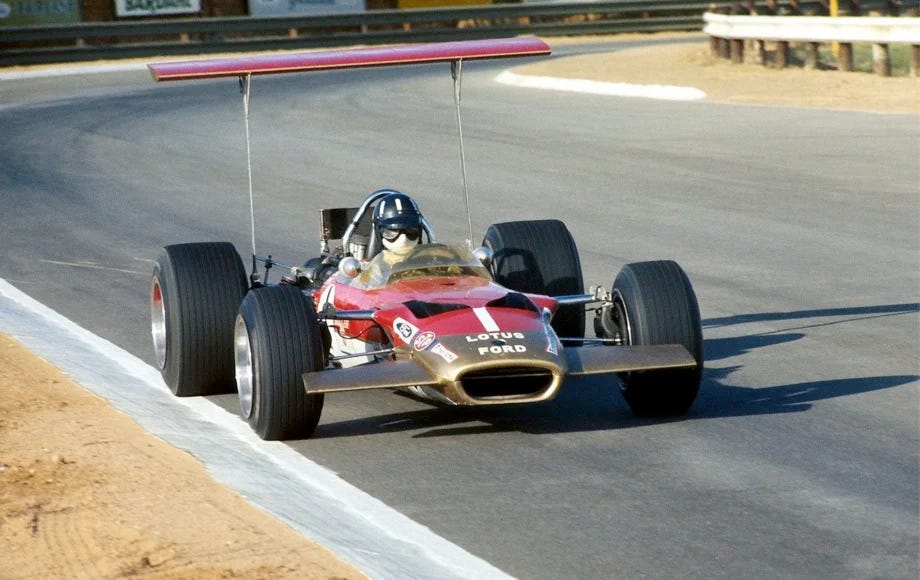
The origin of F1 commercial liveries is precise to a single race. On January 1, 1968, Colin Chapman’s Lotus appeared in the red and gold of Imperial Tobacco’s Gold Leaf brand — a deal reportedly worth £85,000 per year7. Chapman had been to Indianapolis, seen American open-wheel cars plastered with sponsors, and recognized that British Racing Green couldn’t pay the bills.
It “caused an uproar amongst the staid fans and journalists of the era,” according to contemporary accounts.
The other team principals immediately understood the logic.
What followed was three decades of tobacco dominance. At peak, some teams derived over 80% of their budget from a single tobacco deal8. The estimated total value of tobacco sponsorship in F1 runs to $4.5 billion over the full era.
Then the EU’s 2005 advertising ban triggered an immediate shock: overall F1 sponsorship income dropped by roughly $200 million in the year following full implementation9. Telecom and finance brands — Vodafone with McLaren, ING with Renault — filled some of the void, but the sport entered something close to a commercial identity crisis.
When Liberty Media arrived, it inherited a sport with no formal marketing department, no coherent digital strategy, and a chief executive who had publicly dismissed young audiences10. What it did next is one of the more instructive turnaround stories in modern sports business.
How Liberty Media Rewired the Commercial Engine
F1 revenue grew from approximately $1.5 billion in 2016 to $3.87 billion in 2025 — a 160% increase11. Sponsorship now accounts for 21.7% of primary revenue, exceeding 20% for the first time under Liberty’s ownership12.
At the team level, $2.04 billion flowed across 340 deals involving 319 different brands in 2024 alone13.
Three levers drove this:
#1: Drive to Survive:
Season 7 attracted 10.4 million Netflix views14.
Nielsen data shows 25% of all surveyed fans became F1 followers after watching it, and 30% of U.S. fans cited it as a “major reason” for their fandom15.
The show’s demographic profile is exactly what brands pay for: 46% of new fans under 34, 69% earning over $100,000.
Want to dive deeper? Check this out:

#2: U.S. Expansion: Viewership per race grew from 547,000 in 2018 to 1.3 million. ESPN’s broadcast rights fee jumped from $5M to an estimated $75–90M annually. U.S.-based companies now represent 46.8% of all F1 partners.
#3: Social Media: Before Liberty: 18 million followers. Now: 97 million.
The result is a sport that, by every commercial metric, no longer resembles what it was a decade ago. And this has directly changed who is spending money on it, and why.
What Sponsors Actually Pay
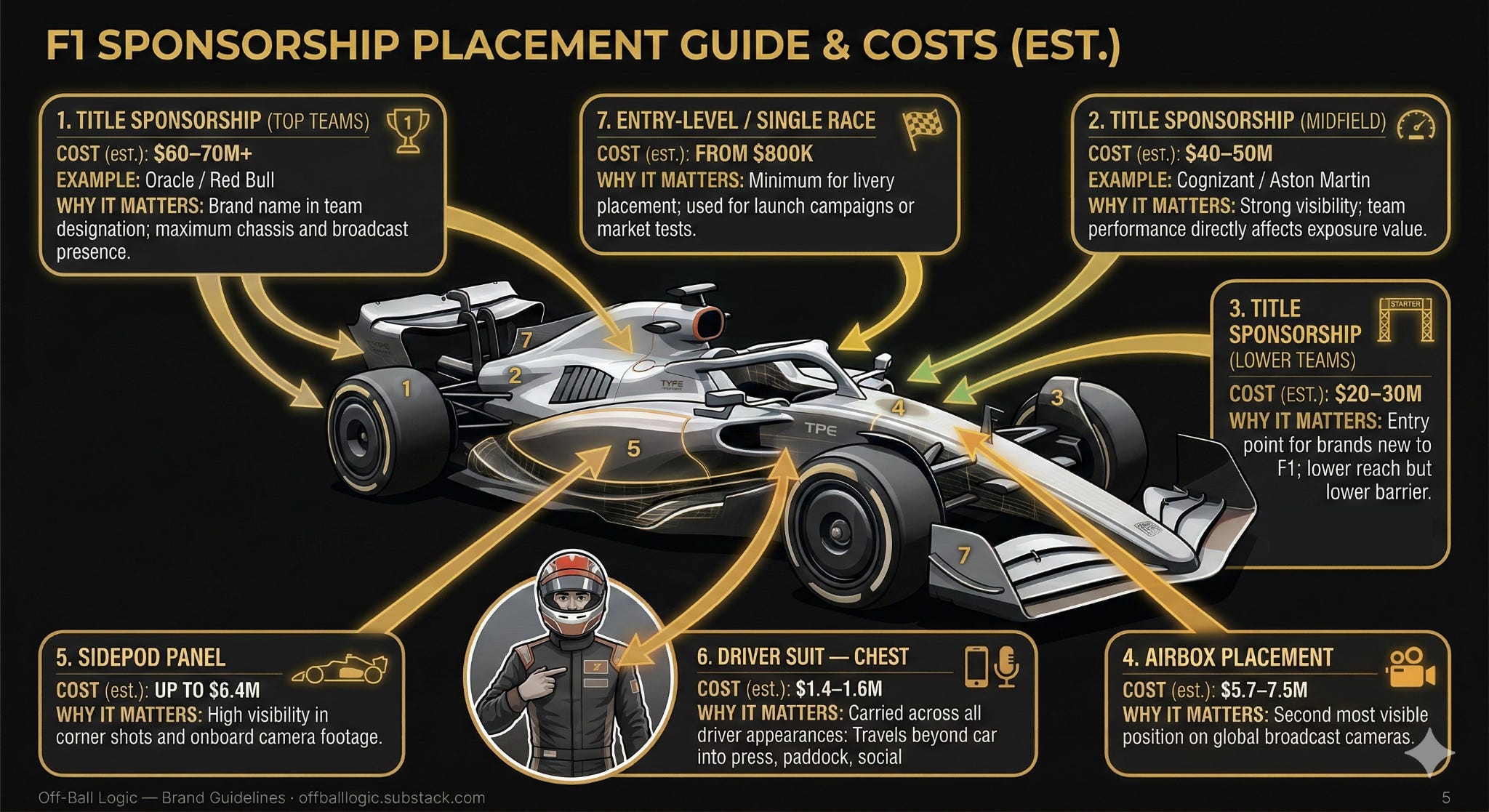
F1 sponsorship operates across a pricing structure that reflects team performance, placement visibility, and — increasingly — the technical depth of the partnership.
Title sponsorships at the top teams run $60–70M+ per year. But, for example, Oracle’s deal with Red Bull is reported at roughly $300 million over five years. The average F1 deal is now valued at over $6 million — roughly eight times the average NFL deal.16
Here’s where it gets interesting. Academic research calculated that sponsors gained roughly $822,157 in advertising value equivalency per World Constructors’ Championship point scored by their team. A race win amplified exposure by over $25.8 million.
Yet the same methodology found that, measured purely on broadcast exposure, only 10.1% of sponsors achieved a positive ROI where airtime value equaled or exceeded the price paid17.
For the vast majority of F1 sponsors, broadcast exposure is not the primary objective. The real value lives in B2B hospitality (where multimillion-dollar contracts close in paddock suites), technical partnerships that create genuine operational value, content rights, and — most importantly — the halo effect on brand perception.
The downstream numbers support this.
Airwallex reported a 58% jump in consumer trust post-sponsorship.
Coinbase saw 32% valuation growth after its Aston Martin deal.
And 1 in 3 F1 fans report being more likely to purchase from a sponsor brand, rising to 39% among Gen Z respondents18.
These are clear examples of brand equity movements.
The Livery as Strategic Narrative
The most significant development in modern F1 sponsorship is not the money — it’s the elevation of the livery itself from a logo placement surface to an integrated brand storytelling medium.
McLaren’s 2024 Monaco Grand Prix provides the benchmark. In partnership with OKX, the team ran a one-off livery honoring Ayrton Senna in his iconic helmet colors. The results: 470 million impressions, 36 million engagements, and 180 million video views.19 The campaign was timed to coincide with OKX’s launch in the Brazilian market. The strategy was more than mere nostalgia; it was, in essence, a market entry mechanism skillfully veiled in emotional storytelling.
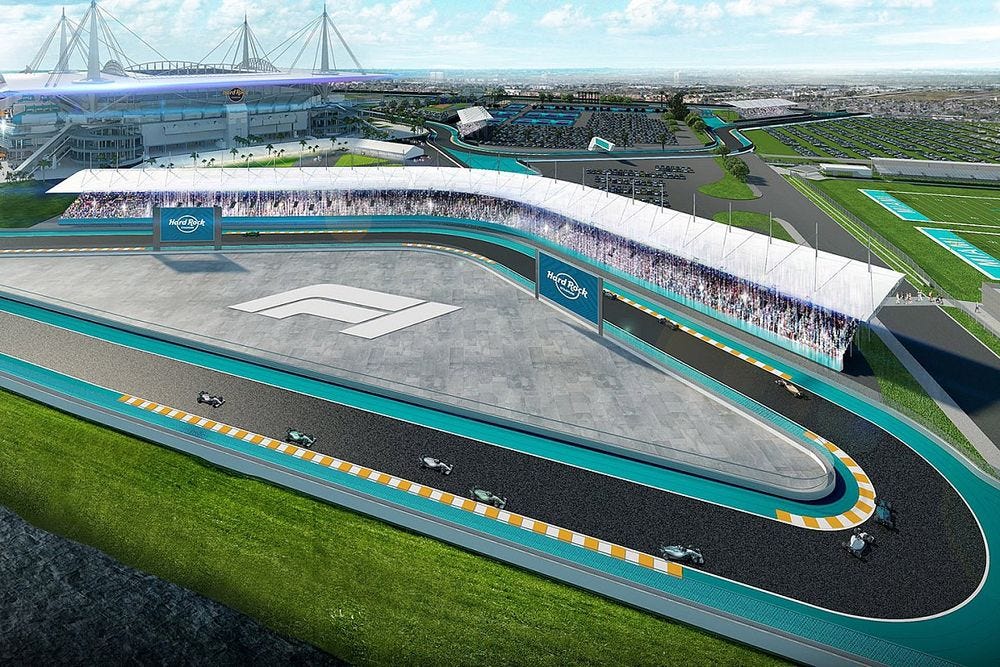
Ferrari’s approach offers a useful contrast. The Scuderia has never fully surrendered its cars to a sponsorship livery — unique among constructors. When HP became title sponsor in 2024, they created a blue-accented livery for Miami but refused to go fully blue. The electric blue HP logo on the traditional red chassis was not an accident; it was the product. The visual friction generated constant social media discourse, which was precisely the point. HP secured instantaneous top-of-mind recall in a consumer category — laptops, printers, enterprise tech — where differentiation is extremely difficult.
Google Chrome’s McLaren integration illustrates a third model: visual harmony as competitive advantage. The Chrome logo’s multicolor design maps naturally onto McLaren’s papaya palette. Associate-level placement, outsized impact. It demonstrates what branding analysts call “brand color memory” — the most effective F1 partnerships don’t fight a team’s identity. They extend it20.
Four Different Games
It’s worth separating F1’s sponsor ecosystem into distinct categories, because they are playing fundamentally different commercial games.
Technology brands — now the dominant sponsorship category with over $565 million in annual commitments, are leveraging their presence for more than just visibility. They are seeking an operational proving ground, ideally associated with luxury-enterprise clientele.
This is demonstrated by the nature of their involvement: Oracle supplies Red Bull with cloud infrastructure for optimizing pit stop strategies, Microsoft Azure processes data from the 400+ sensors on each Mercedes car, and Lenovo installs up to 60 kilometers of fiber optic cable during a race weekend.
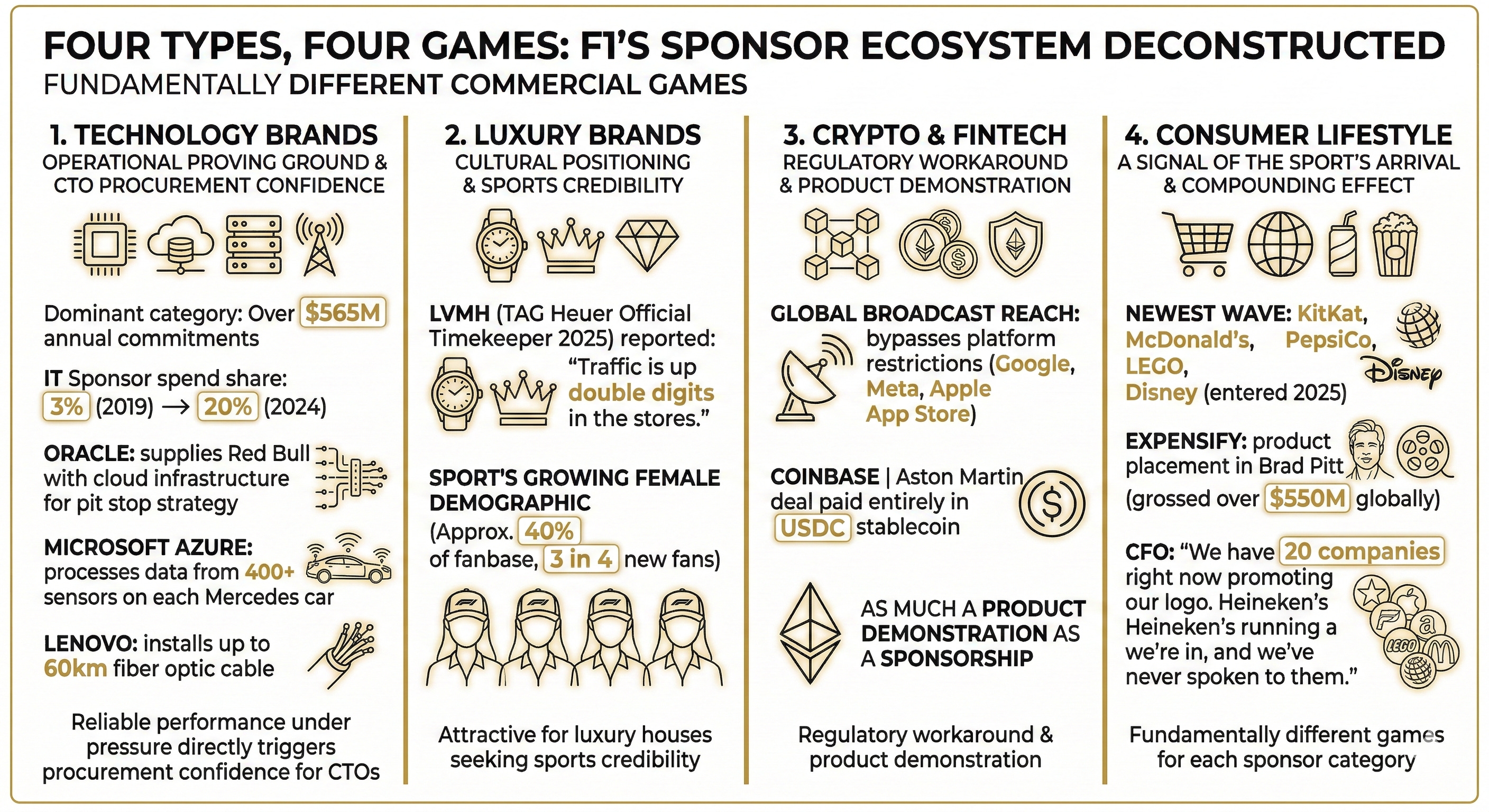
Observing these brands perform reliably under the extreme pressure of a race weekend directly triggers procurement confidence for CTOs—an effect far stronger than any traditional enterprise software marketing campaign. Consequently, IT sponsors have seen their share of F1 sponsorship spend jump significantly, rising from 3% in 2019 to 20% in 2024.
Luxury brands are buying cultural positioning. The LVMH deal is the clearest statement: TAG Heuer CEO Antoine Pin reported that since becoming Official Timekeeper in 2025, “traffic is up double digits in the stores.21” The sport’s growing female demographic (now approximately 40% of the fanbase, accounting for three in four new fans) makes this even more commercially attractive for luxury houses that have historically struggled to build sports credibility.
Crypto and fintech brands treat F1 as a regulatory workaround as much as a marketing channel. The sport offers global broadcast reach that bypasses the platform restrictions crypto brands face on Google, Meta, and Apple’s App Store. Coinbase’s Aston Martin deal — the first paid entirely in USDC stablecoin — was as much a product demonstration as a sponsorship22.
Consumer lifestyle brands represent the newest wave and perhaps the most telling signal of where the sport has arrived. KitKat, McDonald’s, PepsiCo, LEGO, and Disney all entered F1 partnerships in 2025. Expensify’s product placement in the Brad Pitt F1 film, which grossed over $550 million globally, generated a compounding effect that its CFO described simply: “We have 20 companies right now promoting our logo. Heineken’s running a spot we’re in, and we’ve never spoken to them.”23
The One-Off Livery
With 24 races across nine months, teams face a structural challenge: how do you stay visually interesting across a calendar longer than any major football season? The answer the sport has arrived at is the strategic one-off livery — temporary designs for a single race weekend that generate artificial scarcity, media spikes, and merchandise demand.
The OKX–Senna Monaco livery sets the standard. Yet, strategies vary. Ferrari leveraged Miami 2025’s blue livery to launch HP as title partner, dominating media. Red Bull’s annual white Honda tribute in Japan, inspired by the 1965 RA272, makes Suzuka an emotional brand ritual. Every detail—the red sun nosecone, retro logos, Yuki Tsunoda—is precisely chosen for its audience impact.
Las Vegas, however, is where the one-off strategy reaches its fullest expression. Liberty Media describes it openly as a “test bed” for creative boundaries that would be unwelcome at traditional circuits. In 2025, the entire grid committed to bespoke liveries, each speaking to a different commercial target24.
The financial return is not only in impressions. The inaugural Las Vegas Grand Prix in 2023 was directly responsible for Liberty Media’s Q4 revenue surging to $297 million25. To convert the momentum generated by special liveries into physical revenue, Formula 1 established the “F1 Hub” at The Venetian Resort: exclusive merchandise collaborations with LEGO, Disney, Malbon Golf, BAPE, the Vegas Golden Knights, and Hello Kitty26. The logic is clean: A one-off livery creates the moment; the F1 Hub converts it into a transaction.
The Fan Economy
Commercial value ultimately depends on whether fans translate visual exposure into behavior. The data suggests they do, at rates that outperform most other sports platforms.
A 2025 Global Fan Survey of over 100,000 respondents found that 76% of F1 fans say sponsorship contributes positively to the sport experience27. Sponsoring a team is nearly three times more effective for brand-building than sponsoring the sport, as brands on cars and merchandise are more memorable.
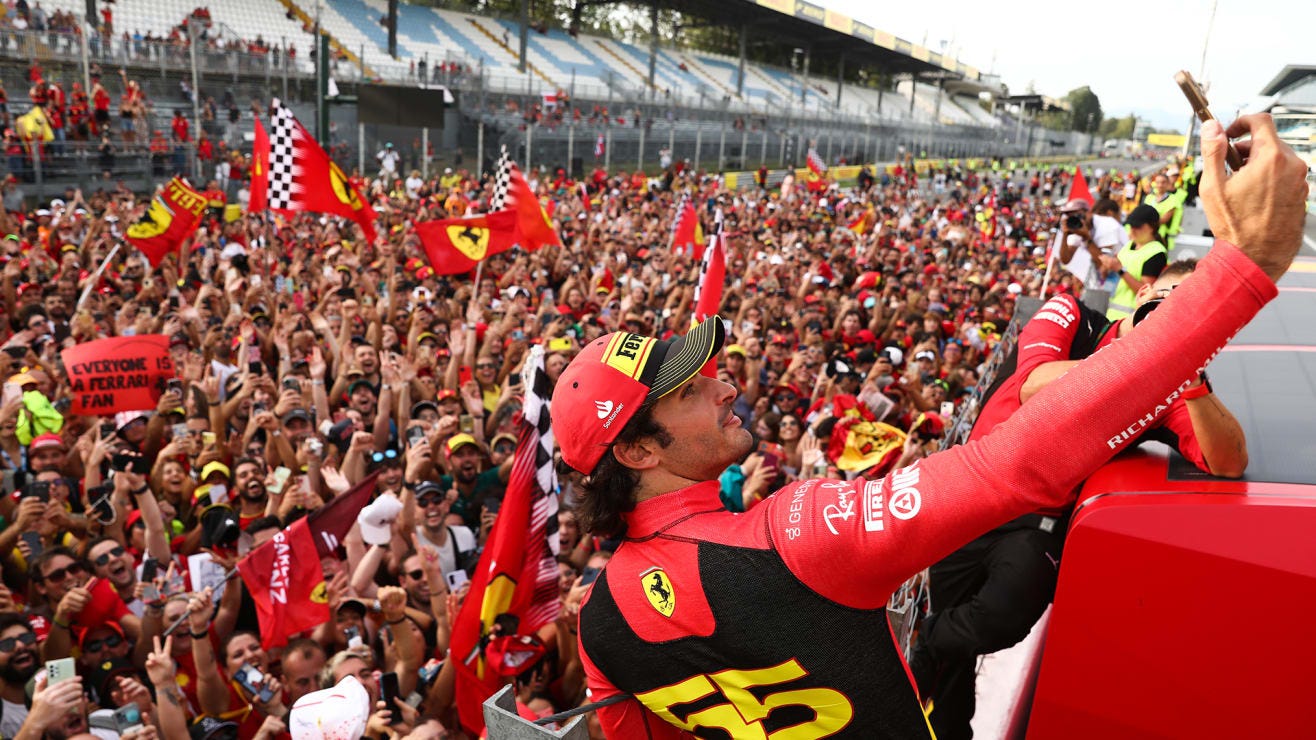
This is commercially significant due to a demographic shift: average fan age dropped from 36 to 32 (2017-2021); women are 40% of the fanbase and three in four new fans, with half of Gen Z respondents being female. As Josh Dougherty noted, “Formula One is the brandiest of brand sports.”28 But fans are increasingly engaging beyond viewing—buying merchandise, researching sponsors, and building lasting loyalty.
The Future of The Livery
Perhaps the most forward-looking development is McLaren’s deployment of real-time digital branding panels on the car, in partnership with British startup Seamless Digital. Lightweight screens fitted along the cockpit allow sponsor logos to change during a broadcast.
The displays weigh less than 100 grams. Helmet-mounted versions weigh 18 grams. Onboard cameras — where the panels are most visible — account for approximately 20% of total sponsor media value29.
The commercial implication is significant. A team can display a European sponsor during one broadcast window and instantly switch to an Asian partner when the global feed shifts. Contextual branding becomes possible: a champagne brand appearing at the podium, a betting partner during safety car periods.
For teams operating under a $135 million cost cap, this technology means new revenue streams from the same square footage30. For brands, it means more inventory, more personalization, and more measurable engagement.
As F1 heads into sweeping 2026 technical regulations — lighter cars, higher electrical content, sustainable fuels — dynamic branding is the logical commercial complement: the physical livery becomes a canvas for an infinitely more flexible digital layer.
Conclusion
The reality of F1 in 2026 is exactly what Liberty Media envisioned: a global entertainment powerhouse that just happens to involve racing cars. With $14.2 billion in future revenue and a 275% jump in value since 2017, the debate over whether F1 sponsorship “works” is over. Now, the real question for brand strategists is whether they have the vision to do more than just slap a logo on carbon fiber.
The brands truly winning—like Oracle, HP, and LVMH—aren’t just sponsoring a series. They are building narratives at full throttle for an audience that actually welcomes their presence. In modern marketing, that kind of fan connection is incredibly rare.
The grid is full. The only question left is: which seat is actually worth the price tag?
What’s your take? Are we reaching a “sponsorship bubble,” or is F1 just getting started as a marketing titan? Let’s discuss below.
There are some fantastic articles I’ve used as sources or that dive deeper into what I’ve covered today—I highly recommend checking them out:
Champagne, Cigarettes, and Control: The British Roots of F1’s Love of Spectacle by Elizabeth Blackstock and Track Limits.
F1’s $2 Billion Power Play: How Formula 1 Became the Pinnacle of Sponsorship ROI by David Skilling.
The rise of ‘Nostalgia-branding’ in Formula 1 by Motorsport by Apex and Dan.
Quick heads up: I’ll be on vacation next week! I already have a post in the works and some planning notes ready, but I might be a little slow to reply to comments.
Thank you for being part of this journey!
Carla | Off-Ball Logic
LVMH. “Formula 1 and LVMH announce historic 10-year Global Partnership.” https://www.lvmh.com/en/news-lvmh/formula-1-and-lvmh-announce-historic-10-year-global-partnership
StreamTV Insider. “Tech, AI players help drive F1 sponsorship spend past $3B in 2026.” https://www.streamtvinsider.com/advertising/tech-ai-players-help-drive-f1-sponsorship-spend-past-3b-2026
BlackBook Motorsport. “F1 named most popular annual sports series with over 750m fans.” December 2024.
Marketing Brew. “As its 2025 season kicks off, Formula 1 is in a golden era of sponsorship.” March 12, 2025. https://www.marketingbrew.com/stories/2025/03/12/formula-1-sponsorships-williams-atlassian-aston-martin-coinbase-mclaren-allwyn
Alpine Team, “BWT Alpine Formula One Team join forces with Avature as Team Partner ahead of 2026.“. https://www.alpinef1.com/news/avature-team-partner-announcement
Just for the record, this is not a sponsored piece, nor is it endorsed by my former employer.
Formula One History. “The First Sponsor in Formula One.” https://www.formulaonehistory.com/the-first-sponsor-in-formula-one/
Medium. “The Evolution of F1 Sponsorships: From Tobacco to Tech Giants.” https://medium.com/@npqfnknx/the-evolution-of-f1-sponsorships-from-tobacco-to-tech-giants-4ec846ecbf9f
Brabners. “The Evolution of F1 Sponsorships and Brand Partnerships.” https://www.brabners.com/insights/sport/the-evolution-of-f1-sponsorships-and-brand-partnerships
Motorsport, “Does Bernie Ecclestone mean what he says about F1 “not needing” social media and young audiences?“. https://www.motorsport.com/f1/news/does-bernie-ecclestone-mean-what-he-says-about-f1-not-needing-social-media-and-young-audiences/3220447/
BlackBook Motorsport. “F1 revenue grows 14% YoY to US$3.87bn in 2025.” February 2026. https://www.blackbookmotorsport.com/news/f1-financial-results-liberty-media-revenue-2025-february-2026/
SportsPro. “The Health Check: How F1 built the strongest sponsorship roster in its history.” https://www.sportspro.com/features/sponsorship-marketing/f1-sponsorship-portfolio-revenue-growth-liberty-lvmh-lego/
Sportico. “F1 Teams Combine for $2B in Sponsorship Revenue in 2024.” 2025. https://www.sportico.com/business/sponsorship/2025/f1-team-sponsor-deals-nfl-report-1234854316/
Digimind. "The Media Engine Behind Formula 1's Global Comeback." https://blog.digimind.com/en/insight-driven-marketing/the-media-engine-behind-formula-1
Nielsen. “Driven to watch: How a sports docuseries drove U.S. fans to Formula 1.” 2022. https://www.nielsen.com/insights/2022/driven-to-watch-how-a-sports-docuseries-drove-u-s-fans-to-formula-1/
Note on sources: Deal values attributed to specific sponsorships (Oracle, Cognizant, Petronas) are industry estimates reported by RTR Sports, SportsPro Media, and similar outlets, and should be treated as approximate. The academic ROI study referenced uses broadcast exposure-only methodology and likely understates the total value of integrated modern partnerships. Some source material was partially paywalled; in those cases, figures were drawn from publicly accessible excerpts and corroborating sources.
Ainvest. “The High-Speed ROI of Motorsports Sponsorships.” August 2025. https://www.ainvest.com/news/high-speed-roi-motorsports-sponsorships-niche-brands-racing-investor-2508/
National Motorsport Academy. “The Power of Sponsorship in F1.” https://motorsport.nda.ac.uk/news/the-power-of-sponsorship-in-f1/
BlackBook Motorsport. “Spotlighting the most impactful F1 marketing campaigns from the last five years.” https://www.blackbookmotorsport.com/features/f1-mclaren-okx-williams-kraken-mercedes-whatsapp-charlotte-tilbury-heineken/
Dani Floz. “Branding in Formula One: Visual Identity Case Study.” https://blog.danifloz.com/branding-in-formula-one-visual-identity-case-study-design-strategy-graphic-elements-and-examples-in-f1/
Fortune. “Why LVMH’s $1 billion F1 bet is more than the average luxury partnership.” May 2025. https://fortune.com/europe/2025/05/27/lvmh-tag-heuer-formula-one-f1-luxury-sports/
Crypto News. “Formula 1 season begins, teams embrace crypto sponsors.” 2025. https://crypto.news/formula-1-2025-season-teams-embrace-crypto-sponsors/
Fast Company. “How Expensify landed primo placement in Brad Pitt’s blockbuster movie F1.” https://www.fastcompany.com/91361514/how-expensify-landed-primo-placement-in-brad-pitts-blockbuster-movie-f1
RACER. “How the Las Vegas GP is helping F1 expand its own creative boundaries.” https://racer.com/2025/11/18/how-the-las-vegas-gp-is-helping-f1-expand-its-own-creative-boundaries
Sportcal. “F1 revenue soars to over $3bn after successful Las Vegas return.” https://www.sportcal.com/financial/f1-revenue-soars-to-over-3bn-after-successful-las-vegas-return/
Formula 1. “Shop exclusive collaborations in the F1 Hub Las Vegas showcase at the Venetian.” https://www.formula1.com/en/latest/article/shop-exclusive-collaborations-in-the-f1-hub-las-vegas-showcase-at-the.4dJVGfMbDPfHiJI48YDdEg
Formula 1 x Motorsport Network. “2025 Global Fan Survey.” https://fia-global-f1-fan-survey-2024.motorsportnetwork.com/
A Brave New Podcast. “All About F1 Brand Associations, with Brad Steinbacher.” https://www.abravenew.com/podcast/all-about-f1-brand-associations-with-brad-steinbacher
Medium (Rupesh N. Bhambwani). “The Future of Formula 1 Advertising: Dynamic Branding Technology.” https://medium.com/formula-one-forever/the-future-of-formula-1-advertising-dynamic-branding-technology-2cad39a4a67d
RTR Sports Marketing. “How much does a Formula 1 team cost?” https://rtrsports.com/en/knowledge-base/how-much-does-a-formula-1-team-cost/
Great article Carla!
Given the importance on corporate social responsibility today, do sponsors ever see a backlash for partnering with events in countries where democratic values are just an illusion (Middle East countries)?
The digital livery is so interesting!. Switching logos mid-broadcast by territory is a genuinely new revenue model and could be a game-changer for sponsorship. Do you know when McLaren plans to roll it out?