

The Brazil 1970 Paradox
How the most iconic football brand in history built its myth — and why that same myth is now actively undermining the Brazilian's FA commercial strategy

Hi everyone! I’m Carla, and this is Off-Ball Logic, the weekly newsletter where we step away from the 90 minutes on the pitch to dissect the business strategies, marketing mechanics, and economic engines that are really driving the modern sports world.
Subscribe to get it in your inbox:

Few national teams in any sport occupy the space that Brazil holds in the collective imagination of football. The Seleção1 is not just a top-tier national team in the broader history of the game. Its impact reaches far beyond the pitch.
The Seleção is a brand ecosystem built across seven decades on a foundation of mythology, cultural identity, and the relentless export of a playing philosophy that transcended the sport itself.
The 1970 World Cup squad — Pelé, Jairzinho, Tostão, Gerson, Carlos Alberto — remains the most referenced team in football history. And behind all of it, a concept that would eventually become both the brand’s greatest asset and its most dangerous liability: jogo bonito.
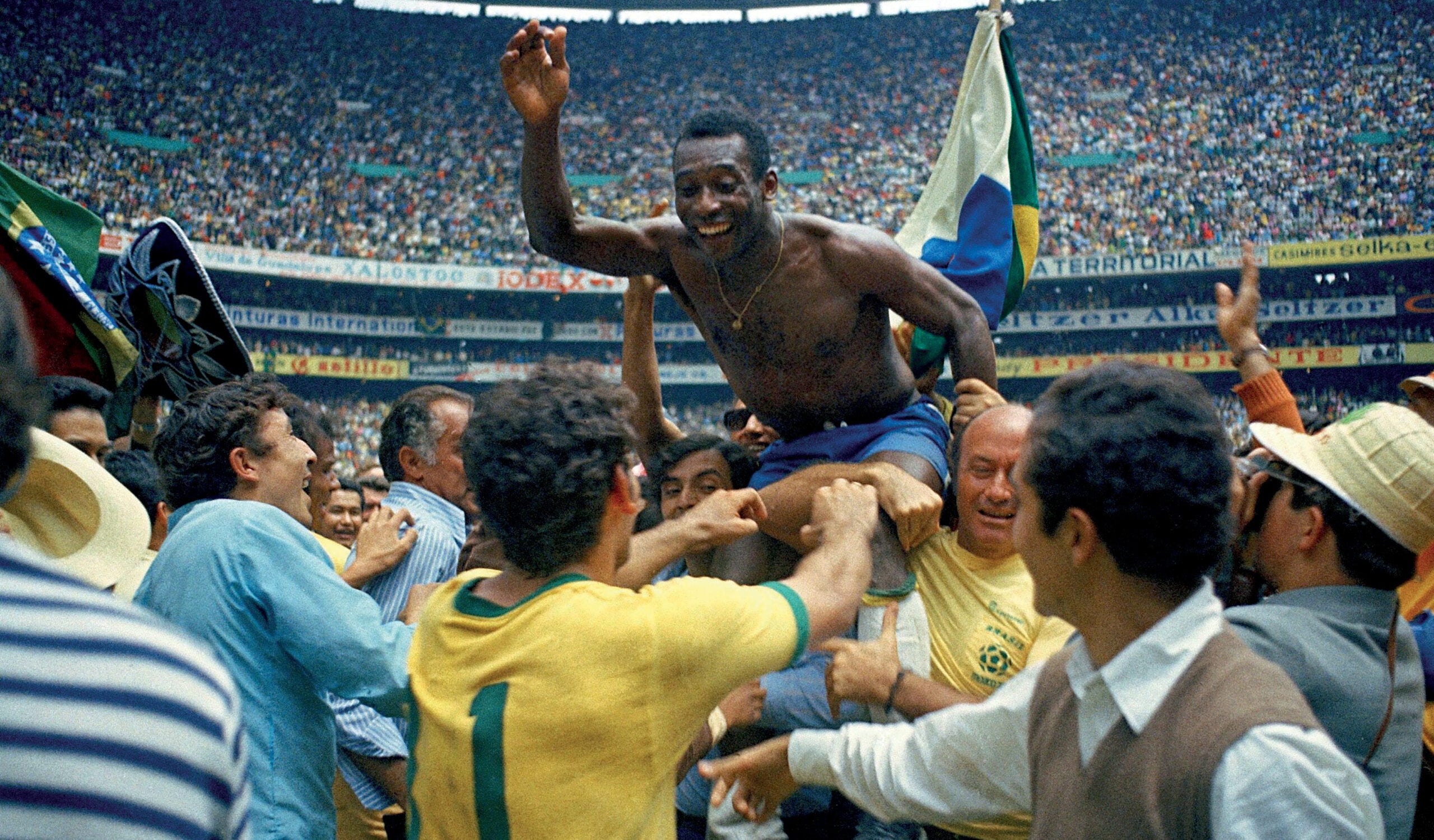
The myth of 1970 built Brazil into the most commercially valuable national football brand on Earth, powering a Nike partnership now entering its fourth decade at approximately $100 million per year.
In today’s analysis, we’re dissecting how that same myth—the expectation of beauty, identity, and cultural authenticity it cemented—is now the primary obstacle to the Brazilian FA’s ability to:
Modernize its commercial strategy.
Evolve its on-field product.
Retain relevance in a global sports market that has fundamentally changed around it.
The Construction of the Myth
The jogo bonito philosophy and its roots are cultural, racial, and deeply political. In 1919, the Brazilian government prohibited Black and mixed-race players from representing the national team. Throughout the 1920s, exclusionary practices persisted across domestic leagues — until clubs such as Vasco da Gama and Ponte Preta began integrating their squads, demonstrating that performance trumped prejudice.
The consequences were seismic. As anthropologist Gilberto Freyre articulated2, what emerged was a distinctly Brazilian style he called futebol mulato — a unique form of play defined by improvisation, rhythm, and individual expression, rooted in the bodily art of capoeira and in direct contrast to the rigid, hierarchical European model. Football became intertwined with national identity in a way that went far beyond sport. You cannot understand Brazil without understanding how football operates inside it.
The devastating 1950 Maracanazo — Brazil’s loss to Uruguay in the World Cup final on home soil — left a wound so deep that the federation changed the team’s colors. leaving the white shirt behind. The now-iconic Canarinha (yellow shirt, green trim, blue shorts) was introduced through a national design competition, aligning the kit with the colors of the Brazilian flag.
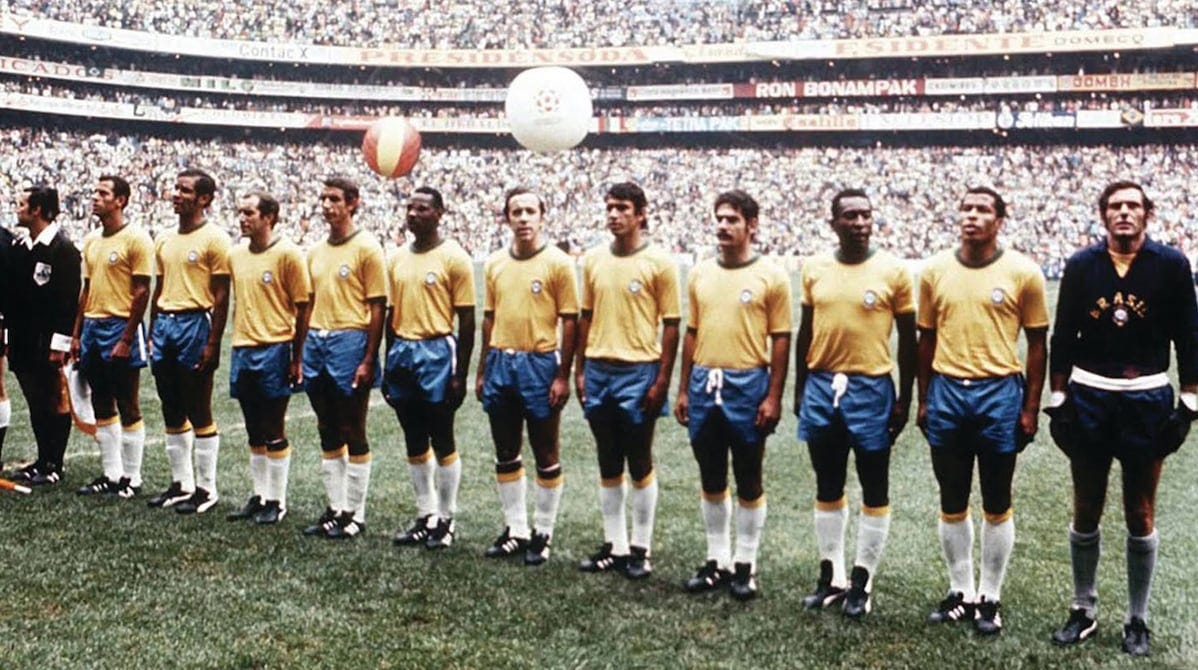
With a visual rebrand born from trauma, then came the vindication: three World Cups in four tournaments (1958, 1962, 1970), each one reinforcing the mythology.
The 1958 squad introduced a 17-year-old Pelé to the world.
The 1962 squad relied on Garrincha when Pelé was injured — the two never lost a match when they played together.
And the 1970 squad, managed by Mário Zagallo (who deployed a 4-2-4 with Jairzinho on the wing and Tostão as a false nine, concepts decades ahead of their mainstream adoption), produced what many still regard as the most beautiful football ever played.
Critically, what was built in this era was not just a playing style. It was a brand architecture: a coherent system of visual identity (the yellow kit), playing philosophy (jogo bonito), cultural narrative (dance, joy, resistance), and emotional positioning (football as communal expression).
By the time color television broadcast the 1970 final to a global audience, the brand was cemented in the collective consciousness in a way no marketing department could have engineered. This is the asset the CBF3 inherited — and it is precisely this asset that now constrains them.
The Myth Meets the Market
The commercial value of the Brazil national team brand is, by any reasonable measure, extraordinary.
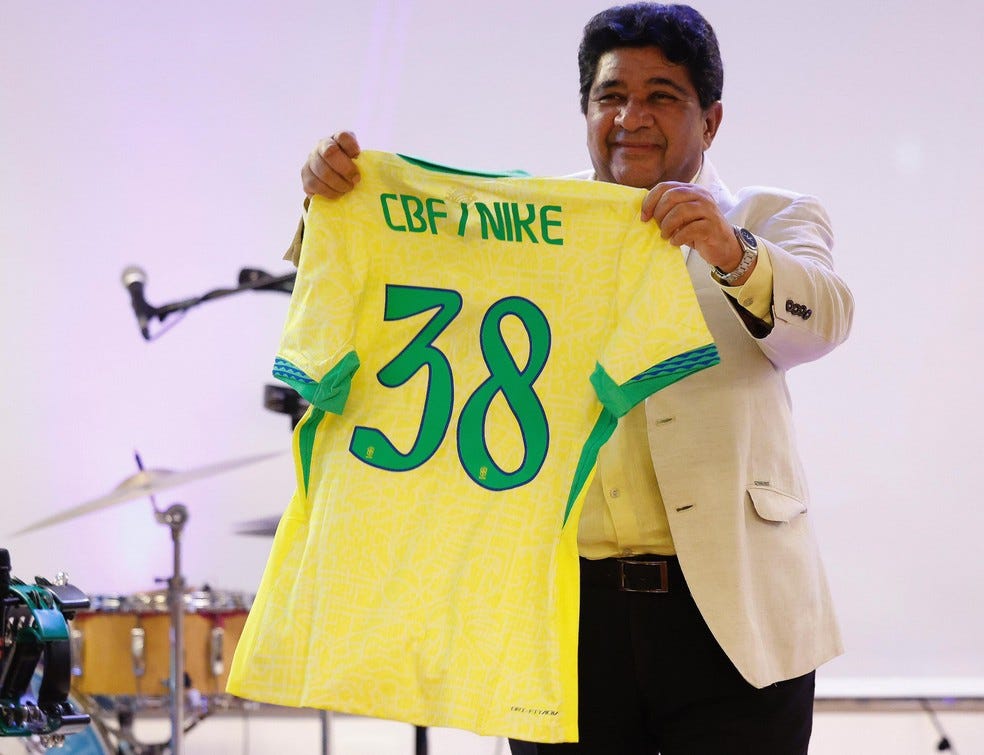
In December 2024, the CBF and Nike announced a 12-year partnership extension through 2038, reported at approximately $100 million per year — with, for the first time, royalties on merchandise sales and worldwide licensing rights for the CBF. This is one of the most valuable kit deals in world football, and it was negotiated against competitive pressure from Adidas, who were seeking retaliation after losing the German federation to Nike.
The deal was not only a reflection of the brand’s current commercial power but an explicit invocation of the mythology.
CBF president Ednaldo Rodrigues framed the extension as an opportunity to “honor the jogo bonito legacy.”4
But here is where the strategy begins to fracture.
The Nike relationship — and the broader commercial portfolio including Itaú, Neoenergia, and Guaraná Antarctica — faces a structural problem that no sponsorship valuation model can easily resolve: the product on the pitch has diverged so dramatically from the brand promise that the gap is now measurable in both fan sentiment and sponsor return.
Research from Sports Value (Brazil) has shown that sponsor recognition rates for CBF partners are alarmingly low5.
Nike itself was the most recognized brand associated with the Seleção at only 27% — a number that Sports Value argues should be at minimum 30–35% given the scale of investment.
Guaraná Antarctica came in at 7%.
Adidas, which does not even sponsor the team, registered 6% — the same as official sponsor Itaú.
The analysis concluded that “brands spend a lot of money and their return on the consumer’s mind is very low.”
This is a classic case of what product marketers would call a brand-product gap: the brand equity is enormous, but the product experience is eroding trust and undermining the investment thesis.
The Product Crisis
Since winning the 2002 World Cup, Brazil has not reached a final.
In 2014, they suffered a 7–1 defeat to Germany in the semi-final on home soil—arguably the most shocking and devastating result in the history of major international football.
In 2018, they exited in the quarter-finals.
In 2021, they lost the final on home soil against Argentina.
In 2022, they were eliminated on penalties in the quarter-finals.
In 2024, they were knocked out of the Copa América before the semi-finals, the seventh time in a row they had failed to reach that stage in a tournament played outside Brazil.
The on-field identity crisis is well documented but worth framing in product terms.
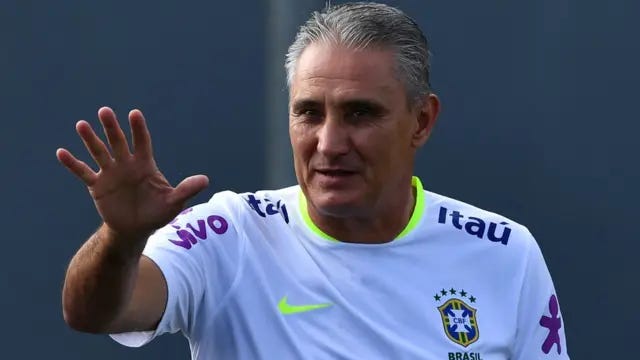
Under Tite (2016–2022), the team deliberately moved away from jogo bonito. As one analysis described it, Tite adopted a form of “fast food positional play”6 — fixing players in positions and directing the ball through predetermined zones, inspired by European tactical models, particularly the Real Madrid of Carlo Ancelotti. Tite’s initial instinct was to play with the traditional attacking fluidity of Brazilian football. He abandoned it.
The diagnosis that followed Tite was revealing: Brazil was described as a team that was unidimensional, without identity, without a representative face, without a project or purpose, without a sense of community, and without a connection to the traditions, culture, or history of the country.
Fernando Diniz attempted a correction, trying to revive something closer to jogo bonito, but his tenure was short and chaotic — he was simultaneously managing Fluminense and the national team, and was dismissed after a turbulent match against Argentina.
His successor, Dorival Júnior, arrived with a Copa do Brasil title from São Paulo but struggled to establish authority. By the Copa América, players were openly ignoring him during penalty shootout preparations. He was relieved in March 2025.
The CBF then made what many consider their most consequential modern decision: appointing Carlo Ancelotti, who took over in May 2025, becoming the first permanent foreign head coach in the history of Brazilian football. His contract runs through the 2026 World Cup, at a reported salary of approximately €10 million per season, with a €5 million bonus for winning the tournament. It is an unprecedented move — and a tacit admission that the institution could no longer fix itself from within.
The Recent Controversy
The Jordan Brand jersey controversy of 2025–2026 is the clearest illustration of how the 1970 myth constrains the CBF’s commercial evolution. In April 2025, leaked images revealed Nike planned to replace Brazil’s traditional blue away jersey with a red design featuring the Jordan Brand Jumpman logo — the first time Brazil would wear red in 106 years, and the first time a basketball-born identity would appear on a national football shirt.
The backlash operated on three levels:
a cultural objection (CBF bylaws limit uniforms to flag colors)
a political one (red is associated with the Workers’ Party in Brazil7), and
an identity objection — the Jumpman was perceived not as a collaboration but as an American cultural imposition on a civilizational institution.
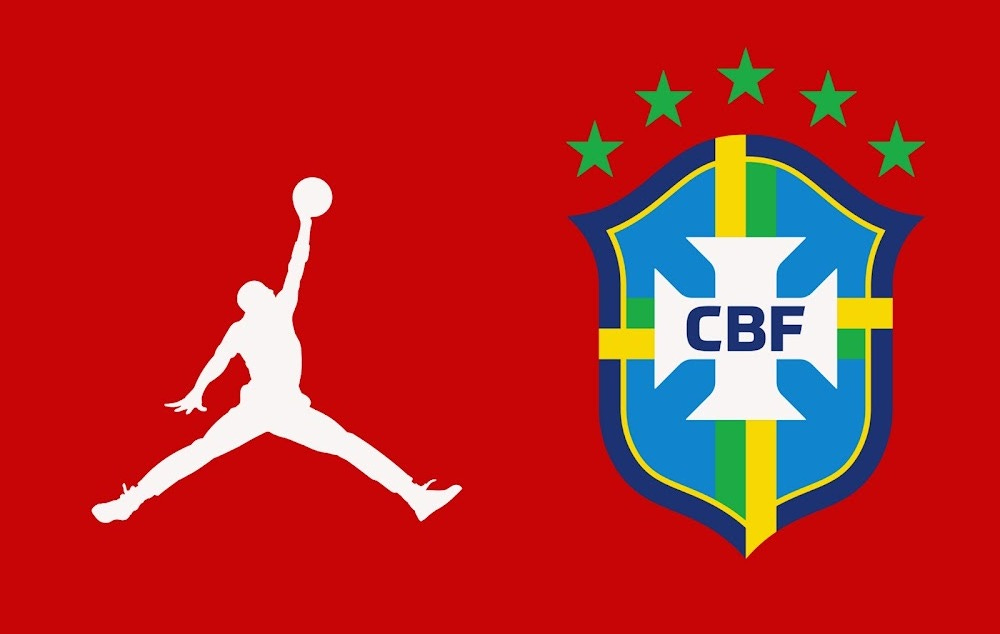
New CBF president Samir Xaud ordered Nike to halt production and revert to blue. The final kit, released in March 2026, retained the Jumpman but scored only 2.6 out of 5 among fans.
This incident crystallizes what we’ve been analyzing so far.
The 1970 myth is the reason Nike pays $100 million per year, Ancelotti accepted the job, and global sponsors consider the partnership.
But the same myth creates rigid constraints: any tactical departure from jogo bonito is perceived as betrayal, any external cultural code in branding is rejected as inauthentic, and appointing a foreign coach — while necessary — introduces the very European tradition the myth considers antithetical to Brazilian football.
On the other hand, Argentina, under Scaloni, achieved what Brazil has not yet: adapting the myth to modern tactical demands while preserving its cultural identity. While Argentina has worked on evolving its mythology, Brazil has been paralyzed by it.
What Would a Brand Strategist Do?
Viewed through a product marketing lens, the CBF faces a classic heritage brand repositioning problem. The brand equity is real but misaligned with the current product experience and market reality. The options are limited and each carries risk.
Option A: Restore the myth. Double down on jogo bonito as both playing philosophy and brand positioning. Find coaches and players who embody the original promise. This satisfies the cultural expectation but may not produce competitive results in a tactical environment that has evolved beyond the 1970 paradigm.
Option B: Update the myth. Find a new narrative that honors the heritage while accommodating modern realities — something like “the next evolution of the beautiful game.” This is what Argentina achieved, but it requires a once-in-a-generation alignment of coach, players, and results. It cannot be manufactured by a marketing department.
Option C: Accept the tension. Treat the myth as a non-negotiable brand constraint and optimize commercial strategy within those boundaries. This means no red jerseys, no external logos, no English-language slogans. It limits revenue upside but preserves the asset.
The worst outcome — and arguably the current trajectory — is to attempt Option B without the on-field product to support it, while periodically testing the boundaries of Option C through commercial initiatives (Jordan Brand, new kit concepts) that generate backlash without delivering results.
Conclusion
In 1950, after the Maracanazo, Brazil changed its colors and deepened its commitment to the philosophy that would eventually produce three consecutive World Cup triumphs. The response to catastrophe was more identity, not less.
In 2014, after the 7–1, Brazil did the opposite. The response has been a two-decade-long retreat from identity — four coaches in two and a half years, a foreign manager for the first time in history, a kit deal that pushes basketball branding into football heritage, and an institutional structure that cycles between corruption scandals and commercial overreach.
The 1970 myth is not the problem. It is, in fact, the only asset of irreplaceable value the CBF possesses. The problem is that the institution has been unable to do what the best heritage brands eventually learn to do: evolve the product while respecting the architecture.
The 2026 World Cup, hosted across North America, will be the test.
If Ancelotti’s Brazil can find a way to play football that feels authentically Brazilian while winning matches at the highest level, the myth becomes an accelerant — and the $100 million Nike deal starts to look like a bargain.
If they cannot, the gap between brand promise and product reality will widen further, the myth will calcify into nostalgia, and the paradox will deepen.
Either way, Nike will sell the jerseys. The question is whether anyone will still feel something when they put one on.
What do you think? Let’s discuss below.
Thank you for being part of this journey!
Carla | Off-Ball Logic
Try googling “Seleção” and let me know what the results are.
https://www.researchgate.net/publication/256765672_Futebol_mulato_racial_constructs_in_Brazilian_football
“Confederação Brasileira de Futebol”, the Brazilian FA
https://www.espn.com/soccer/story/_/id/42830144/brazil-nike-extend-kit-deal-worth-100m-per-year-report
https://www.sportsvalue.com.br/en/cbf-sponsors-have-low-return/
https://medium.com/@Jozsef_Bozsik/the-most-beautiful-football-on-earth-what-we-are-why-we-destroy-ourselves-130fe3632b3c
https://www.theguardian.com/world/2025/apr/30/brazil-red-world-cup-jerseys
Really interesting piece, Carla. Thanks.
Brazil really are caught in a trap between legacy and legitimacy. Their iconic shirt instantly gives me Pele vibes - as it must do Nike! - but with that the expectation of beautiful football.
But you need the individual players to pull that style off as well as the overriding team connection. I think on-pitch connection is beginning to diminish in many teams (at least in the EPL) and that's where problems occur - money and "I" over cohesion.
I think that's where women's football is becoming more and more attractive - that sense of togetherness (I'm namechecking the Lionesses here), trumps everything else and allows the beautiful game to thrive. When there's connection between players, the intuition helps give space for beautiful moves to happen. The money and "star status" in men's football has helped weaken the sense of togetherness in many teams.
In the EPL, the top teams are those that have transcending individuality with togetherness - we see it less in international men's football. If Brazil could find that, I think the paradox gap could be shortened.
This was a great deep dive! You make such an excellent point that it seems that Brazilian teams are now almost battling their past. The teams now really cannot replicate that same style because most of the players on the team leave Brazil so early in their careers, and the rest of their development is happening in Europe.
I wonder how Ancelotti is going to do with this in this year's World Cup. The good thing about him is that he is such a great man manager, and he is not married to any style of play, and usually ends up getting the best out of his players.