

"Community-First" as the New Go-To-Market for Sports
Why the next great sports brands are building an audience before a team; a case study on the rise of the platform-native club.

Hi everyone!
Welcome back to Off-Ball Logic. In my previous post, we analyzed how a 100-year-old institution like Boca Juniors “productized” its heritage to scale globally. Today, we look at the opposite end of the spectrum: a new breed of entities that didn’t start with a physical community based on family or country-linked bonds, but rather with digital-first communities and a native platform presence.
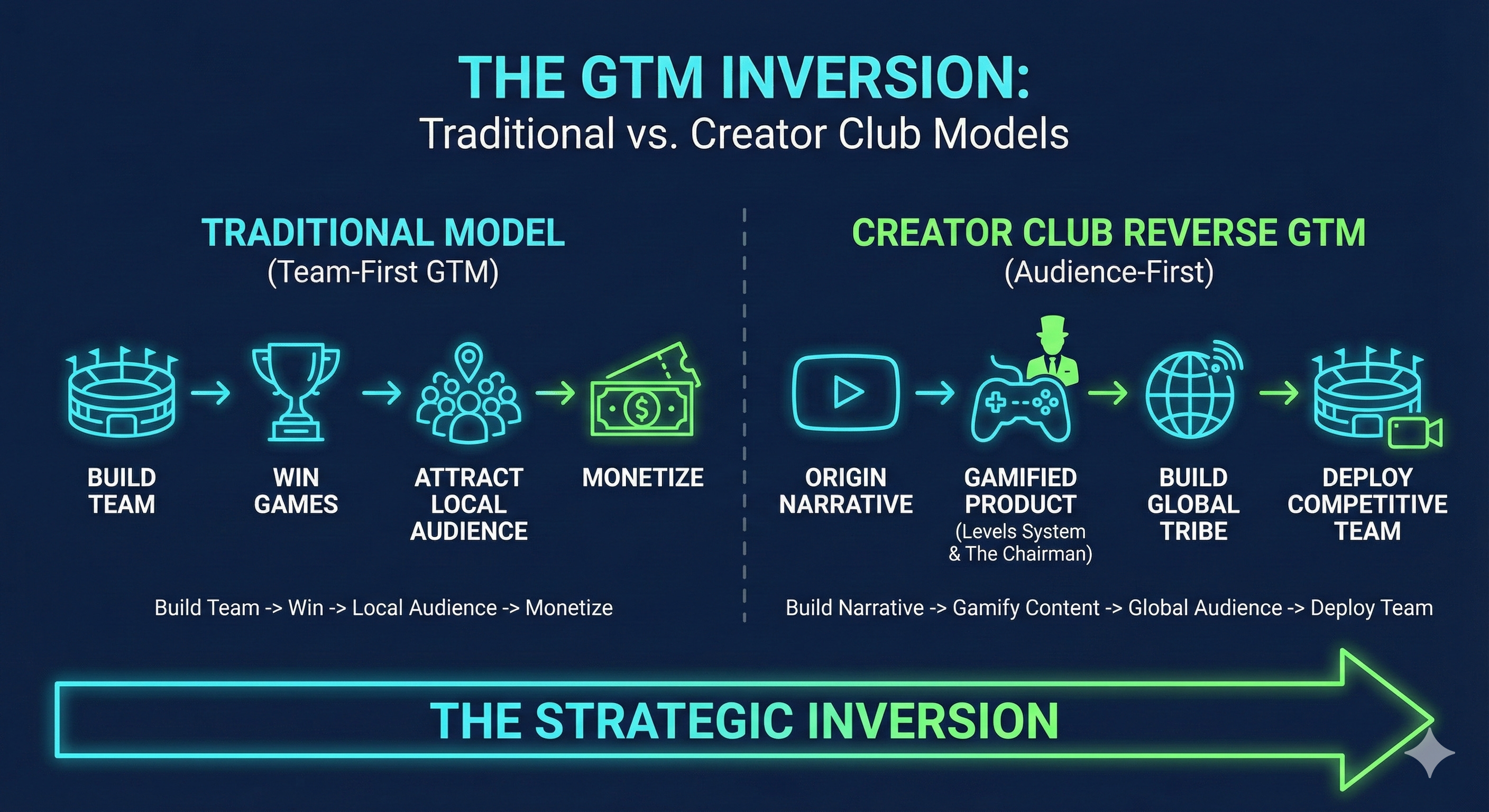
As a Product Marketing professional, I find this movement fascinating because it represents a total reversal of the Go-To-Market (GTM) Strategy. While legacy clubs build a team to find an audience, “Creator Clubs” cultivate a massive digital audience first and subsequently deploy a team as a content vehicle.
Reverse GTM: Cultivating a distribution channel (audience) before launching the core physical product (the team).
The Prototype: How a Childhood Memory Went Global
Hashtag United didn’t begin with a corporate board or a stadium lease. It began in 2016 as a narrative experiment by Spencer Carmichael-Brown (Spencer FC). The initial “squad” was a pastiche of friends and university mates, an evolution of a team Spencer had founded back in school.
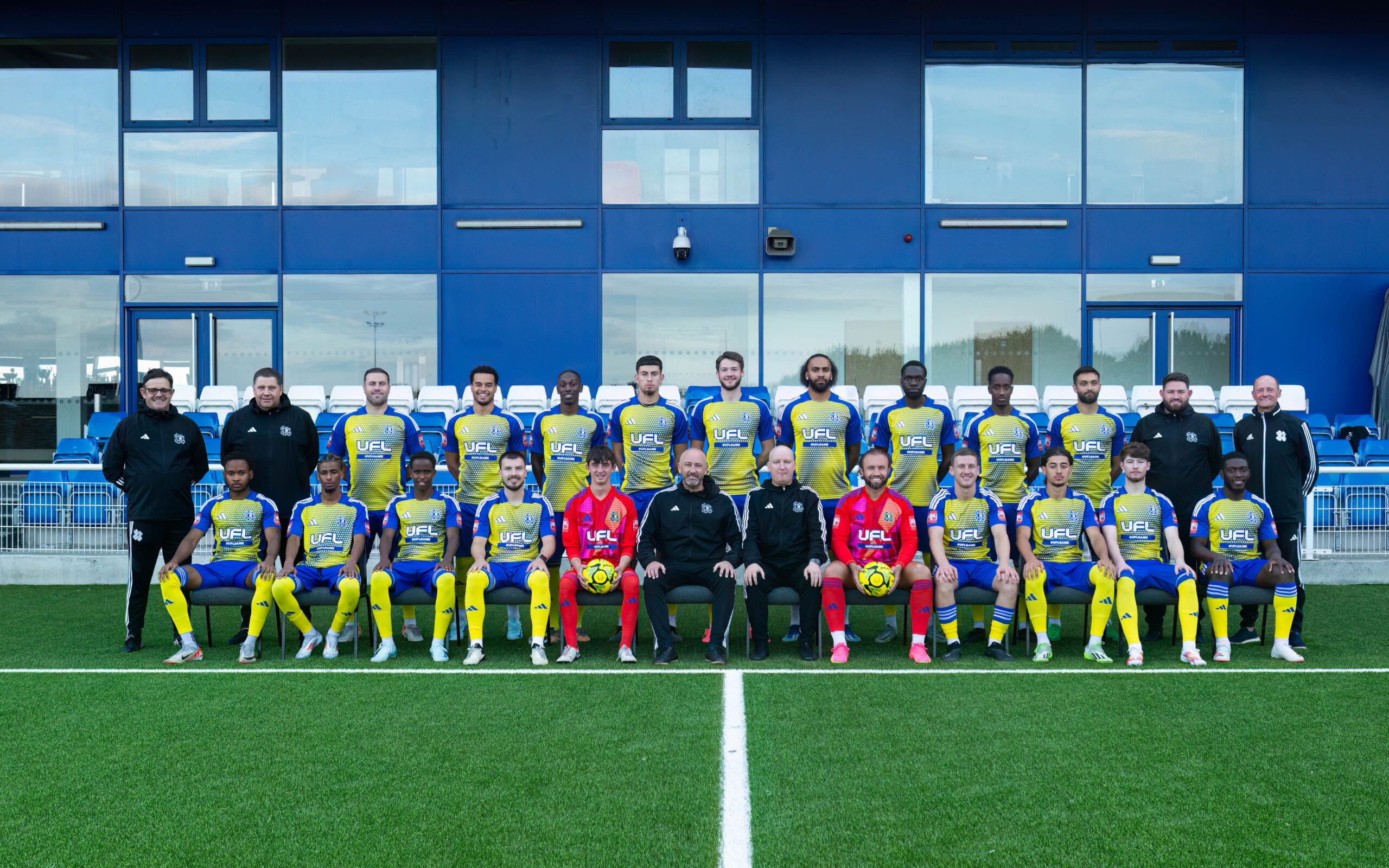
The “Product-Market Fit” was discovered almost by accident. The team owes its existence to another football team, Carmichael-Browns Athletic, which was set up by Spencer when still at school. When highlights of a memorial match for two of his former CBA players went viral in early 2016, Spencer realized there was a massive appetite for content that sat between the hyper-polished Premier League and the relatable reality of amateur football.
The story of Hashtag United’s journey
To solve the problem of “meaningless” friendly matches, Hashtag United introduced its first major product feature: The Levels System. Inspired by the progression mechanics of the FIFA video game series, the team had points targets for sets of games. Meeting the target unlocked rewards like budget increases or kit upgrades. By introducing a fictional antagonist, called “The Chairman”, to issue these challenges, they turned a standard sports broadcast into a live-action management simulation.
Gamified Retention: Using video game mechanics (like the “Levels System”) to create stakes in otherwise exhibition-style products.
Capitalizing on Narrative Decay: The “Transfer Window” Shift
Spencer and his team were incredibly smart in identifying a vacuum in the football media landscape.
For decades, the transfer window (or, as we call in Spanish, “el mercado de pases”) was a televised event, which became a high-stakes broadcast spectacle on Sky Sports. However, as the news cycle shifted almost entirely to real-time platforms like X/Twitter (driven by insiders like Fabrizio Romano), the traditional televised format lost its utility.
Hashtag United recognized this narrative reframing. They realized that while the news moved to social media, the tension and the human drama of recruitment were still highly valuable. They filled this gap with the Hashtag Academy. By turning their own recruitment into a reality-style event, they captured the engagement that the old broadcast models dropped. They didn’t just report news, they created a proprietary narrative that fans could follow from trial to signing.
Narrative Reframing: While the subject (the transfer window or Sunday League) stays the same, the frame has changed through which the audience views it to create entirely new value.
The Sunday League “Hero’s Journey”
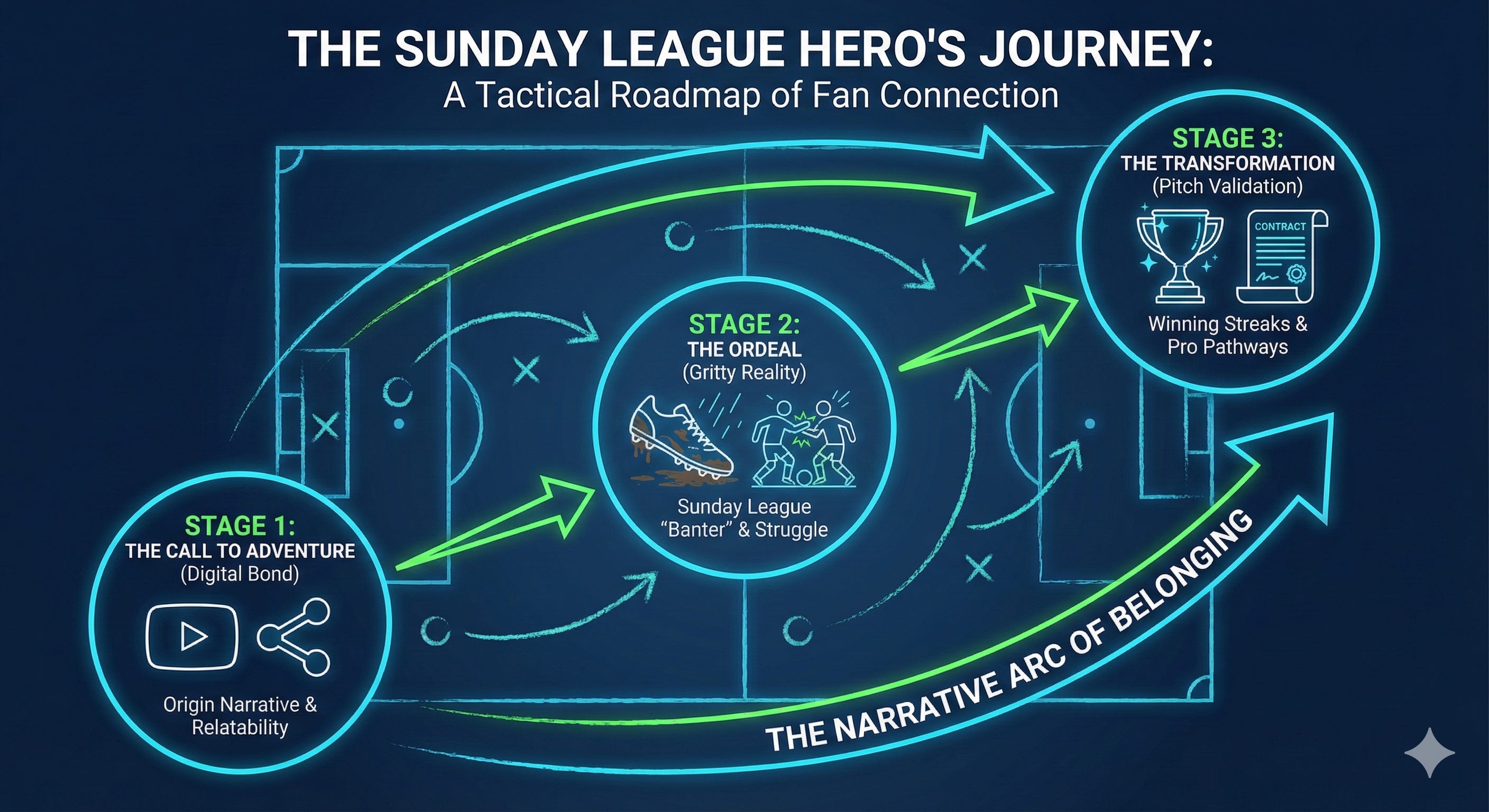
To understand why clubs like Hashtag United or SE Dons (with a similar business model) resonate so deeply, we have to look at the Hero’s Journey, a fundamental storytelling framework that remains the most powerful asset in sports marketing.
Unlike the professional elite, Sunday League content is built on relatability. This is the core of their “product” appeal:
The Call to Adventure: A group of creators stepping onto a muddy pitch to build something from zero.
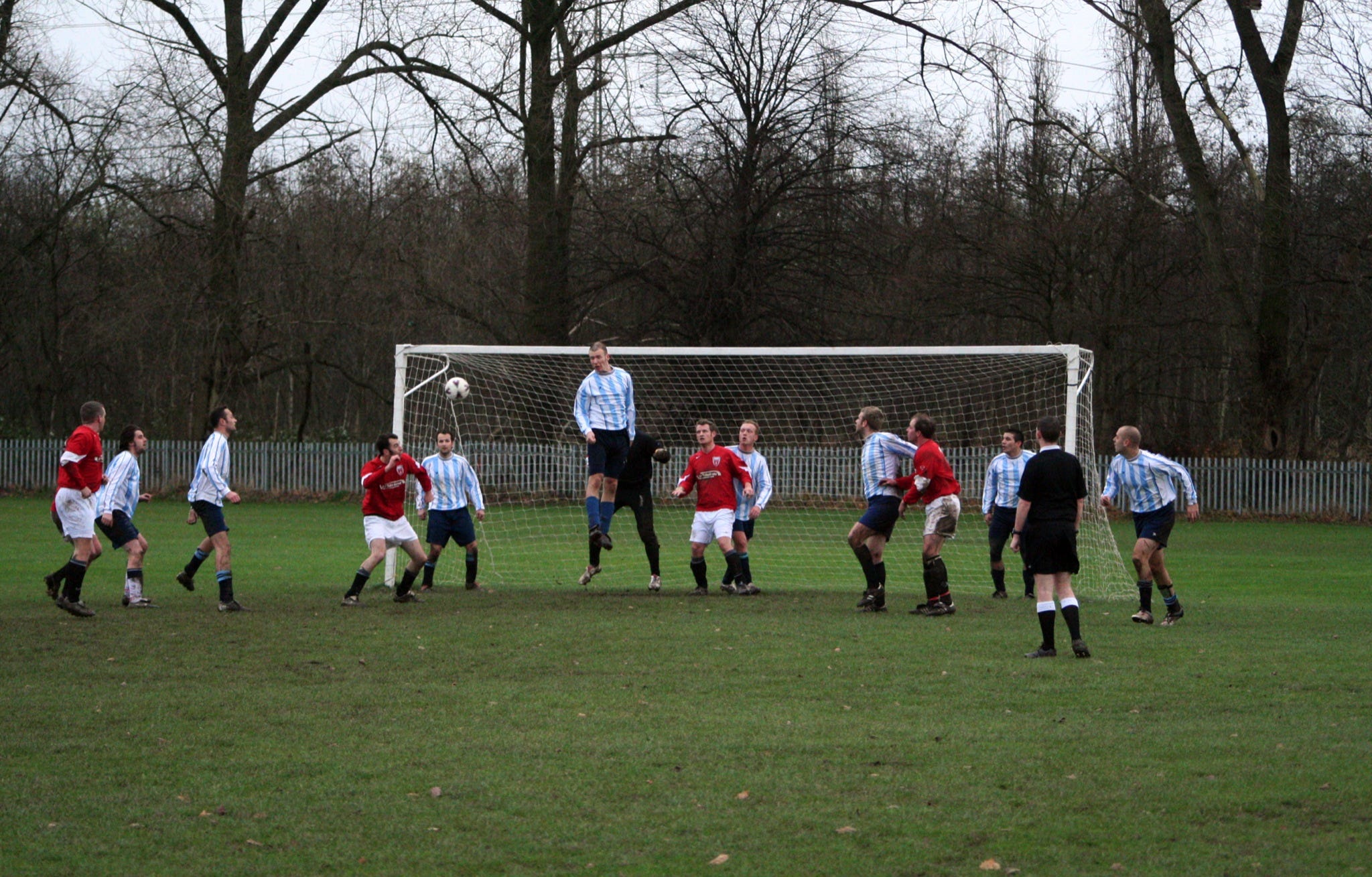
The Ordeal: Facing the raw, gritty reality of the lower-tier pyramid (aggressive tackles, muddy pitches, and referee arguments).
The Transformation: Seeing a player move from a trial video to a semi-professional winning streak (like the 21-match streak Hashtag achieved in 22/23).
By emphasizing the struggle and the banter, they invite the audience to participate in an odyssey they can actually see themselves in.
Strategic Scope: Proximity Over Spectacle
I want to clarify that my focus here isn’t on “celebrity-based” leagues like the Kings League. While those are successful entertainment products, the Creator Club is different because it maintains proximity to the game. The goal for these founders isn’t to change the rules of football, but to renovate the fan engagement model. They leverage the tribal loyalty of platform-native fan bases and apply it to the traditional pyramid structure. This model is more meritorious because it builds a club’s DNA from the ground up, proving that the sense of belonging can be forged through a screen just as effectively as it was once forged in a local pub.
Beyond the Screen: The Reality of Scaling
Scaling digital-first communities into the physical world isn’t without its risks:
Gimmick Fatigue: Can the “Levels System” and digital storytelling survive the grind of mid-table results once the initial “Hero’s Journey” reaches its peak?
The Scaling Ceiling: Success in the 7th tier is relatively inexpensive. Competing with state-funded clubs at the top tier requires a capital structure that “Ad-Revenue” alone cannot support.
Note: Two days ago, the Tags announced a move to East London for next season to share Redbridge’s Techsoc.Com Stadium—a strategic step toward finding a long-term home.
Platform Dependency: These clubs are built on third-party algorithms. A shift in YouTube’s monetization or audience behavior is an existential threat.
Conclusion: From Spectators to Protagonists
The Creator Club isn't just a trend; it's a shift in how we belong. It proves that digital-first communities are the new foundation of sports. Today, the community comes before the kick-off, and the match itself is just the moment the story comes to life.
We don’t just follow teams anymore. We follow the narratives that make us feel part of something bigger.
If you found this analysis valuable, subscribe to Off-Ball Logic. Every week, from now on, we’ll continue to deconstruct the hidden business mechanics behind the world’s most iconic sports brands.
Coming Next Week: We move off the pitch to explore The “Drive to Survive” Effect. Can other sports truly replicate the F1 blueprint, or was it a marketing lightning strike that can’t be bottled twice?
Speak soon,
Carla | Off-Ball Logic
Great story, Carla! Could be interesting to see how other fans try to borrow this model and/or find some form of funding for it outside the third party