

The Manchester United Brand Conundrum
Why Sir Jim Ratcliffe’s polarizing political stance puts the club’s brand safety and diverse ICP at a strategic crossroads.

Hi everyone! I’m Carla, and this is Off-Ball Logic, the weekly newsletter where we step away from the 90 minutes on the pitch to dissect the business strategies, marketing mechanics, and economic engines that are really driving the modern sports world.
Subscribe to get it in your inbox:

Today we’re talking about a hot topic that has dominated international football over the past few weeks. Recent comments by Manchester United chairman Sir Jim Ratcliffe have sparked a firestorm everywhere, from 10 Downing Street to the club’s own fan base.
Although the FA considers that this shouldn’t result in a punishment, this post is about the potential consequences. Before we start, I’m not going to dive deep into the social or political implications this might have, nor how it relates to Sir Jim’s management of Man Utd or his role at INEOS. There are already some amazing articles on those subjects, and I highly recommend checking them out:
1. The Staggering Hypocrisy of “Sir” Jim Ratcliffe by Josh Bland
2. Is Jim Ratcliffe right about the claims made at the interview? by Govy20
3. The Coloniser’s Lament by Ed Barker
My goal is to offer a different perspective by analyzing how Manchester United successfully established a premier brand within an emerging market, effectively identifying a definitive Ideal Customer Profile (ICP). Furthermore, I want to examine the critical risks involved when a brand’s external public image begins to erode its foundational identity.
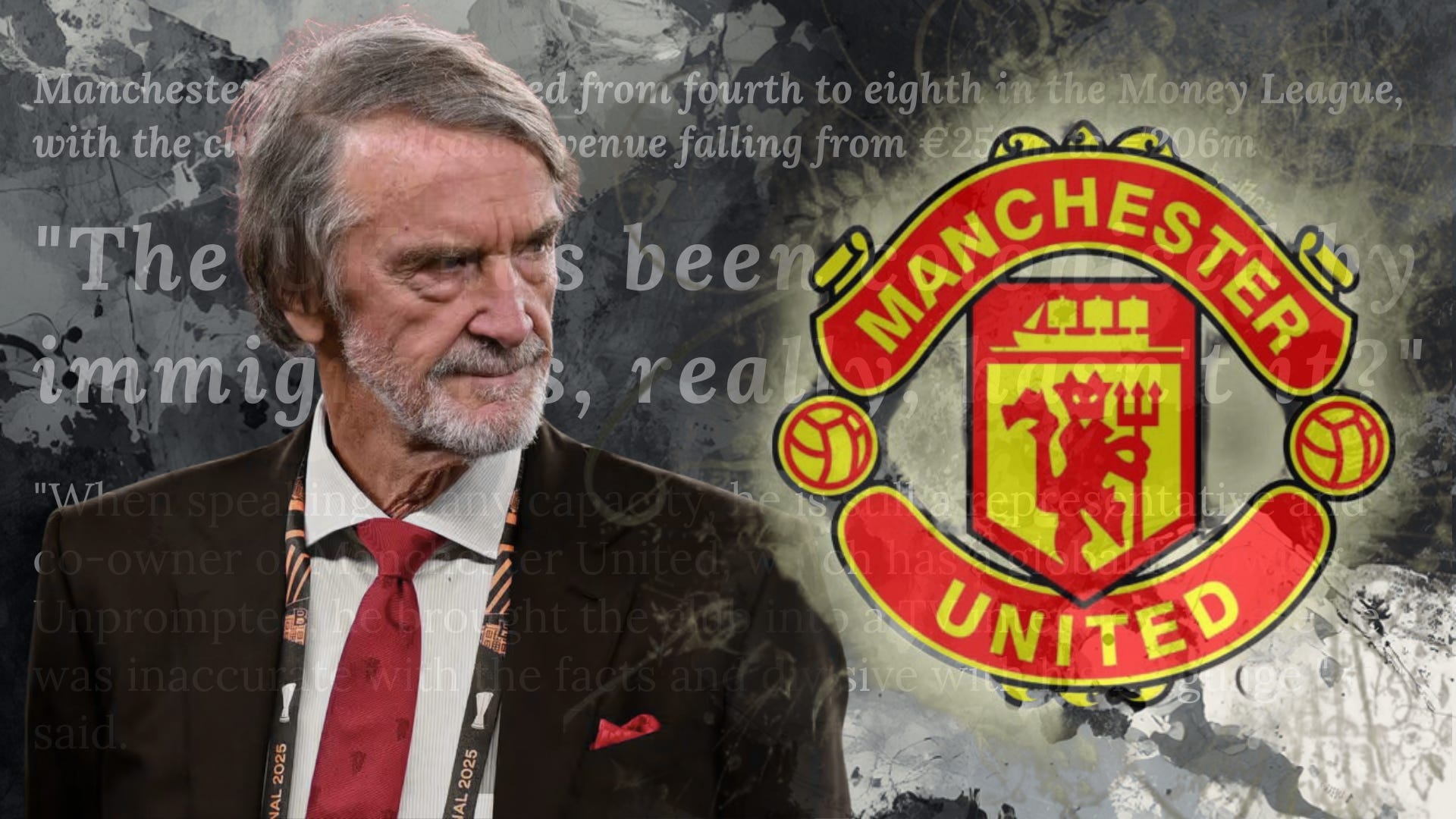
To be honest, this resonated with me personally. As a 14-year-old girl in Argentina, the Premier League was my first and only connection to football. Don’t get me wrong (I’ve been into football since I was little) but back in the early 2000s, football in Argentina was almost exclusively a man’s world. So, the PL and Man Utd specifically became my “football island” and my introduction to fandom.
Furthermore, and given my experience across various industries and my background in managing relationships with major stakeholders, I found it surprising that a businessman leading a club with such a diverse global reach and brand heritage would make these specific public declarations.
How Man Utd Became a Global Brand
To tell this story, I want to split it into two parts. First, we’ll look at how Manchester United evolved from a regional team into a leading global brand—a journey that peaked with Malcolm Glazer’s 2005 takeover. We will cover the second part (the post-Glazer era) afterward.
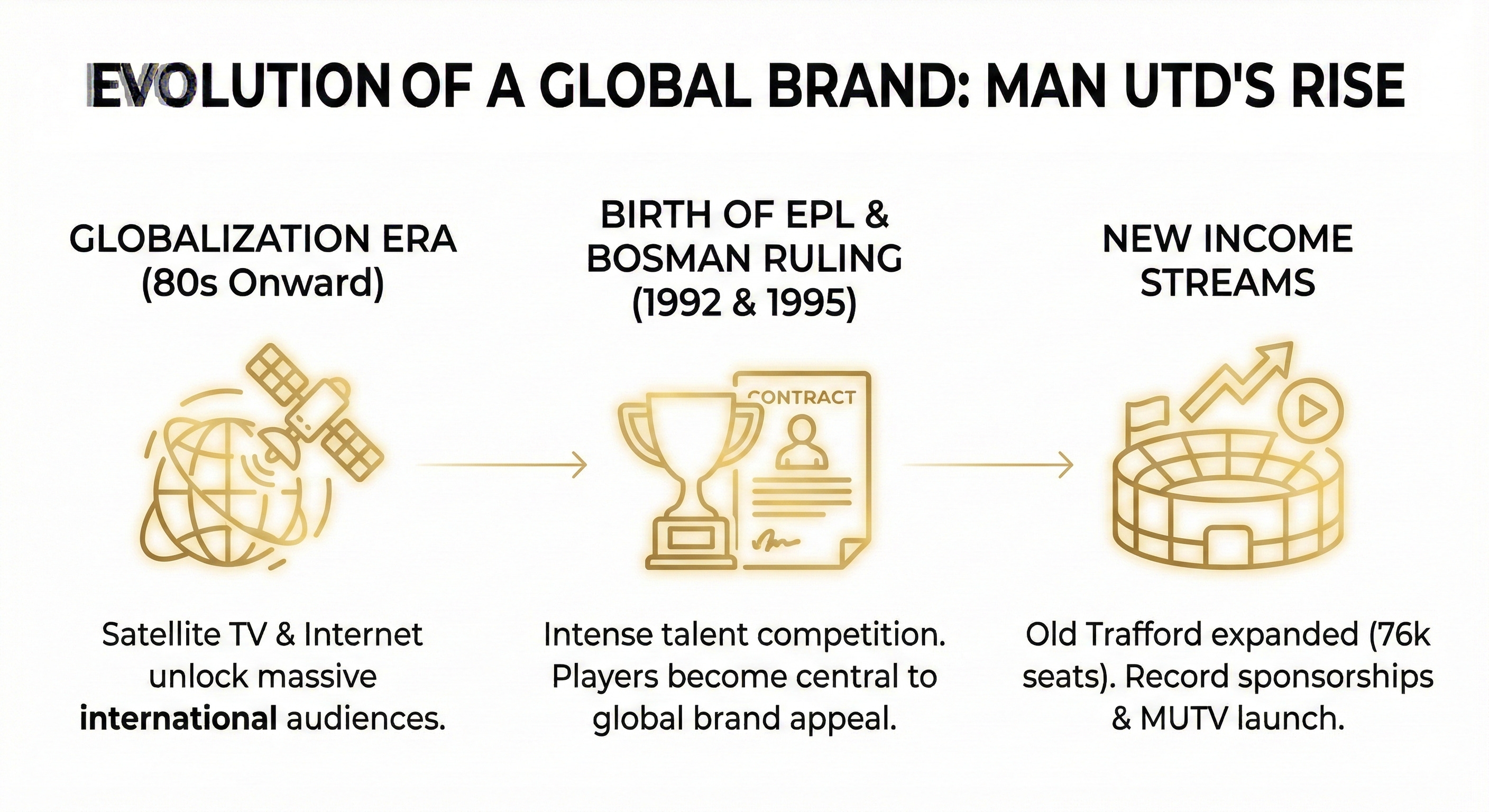
This early success came from balancing excellence on the pitch with aggressive, marketing-led management off it. While the club’s journey spans nearly 100 years, the club navigated massive shifts from the 80s onward1:
Globalization: Football benefited from satellite TV and the internet, allowing clubs to reach huge international audiences.
The Birth of the EPL & the Bosman Ruling: The 1992 creation of the Premier League and the 1995 Bosman Ruling (which allowed a player to leave a club on a free transfer as soon as his contract expired) created intense competition for talent. Players became central to the brand’s global appeal—more on that later.
New Income Streams: To offset rising costs, the club aggressively pursued new revenue. They expanded Old Trafford to nearly 76,000 seats and added executive suites, a museum, and a megastore. They also secured record-breaking sponsorships (like Vodafone, AIG, and Nike) and launched their own TV network, MUTV.
Dissecting Man Utd’s Brand Identity
Using Aaker’s Brand Identity Model, researchers categorize United’s strengths into four attributes2:
The Brand as Product: The club benefits from the simple, action-packed nature of football and the high quality of the EPL. It also has a “country of origin” advantage, as Britain is seen as the home of football.
The Brand as Organization: Defined by traditional values, like developing homegrown youth talent, mixed with the acquisition of global stars to maintain an exciting, cosmopolitan style of play.
The Brand as Person: The brand feels “youthful” and “exciting.” The club uses charismatic icons whose star power boosts the corporate image and grabs global media attention.
The Brand as Symbol: Visuals like the crest, the red shirts, the “Red Devils” nickname, and the “Theatre of Dreams” (Old Trafford) resonate globally.
This strategy kept Man Utd at the top of the Deloitte Football Money League for years. You can see more on that evolution here:

While winning is a prerequisite, the real differentiator was a proactive commercial strategy that turned passive fans into paying customers through global partnerships.
A critical takeaway is the club’s ability to maintain its core local identity—rooted in a working-class city and the development of local youth players—while simultaneously building a cosmopolitan roster of global superstars to appeal to international markets, and incorporating technology.
The ICP and How It Evolves
Definition: In a business context, an ICP is a categorical description of the type of customer who derives the most value from your product and, in turn, provides the most significant lifetime value to your brand. It’s the “perfect” customer that your marketing engine is built to serve.
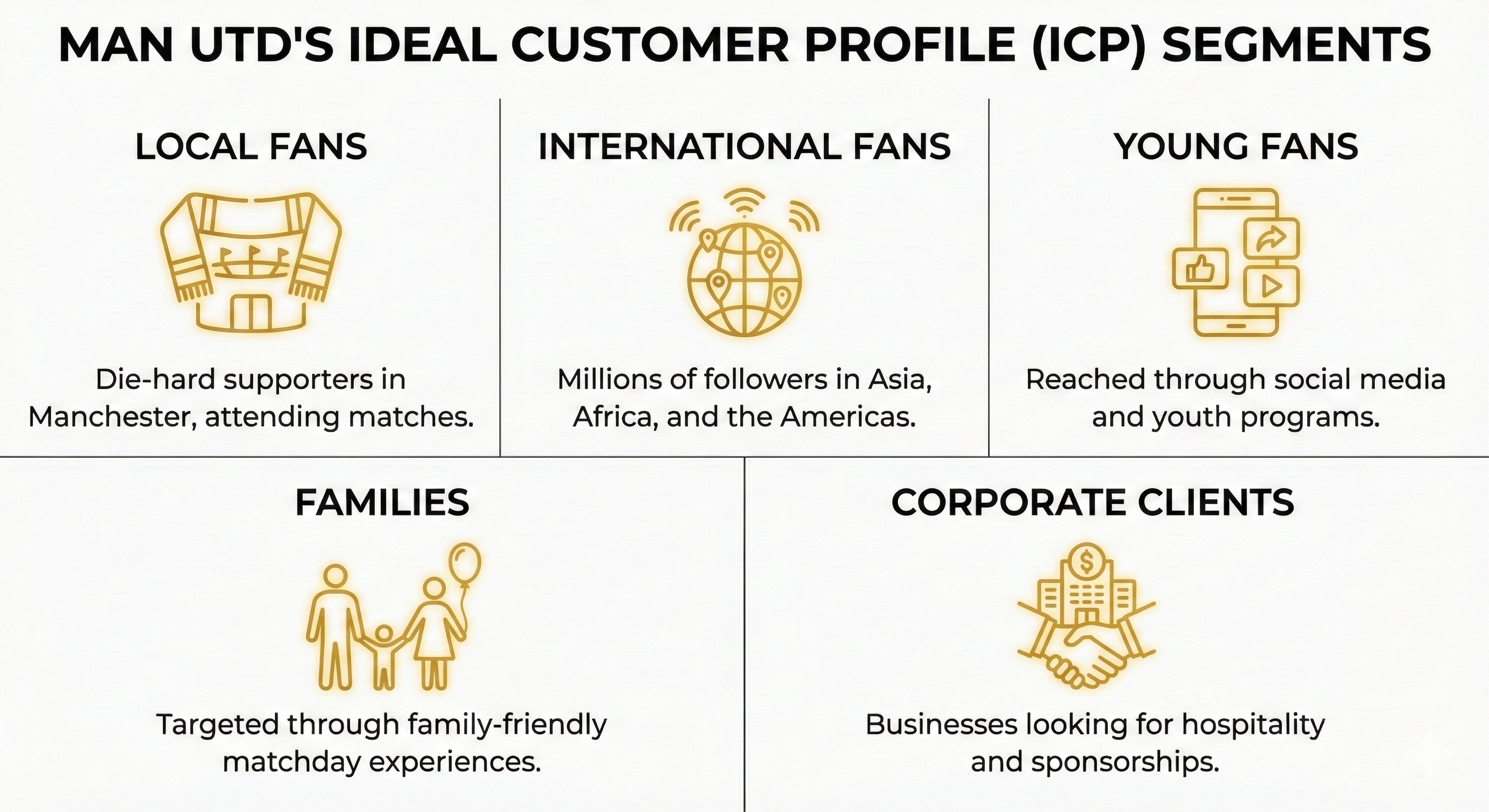
Regarding Man Utd, the club has a strong following among3:
Local Fans: Die-hard supporters in Manchester who attend matches.
International Fans: Millions of followers in Asia, Africa, and the Americas.
Young Fans: Reached through social media and youth programs.
Families: Targeted through family-friendly matchday experiences.
Corporate Clients: Businesses looking for hospitality and sponsorships.
What truly cemented Man Utd’s place within these diverse ICP segments was a unique blend of brand attributes that resonated far beyond the pitch. By anchoring the identity in loyalty, a storied history, and the grit of Manchester’s local culture, the club created a visceral sense of belonging. The “Manchester United way”—which combines the development of homegrown youth with the acquisition of international legends—allowed fans in both the Stretford End and Southeast Asia to feel like stakeholders in a shared legacy. It transformed a global brand into a personal identity.
According to YouGov4, Manchester United is among the top three most popular clubs in 47 markets, bested only by Liverpool (49 markets). They are the most popular PL club in the US (26% of sports fans support the team), Canada (36%), China (30%), India (38%), and Japan (32%). These might not all be “die-hard” fans, but they are consumers who identify with the brand.
The Role of the Players
Players are essentially heroes and inspirations. For a lot of people that are passionate about this sport, these players are like heroes, an inspiration to be followed. In July 2005, United signed South Korean player Park Ji-sung. This was a brilliant move: he was a talented player for Sir Alex Ferguson, but he was also a key marketing “bridge” to Asia. Even after retiring in 2014, he became a club ambassador in Asia5.
The team’s global popularity is built on a diverse roster of stars—from Park Ji-sung to icons like David Beckham, George Best, and Cristiano Ronaldo. Summer tours in the US, Australia, and Asia further strengthen this brand connection.
Maintaining Leadership Through Change
To stay relevant after the Glazer buyout and through the modernization of the 2000s, the club uses a sophisticated marketing mix6:
Product: Beyond the team, this includes jerseys and lifestyle gear. The iconic red jersey serves as a primary symbol of loyalty and belonging for an estimated 1.1 billion fans worldwide.
Pricing: They use premium pricing for season tickets but offer tiered pricing for merchandise so fans of all backgrounds can participate.
Global Outreach: Distribution is no longer limited to Old Trafford. The club utilizes a “think local, act global” approach, using pre-season tours in markets like the US, China, and Southeast Asia to bring the brand directly to international supporters.
Innovation: Promotion is driven by exclusivity and intimacy. This is achieved through dedicated platforms like MUTV and the Man Utd app, which provide behind-the-scenes content and player interactions that foster a sense of community.
These activities help Man Utd in keeping its presence globally. Additionally, the club has invested in localized content for different regions. For example, during the Lunar New Year, the club often shares special content celebrating the holiday, which not only honors their Asian fanbase but also strengthens their connection to the culture.
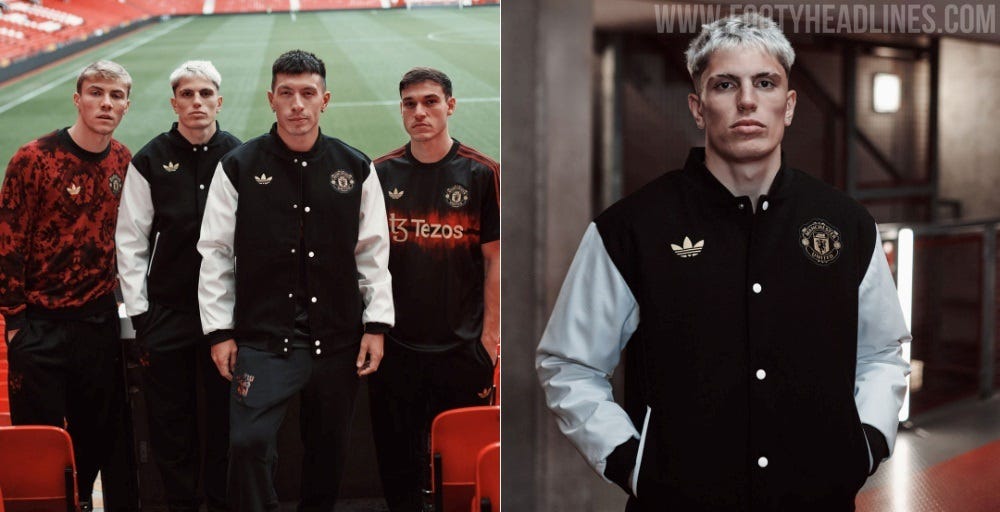
In a nutshell, combining tradition with innovation is how they stay on top.
How Brand Value Translates to Revenue
The club’s financial dominance directly influences three major streams (based on 2014-2025 data)7:
Commercial (50%): Sponsorships (Adidas, Snapdragon, etc.) and merchandising.
Broadcasting (26%): EPL and recent Europa League rights.
Matchday (24%): Tickets and the megastore.
A key differentiator for United is its regional sponsorship policy. Rather than selling rights to a single global partner, the club sells territory-specific deals (e.g., official partners in Asia). This maximizes revenue without diluting the brand, as these partners market the club aggressively within their own regions.
Why Words Matter
Despite this success, the brand faces headwinds in 2026:
Debt: Critics continue to highlight the burden of record-breaking debt, which has now spiraled past £749 million ($1 billion). While the original leveraged buyout debt remains, heavy borrowing to fund squad rebuilding and bridge the gap from missing European football has pushed the club's liabilities to their highest levels since 2005. This financial pressure raises critical questions about the club’s ability to self-fund the proposed £2 billion stadium regeneration without further external investment8.
Identity: There are growing concerns among fans regarding “identity sustainability” as the club relies on the legacy of past icons like Giggs and Scholes while navigating a modern era where on-field performance has fluctuated9.
Lack of on-pitch success: Beyond the immediate loss in European broadcast revenue, the club faces a long-term erosion of brand perception that even record-breaking commercial deals cannot fully offset.
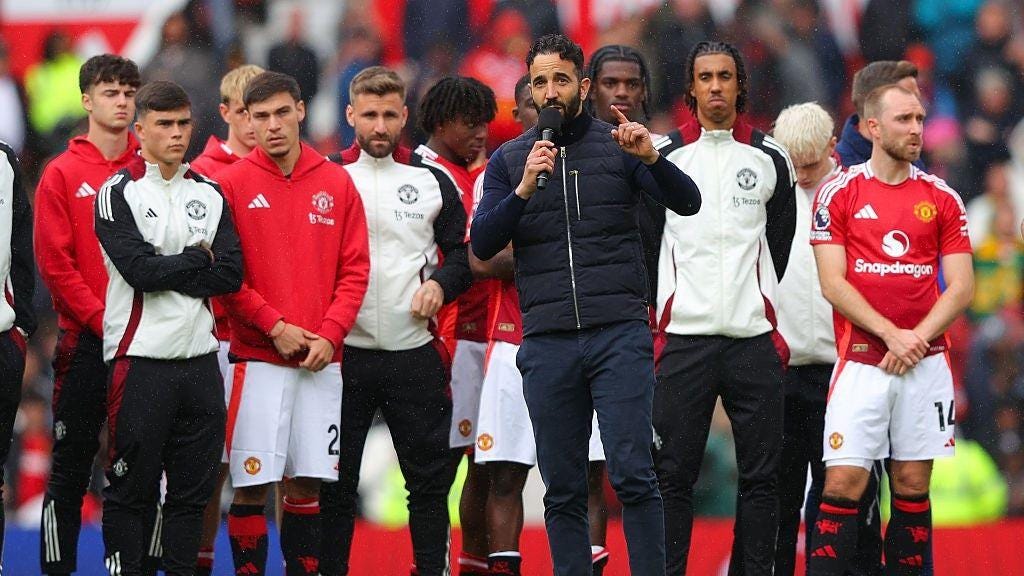
So, how do Sir Jim’s words affect things? The club is already in a tough spot, having slid four places to 8th in the Deloitte Money League, as the club reported total revenue of €793m for 2024/25 compared to €771m the prior year 10.
While commercial revenue is up, broadcast revenue dropped due to poor results. While the club reported a combined increase of €75m through matchday and commercial revenues, there was a year-on-year decrease of €52m in broadcast revenue due to on-pitch results.
Increased globalization and the professionalization of clubs in other European leagues mean they can now compete in the same regions where Man Utd was once dominant. Local players are now spread across more clubs; for example, if we look at the trajectory since Park Ji-sung, the landscape has shifted. Today’s top South Korean talent isn't just following a single path to one “mega-club”; they are making their mark across different leagues and cultures. Last but not least, African and Asian leagues are growing considerably and establishing their own brand presence.
Dissecting Sir Jim’s words and how they alienate a key business asset
According to ONS and OECD data for 2024 and 202511, the leading countries for long-term international migration to the UK include India, which remains the undisputed leader. Nigeria and the Philippines follow as vital pillars of the British social fabric. This architecture is rounded out by Pakistan and China.
As seen in YouGov (where in China and India the Red Devils are the most chosen club in the PL), we also have traffic data, where, according to searches — and close behind the UK (10.5% of traffic)—, are India and Indonesia, which both contribute 10.1% of the team’s total web search traffic. Other significant interest comes from Nigeria (8.2%), South Africa (6.9%), and the USA (4%)12.
If India, Nigeria, and China are the backbone of international interest, and these are the same regions where United is most popular, and these are also part of the main volume of migration — the object of Ratcliffe’s words, the question remains: If the “top man” at the club uses polarizing language regarding these demographics, is he jeopardizing years of global brand-building?
How can this affect the overall picture?
While these comments may not alienate the core fan base overnight—the bond of legacy and loyalty is too resilient for a single news cycle to break—it does signal a shift in the wrong direction. In sports marketing, the sense of belonging is the primary driver of value.
It is concerning when high-level leadership risks the inclusivity of a global brand by leaning into polarizing rhetoric. This creates a precedent that could eventually unsettle everyone from commercial stakeholders to future investors. In an era where the “Ideal Customer” is global, a brand’s language cannot afford to be exclusionary.
Sir Jim is betting that the “Red Devil” legacy is stronger than any press cycle. But in a 2026 market where fans have more choices than ever, is that a gamble worth taking?
What do you think? Is the brand moat shrinking, or is the sense of belonging too deep to break? Let’s discuss below.
Thank you for being part of this.
Carla | Off-Ball Logic
https://www.researchgate.net/profile/John-Hill-7/publication/293018236_Globalisation_and_sports_branding_the_case_of_Manchester_United/links/5cab655f4585157bd32abe7b/Globalisation-and-sports-branding-the-case-of-Manchester-United.pdf
https://www.researchgate.net/profile/John-Hill-7/publication/293018236_Globalisation_and_sports_branding_the_case_of_Manchester_United/links/5cab655f4585157bd32abe7b/Globalisation-and-sports-branding-the-case-of-Manchester-United.pdf
https://voymedia.com/manchester-united-marketing-strategy/#google_vignette
https://yougov.com/en-us/articles/47129-club-profile-measuring-the-worldwide-popularity-of-manchester-united
https://medium.com/@chrscaio/a-brand-analysis-manchester-united-fc-c41b707db5ae
https://www.firsttouchmarketing.co.uk/blog/manchester-united-marketing-strategy#:~:text=With%20regard%20to%20pricing%2C%20Manchester,exclusive%27%20content%20for%20its%20fans
https://medium.com/@chrscaio/a-brand-analysis-manchester-united-fc-c41b707db5ae
https://www.insideworldfootball.com/2025/12/12/man-utds-first-quarter-financials-reports-debt-spiralling-past-1bn/#:~:text=With%20an%20additional%20%C2%A3105,by%20the%20Glazers’%20dividend%20policies.
https://myzon.wordpress.com/2012/05/19/decode-manchester-united-brand-phenomenon/
https://www.deloitte.com/uk/en/services/consulting-financial/analysis/deloitte-football-money-league.html
https://www.ons.gov.uk/peoplepopulationandcommunity/populationandmigration/internationalmigration/bulletins/longterminternationalmigrationprovisional/yearendingjune2025 and https://www.oecd.org/en/publications/international-migration-outlook-2025_ae26c893-en.html
https://hypersetgroup.com/how-big-is-manchester-uniteds-global-fanbase/
Lovely read! So many factors to consider, but Man Utd have become the perfect case study in how to destroy your brand reputation as quickly as possible. For so long, they were the standard-bearers for the Premier League and have slipped pretty far down the road of dysfunction.
Really great article! Love the way you looked at how important the Indonesian, Nigerian and Indian markets are to United’s global presence. As a United fan myself, there’s no Man United without these global fanbases. Makes Ratcliffe’s comments look even more ludicrous.