

The Rivalry Premium: Why the World’s Most Important Football Match Refuses to Be a Global Product
On the eve of Superclásico #266, a commercial analysis of two brands too deeply rooted to compromise.

Hi everyone! I’m Carla, and this is Off-Ball Logic, the weekly newsletter where we step away from the 90 minutes on the pitch to dissect the business strategies, marketing mechanics, and economic engines that are really driving the modern sports world.

In November 2025, a couple of tourists in Buenos Aires tried to buy tickets to the Superclásico. They couldn’t.
Not because the game was sold out or the prices were too high—although they are steep, with secondary market packages running between $345 and $2,500 USD. The real reason is a highly restrictive ticketing system that has been locked inside club memberships for years. There is no general sale, no tourist window, and no away fans (a policy implemented in the Argentine football ecosystem years ago).
At this point, you might wonder why this is relevant for modern football. The reason is that the “Superclásico” gathers thousands of fans and attracts the interest of tourists worldwide, becoming a brand in itself for football lovers. FourFourTwo magazine once called it the most important derby in the history of football. And yet, the most globally acclaimed football fixture is simultaneously the least globally accessible.
In today’s post, we are going to dissect:
why the system is designed the way it is
why it’s so restrictive for locals as well as tourists
how it became a brand in its own right, and
how it differs from other derby models.
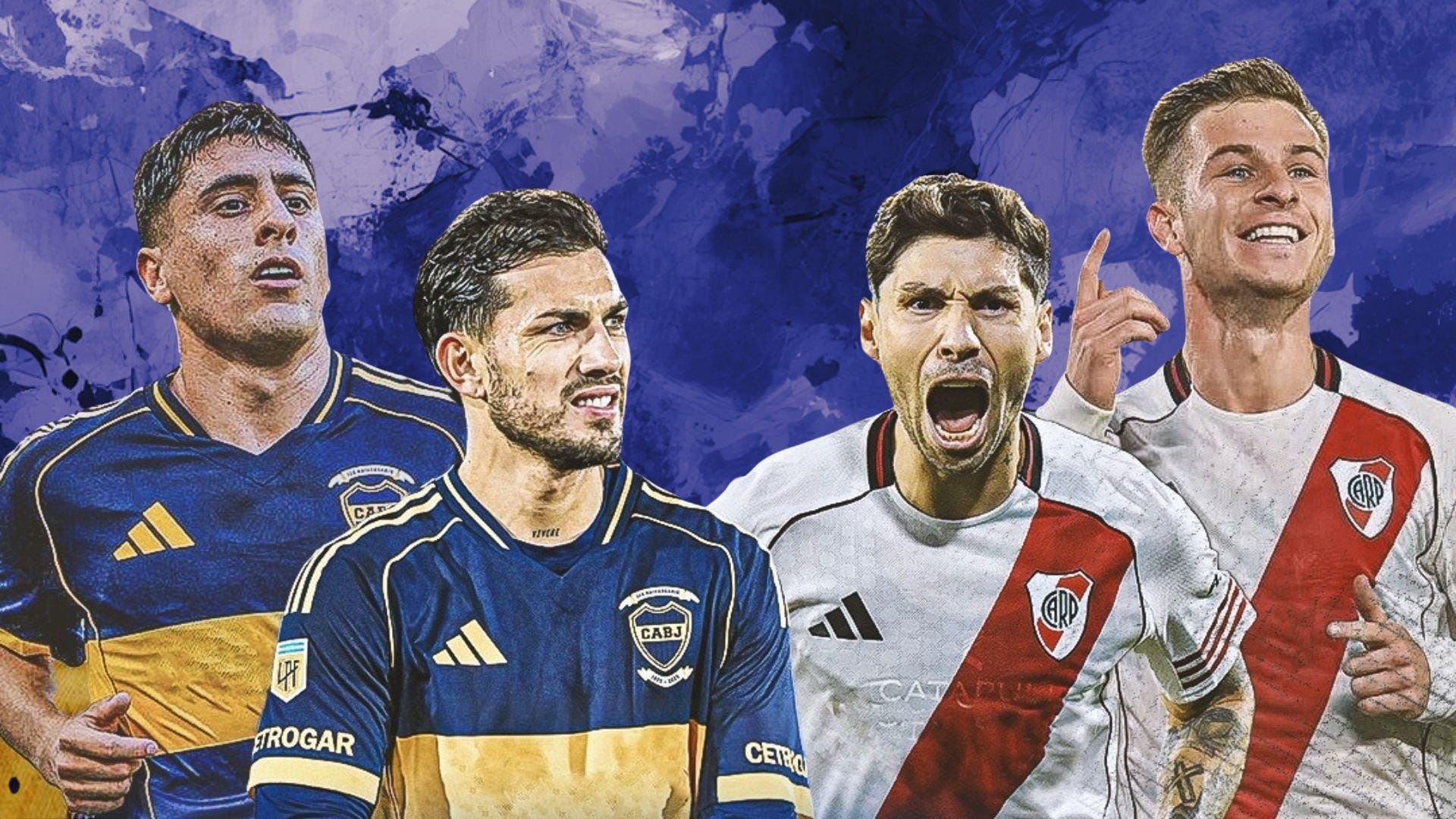
Opposite Brands, Shared History
To understand the Superclásico commercially, you have to understand that Boca Juniors and River Plate are not partners in a shared enterprise.
Boca Juniors was founded in the working-class docklands, and by staying in the neighborhood, it claimed the emotional monopoly on that identity. The club has famously resisted every proposal to leave La Bombonera, despite financial projections suggesting a new stadium would unlock massive revenue. Its brand equity—including its trademarked blue and yellow colors—is built entirely on cultural heritage and its physical tie to the port of Buenos Aires, not commercial engineering.
River Plate is the establishment counterpoint. Nicknamed Los Millonarios, they moved from the port to the affluent suburb of Belgrano, adopting a “Premium Aspirational” persona. This identity is physically embodied in their home: the Más Monumental. Backed by a $100 million international loan and a $110 million deal with Live Nation, the stadium expanded to 85,000 seats (more on that here).

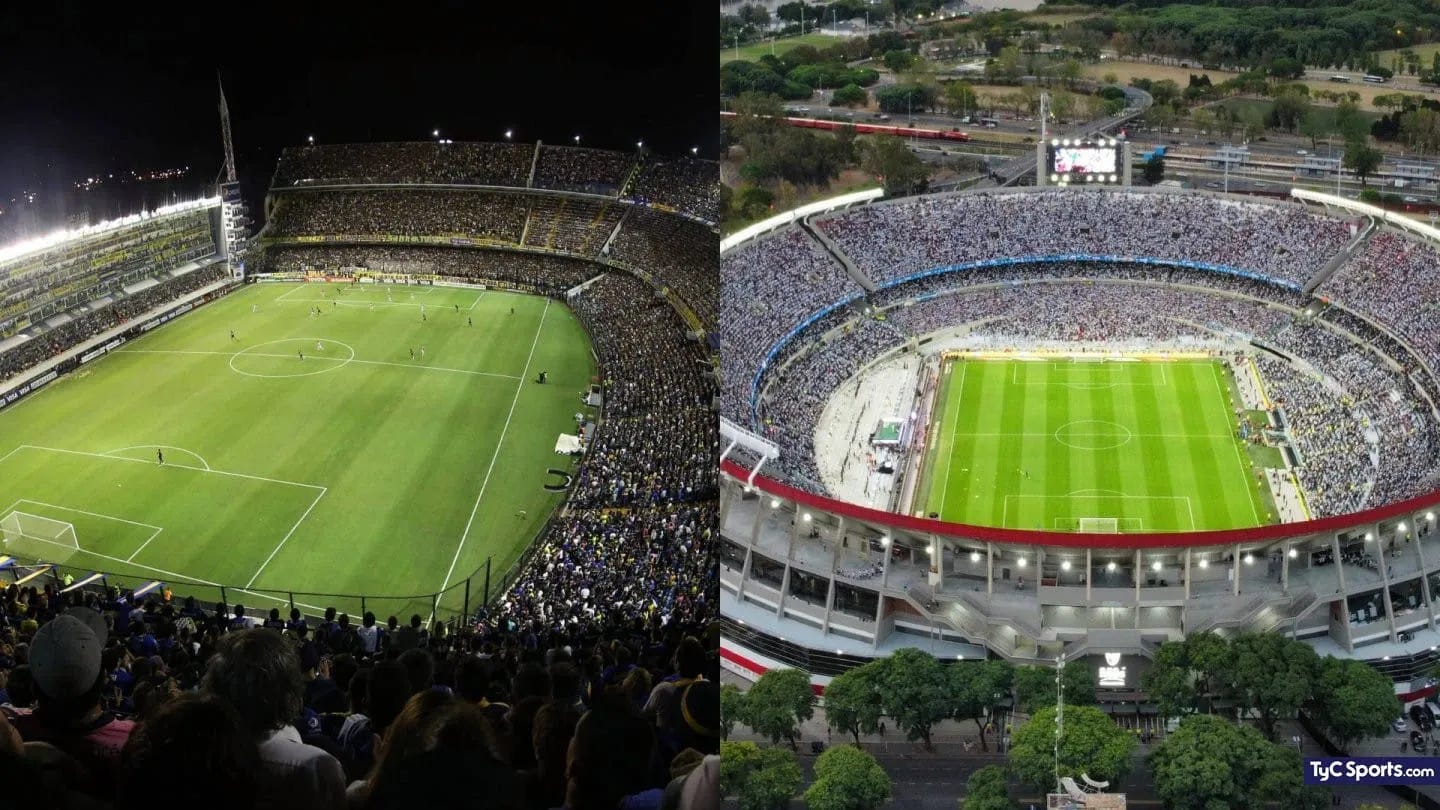
It now operates with more commercial flexibility, hosting its usual rotation of national team fixtures and major international concerts alongside club matches.
These are two entirely different commercial philosophies. And both clubs communicate their brands in very distinctive ways:
Boca Juniors usually appeals to identity, history, and legacy.
River appeals to growth, infrastructure, and institutions.
If you want to deep dive into how brand equity and infrastructure differ, you can read:

The Commercial Value of Conflict
Although both are strong individual brands, when they collide, their historic rivalry and diametrically opposed identities make them even stronger.
Consider the “Old Firm” derby between Celtic and Rangers. Individually, they operate in a constrained Scottish market. Yet, combined, their rivalry generates roughly 40% of the Scottish Premiership broadcast value, acting as the sole anchor of the league’s TV contracts. Like the Old Firm, the Superclásico’s massive commercial multiplier emerges strictly from opposition, not collaboration.

To assert that the Superclásico is the “most important” match in world football relies entirely on an anthropological and cultural metric rather than a conventional, spreadsheet-driven commercial one.
Dominating the Local Market
Domestically, the “Rivalry Premium” is massive. Argentine broadcast rights are built on the “Pack Fútbol” model—a joint venture between ESPN Premium and TNT Sports. To watch, fans pay a monthly surcharge of roughly $14 USD on top of their standard cable bill. It’s a steep entry price, yet the current deal is locked in through 2031.
But even within this ecosystem, the Superclásico exists in its own commercial stratosphere. For Superclásico #266 this Sunday, April 19, the match will be uniquely simulcast across both networks. This is a move to capture every possible set of eyes in the country, cementing the match as the undisputed peak of the sporting calendar.
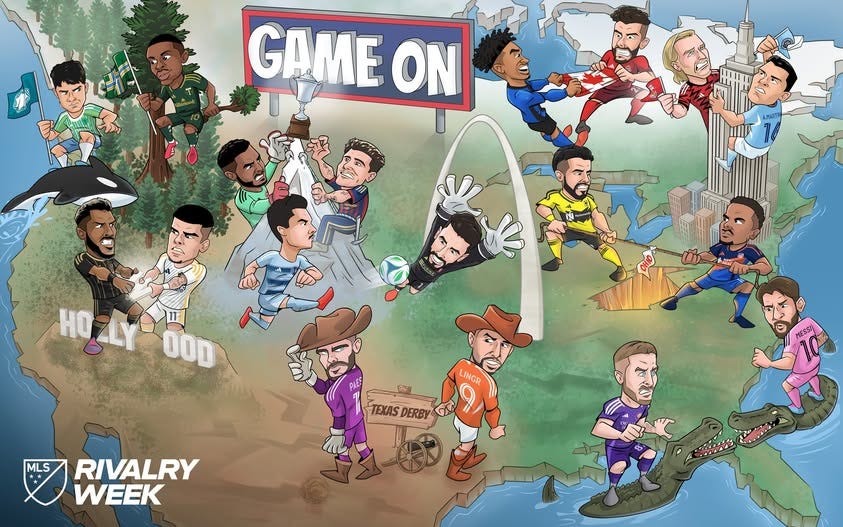
The league even cleared the schedule to protect this value. A few years ago, Argentina experimented with a “Rivalry Week” similar to the MLS, grouping all derbies into a single weekend. But the Superclásico is so dominant that it effectively “starved” the other matches of attention. Now, the fixture gets its own exclusive matchday, ensuring the brand isn’t diluted by local competition.
However, this is where the FourFourTwo “most important match” label hits a wall. While the passion is unparalleled, the revenue isn’t. The English Premier League generates over $16 billion per cycle through global distribution. By comparison, the Argentine Liga Profesional—distributed via niche platforms like Fanatiz and Paramount+—remains a fraction of that size.
The Superclásico is the ultimate proof that brand equity and cash flow are two very different things. It is a domestic giant that is, by design, almost impossible to export.
A Global Icon with a Local Problem
The Superclásico’s “importance” is, therefore, a pure measure of raw brand equity and cultural depth. It drives irrational consumer demand locally, but lacks the international commercial infrastructure to be fully monetized globally.
To understand the Superclásico’s unique weight, we have to look at how its “exportability” compares to other global rivalries:
El Clásico (Spain): The ultimate hyper-globalized model. Real Madrid and Barcelona took their historic political friction and built an unparalleled international infrastructure around it. By prioritizing Asian kick-off times and global marketing tours, they gained massive reach—but critics argue they’ve sacrificed a degree of authentic local hostility to become more accessible to the international consumer.
MLS Rivalry Week: The US major league attempts to engineer rivalry value through manufactured initiatives like “Rivalry Week.” While some derbies generate strong localized engagement and admirable stadium aesthetics, many others don’t reflect the kind of historical rivalries better seen in other American sports like the NFL or the NBA.
Thanks to Carla Espinal , Fox in the Box FC , Jon Lane , David Shams and Jonathan Allen Ebert for engaging with this note and providing more context on how this rivalry plays out in real life!
The Cairo Derby (Egypt): This is the closest structural equivalent. Like Boca and River, Al Ahly and Zamalek completely monopolize their domestic landscape. Al Ahly is a commercial juggernaut with 51 million social followers and $21 million in annual revenue from elite memberships. Yet, like the Superclásico, it faces a severe export problem: its soul is so tied to specific local socio-political narratives that it’s difficult to package for a Western or Asian audience.
The pattern holds everywhere: Rivalry value is highest where local identity runs deepest—and it’s hardest to export for exactly the same reason.
The terrifying intensity that makes the Superclásico so visually spectacular is entirely dependent on an audience that views the match as a matter of cultural life and death.
It is inherently tied to the global history of football, which is dominated by Europe but deeply rooted in South America.
But going back to the topic at the beginning:
Why can’t they get in?
The tourist cannot gain entry because the product has been engineered—partially by club design, partially by socio-political necessity—to be the most exclusive, inaccessible sporting event on earth.
The Ban That Shaped the Spectacle
I previously mentioned that “no away fans” are allowed in the Superclásico, but this is actually a general measure across the league. Following a horrific, decades-long escalation of stadium violence that culminated in the tragic shooting death of Lanús supporter Javier Gerez in June 2013, the Argentine Football Association (AFA) and national security ministries enacted a comprehensive and severe restriction on away fans for all league fixtures nationwide.
Recently the AFA announced a highly publicized, controlled rollout to test the gradual return of visiting fans. However, the security apparatus of Buenos Aires City explicitly excluded high-risk capital derbies from this initial phase. (This conflict between the Argentine political landscape and football dynamics also demands its own separate post!)
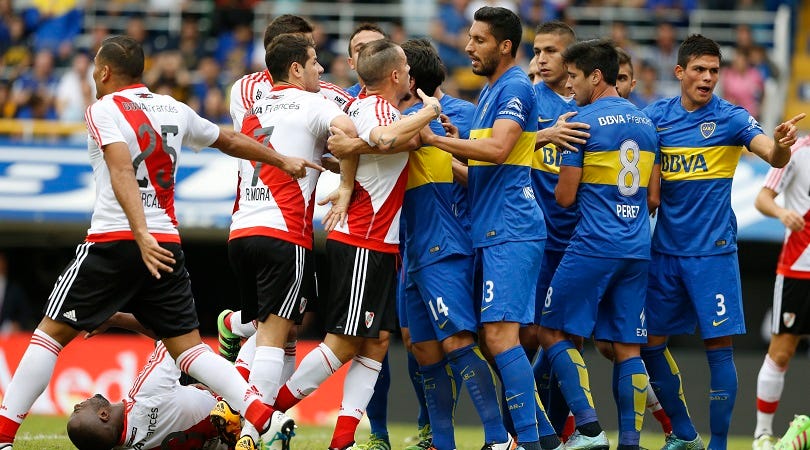
Consequently, the upcoming Superclásico remains a strictly monocultural environment: 85,000 seats draped entirely in the red and white of River Plate, without a single Boca Juniors supporter permitted inside the stadium perimeter.
The ban on visiting fans was a response to tragedy, and it’s understandable. The resulting atmosphere—the deafening wall of noise, the synchronized hostility, the visual sea of a single color cascading down the steep stands—is utterly unlike any neutral, corporate, or dual-fanbase environment found in other major tournaments.
The Physics of Scarcity
Because primary ticketing for the Superclásico is entirely absorbed by the clubs’ vast, tiered membership and season-ticket hierarchies, the casual consumer is structurally and legally excluded.
River Plate utilizes a rigid pre-sale system prioritizing season ticket holders, followed by members of the “Somos River” community, before any theoretical (and virtually non-existent) general sale occurs. Boca Juniors, conversely, operates an even more exclusive system with an eight-to-twelve-year waiting list just to achieve official “socio” status to qualify for a ticket lottery.
This clearly impacts secondary market pricing: both fans of the home team and tourists are competing for access. I’ve heard of locals spending $500 to see the match in an economy where the average gross monthly wage is between $1,000 and $2,000.
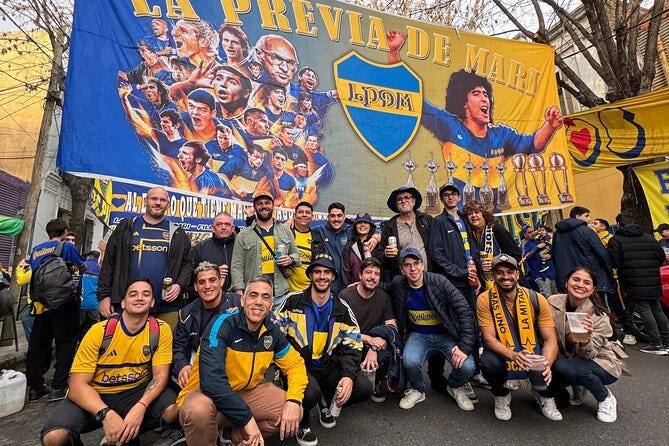
For the international tourist, the only viable route into the stadium is through this secondary market, which operates largely through specialized local agencies offering premium “hospitality packages.” These packages—which conveniently bundle the match ticket with pre-game city tours, bilingual guides, transportation logistics, and security details—routinely reach astronomical multiples of the ticket’s original face value, commanding prices to nearly $800 USD per person.
The extreme scarcity here is not artificially manufactured via software algorithms, but is the natural, organic result of a cultural ecosystem that literally has no physical or philosophical room for the casual observer.
The Bottom Line
FourFourTwo called this the most important match in football history. Under a global commercial lens, that claim doesn’t hold. The Superclásico lacks the broadcast architecture, the frictionless ticketing, and the international infrastructure of the Premier League or the Champions League.
But the final analysis of the Superclásico lands on a brilliant, enduring commercial paradox. The fixture’s most commercially significant feature—the sheer magnitude of its Rivalry Premium—exists precisely because it has never been designed to be commercially significant to outsiders. In the push to become accessible global brands, many historic rivalries—from Spain to England, to the United States—have traded some of their local friction for a more frictionless international appeal.
This one is different.
Anchored by a working-class club that stubbornly refuses to sell its stadium’s soul or its naming rights, and an establishment club that leverages hundreds of millions in infrastructure debt from within its own borders to dominate the continent, the Superclásico is still deciding whether it actually wants to be a global product at all.
And in that steadfast refusal to compromise its identity for the sake of international export, it retains a raw, unadulterated brand value that no amount of global commercial engineering could ever replicate or buy.
What do you think? Let’s discuss below.
Thank you for being part of this journey!
Carla | Off-Ball Logic
Great post Carla. Here’s my take. From the outside, this appears to be a case of This is our derby and it is ‘not for sale’.
Culture appears to be more important than commercial opportunity, and the authorities should be commended for that.
To put this into some kind of context, The English FA moved the FA Cup semi finals from the historic neutral grounds of Hillsborough, Villa Park and Highbury to Wembley stadium.
This was so well written. I have always wanted to go to the Superclásico, but it sounds like it would be extremely difficult. With that being said, I'm appreciative that the tickets are pretty much limited to the fans of the teams. So much of soccer (futbol) has been over-commercialized and overpriced.