

The Celebrity Equity Effect: When the Star is the Sponsor
How Sheeran, the Gallaghers, Elton, Robbie, and Reynolds are rewriting the commercial playbook for small-to-mid-market football clubs.

Hi everyone!
A League Two club outperforms Championship rivals in sponsorship revenue. A promoted Premier League side sells more replica shirts than clubs with decades of top-flight history. A team from Stoke-on-Trent becomes an international cult brand without spending a penny on marketing. None of these developments were possible even a few years ago, yet they are all unfolding now for very similar reasons
Celebrity partnerships in football are nothing new. But what’s being built in 2026 is strategically and structurally different from the old days of a quick photo op and a novelty shirt. Today, musicians and cultural figures are functioning as literal commercial infrastructure for clubs that otherwise have no realistic path to global brand relevance.
As we covered in our Man Utd edition, the attention economy rewards authenticity above almost everything else. The clubs that understand this are using celebrity relationships as a strategic bypass around the traditional gatekeepers of commercial football.
Here are five deals that look nothing alike—but point in exactly the same direction.
Welcome to Off-Ball Logic, the weekly newsletter where we step away from the 90 minutes on the pitch to dissect the business strategies, marketing mechanics, and economic engines that are really driving the modern sports world.

The Multiplier: Ed Sheeran and Ipswich Town
Ed Sheeran’s relationship with Ipswich Town is the most quantifiable celebrity-club partnership in modern football — which makes it the most instructive. Most celebrity deals in sport are commercially opaque. The Sheeran–Ipswich model is not.
Ed didn’t attach his name to the stadium. He integrated his own commercial machine directly into the club’s fabric: a 1.4% equity stake, front-of-shirt sponsorship tied to the Mathematics Tour, and direct creative input on the product.
The results during their Premier League return speak for themselves:
100,000+ replica shirts sold: A figure that rivals established top-flight clubs and is virtually unheard of for a newly promoted side.
The lifestyle crossover: The pink third kit, designed with Sheeran’s direct input, crossed over from sports equipment into lifestyle apparel — a category shift most clubs spend years trying to engineer.1
Commercial independence: Fueled by this massive retail success, the club announced it will move entirely away from gambling sponsors once the deal expires.2
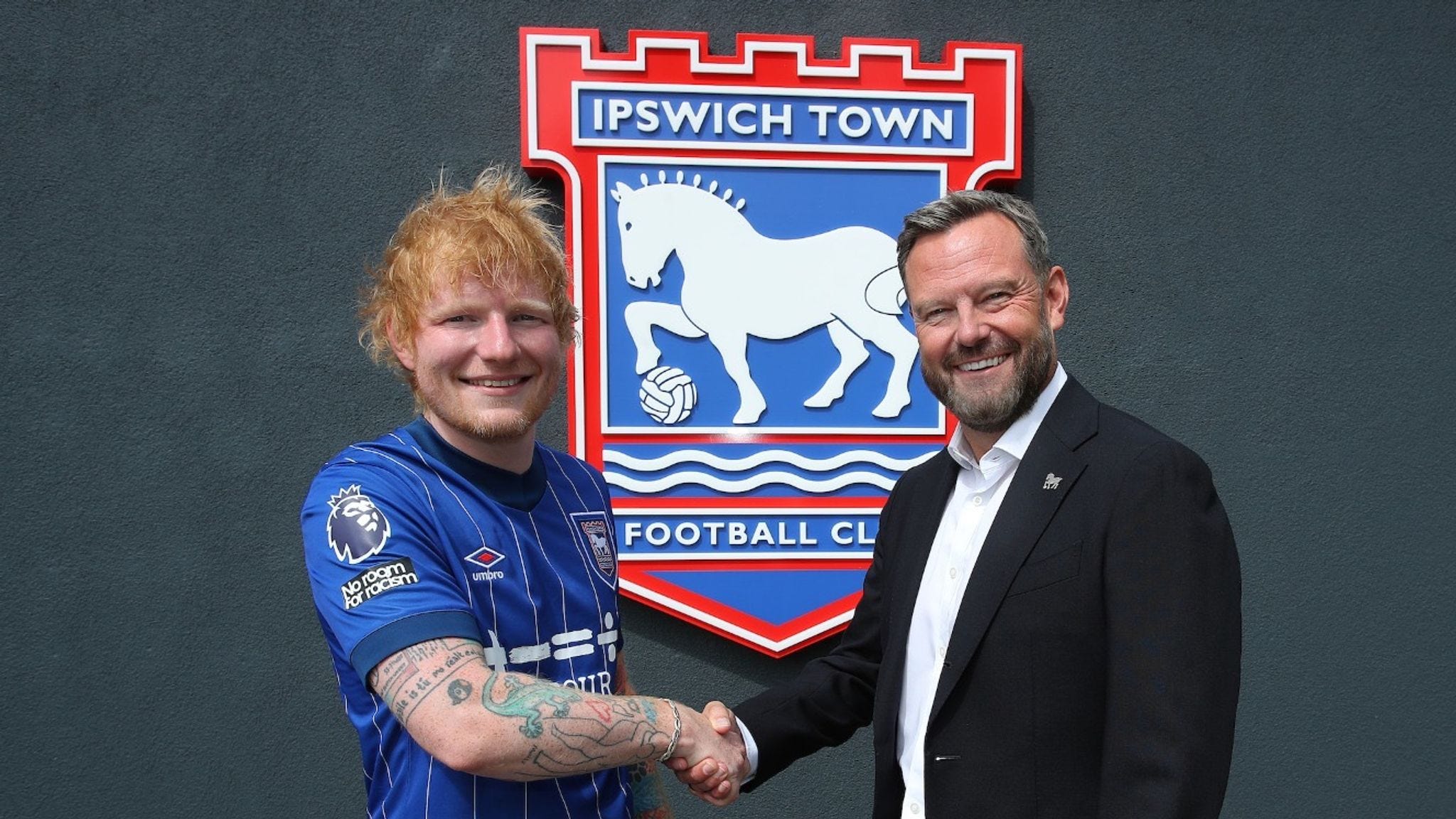
That final point about sponsorship freedom is the most strategically significant. Because Sheeran functions as both an equity stakeholder and the club’s primary brand anchor, Ipswich now has the commercial leverage to be selective—a luxury clubs of their size almost never have. They can confidently pitch fintech, wellness, and global travel brands that would usually ignore a newly promoted side.
The secret engine behind this is incentive alignment. When a cultural icon is a genuine equity partner rather than a rented billboard, brand-building becomes mutual instead of transactional. If the club’s commercial reputation deteriorates, Sheeran’s own brand equity takes a hit. That shared risk changes the entire DNA of the relationship.
The Steamroller: Oasis and Manchester City
If Sheeran is about precision, Oasis is about scale. The 2025 reunion tour contributed an estimated £940 million to the UK economy, with roughly £55 million of economic activity per Manchester concert alone.3 We’re no longer talking about campaign ROI. That is pure macroeconomic impact, and the club positioned itself right at the center to capture the upside.
City moved early. The “Definitely City” collection—launched in collaboration with Noel Gallagher for the 2024/25 season—combined Britpop-era aesthetics with the club’s visual identity. When Liam Gallagher dedicated “D’You Know What I Mean?” to Pep Guardiola at a sold-out Heaton Park, it might have seemed like a spontaneous shoutout. But for the Man City brand, it meant a coordinated global endorsement delivered to one of the largest live audiences in British music history.
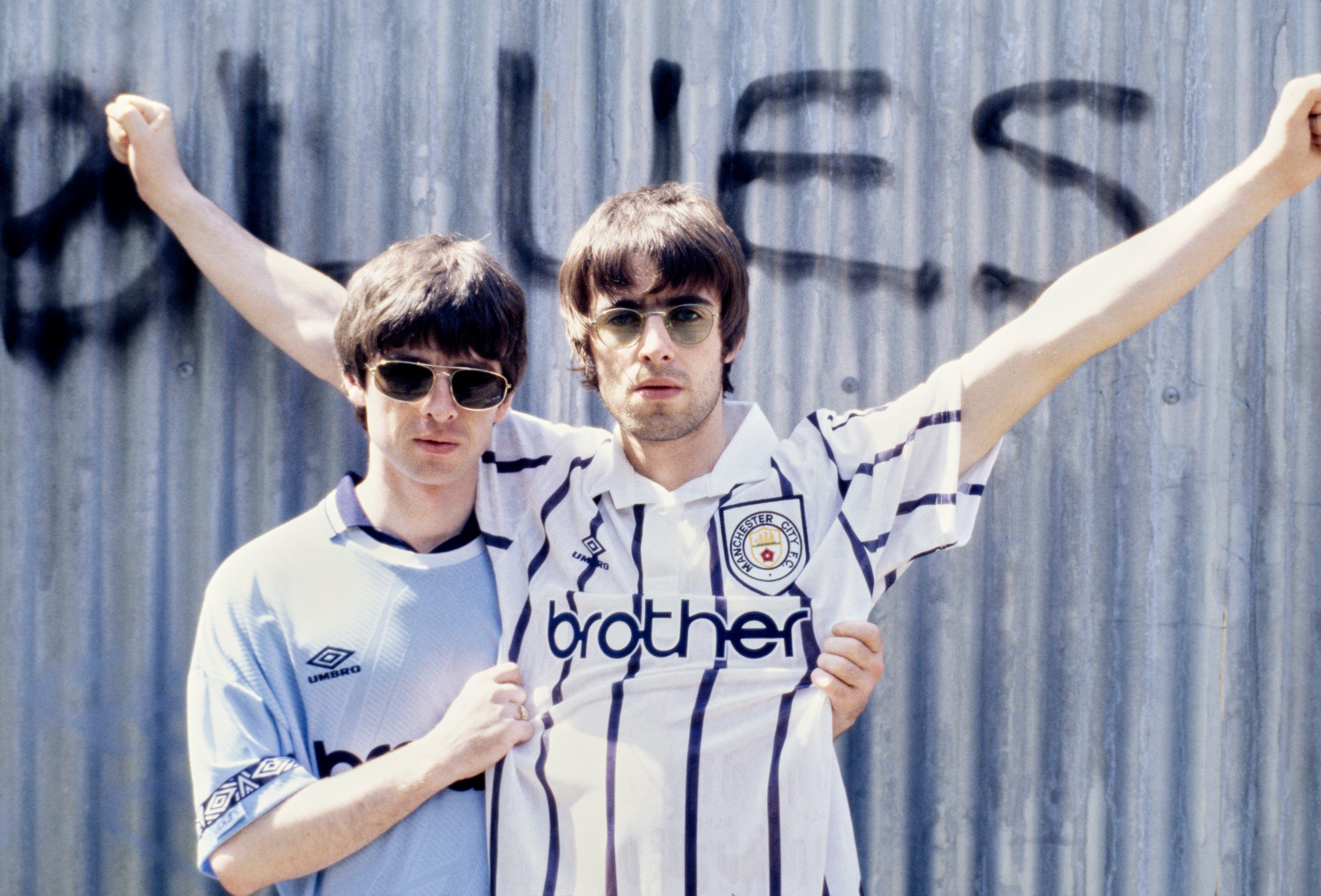
This matters for City in a specific way. The club operates in a commercial environment where its ownership structure generates constant scrutiny and a persistent “bought success” narrative. The Gallagher alignment buys something billionaires genuinely cannot purchase: cultural authenticity. It anchors the club’s global commercial ambitions to the grit and post-industrial identity of Manchester itself—ensuring that as the brand scales internationally, it remains tethered to a credible, recognizable origin.
The commercial logic here is not primarily about shirt sales. It is about narrative insulation: building a brand story thick enough that no controversy around ownership or governance can easily penetrate it.
The Legacy Anchor: Elton John and Watford
Sir Elton John—THE man himself—and his relationship with Watford spans five decades, a timeline that makes it categorically different from any other partnership discussed here. Long before celebrity ownership was a sports business trend, he literally took charge of the club, becoming Chairman in 1976 and driving their historic rise from the Fourth Division to the top flight. In 2014, the club inaugurated the Sir Elton John Stand, converting that lifelong, foundational relationship into physical permanence.4
The commercial metrics surrounding this longevity are striking:
Championship-level financial power: The club recorded a pre-tax profit of £24.1 million in 2022/23—the highest ever reported at the Championship level.
A massive global footprint: Despite cycling between the Championship and the Premier League, Watford remains the 16th most followed club in England, with over 5 million social media followers worldwide.
International investor appeal: When the club launched a digital equity offering in 2024 at a massive £175 million valuation, it immediately drew thousands of retail investors from across the globe, despite inconsistent on-pitch results.5
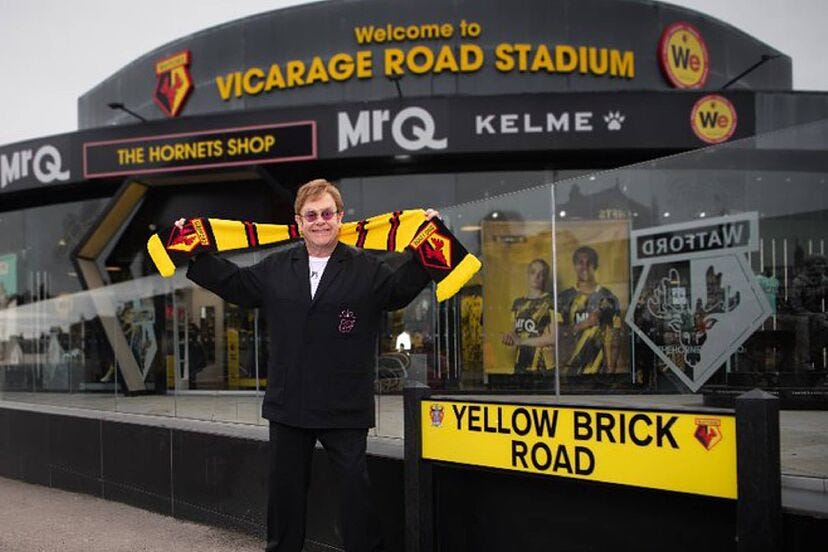
While we can’t attribute every single one of these stats directly to Elton, his presence provides exactly what genuine long-term celebrity alignment buys: brand insulation. Watford’s global following is “sticky” in a way that purely performance-driven fanbases are not. When results are bad—and for a club cycling between divisions, they frequently are—the Elton connection provides a floor of international interest that pure football merit cannot explain.
The Elton model demonstrates a principle that applies across the sports business: a strong enough cultural identity can partially decouple a club’s commercial value from its sporting performance. For mid-market clubs that cannot guarantee consistent top-flight football, that decoupling is worth more than any single sponsorship deal.
Cultural Arbitrage: Robbie Williams and Port Vale
First, truth be told: I am a massive fan of this man. In fact, I probably only know about the city of Stoke-on-Trent and Port Vale because of Robbie himself, so I had to do a bit of research to keep this as objective as possible. Here it goes:
Port Vale operates in a completely different financial universe from every other club in this analysis. And yet, Better Man—the recent biographical musical where the record-breaking UK pop star is portrayed by a CGI primate—has given them something money cannot buy at any league level: worldwide cinematic product placement at zero marginal cost.
The movie literally opens with a young Robbie (in CGI primate form) wearing a Port Vale jersey—a single scene that instantly exposed the club to a massive international audience.
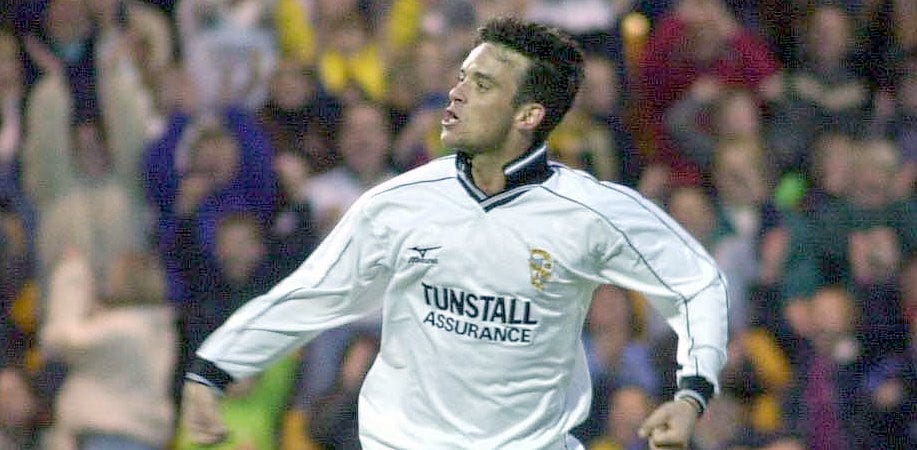
Williams assuming the role of Club President in 2024 essentially created a perpetual marketing engine—one that activates every time the film is streamed, an interview is published, or the tabloid Oasis–Williams rivalry resurfaces. None of this costs Port Vale a penny in activation spend.
This is cultural arbitrage in its purest form: using a celebrity’s existing momentum to manufacture global brand awareness for a club that, by pure football economics, has no business being known outside of England. Turning a honorary title into worldwide cinematic recognition is a massive commercial cheat code, serving as the perfect microcosm for this entire trend.
And this isn’t a recent phenomenon:
As noted by OneValeFan, even during the height of Take That’s fame in the 90s, Robbie simply wearing the shirt caused club shop sales to skyrocket.
When he provided the soundtrack for EA Sports’ FIFA 2000, he did it on one condition: EA had to include Port Vale in the game. They agreed, placing the lower-league side in the “Rest of World” tier alongside global powerhouses.


The Counter-Model: Ryan Reynolds, Rob McElhenney, and Wrexham
Wrexham demands its own category—because it breaks the pattern entirely, and understanding why it works makes it the most commercially instructive case of all.
Ryan Reynolds and Rob McElhenney are not from Wrexham. They are Hollywood actors who acquired a fifth-division Welsh club for $2.5 million in 2021 and built their commercial case around a content strategy, not a lifelong biographical connection. Welcome to Wrexham—the Emmy Award-winning documentary—functions not as a direct revenue stream for the club, but as a top-of-funnel global sponsorship platform that commands Premier League-level commercial attention for a lower-league side.6
The numbers validate the model completely:
Sponsorship revenue: £1.9 million (2022–23) → £13.2 million (2023–24). A nearly 600% increase while still in League Two, easily outperforming established Championship clubs.7
Audience growth: X (Twitter) grew from 45,000 to over 530,000 followers, while Instagram skyrocketed from 27,000 to well over 1 million.8
Club valuation: $2.5 million (2021) → £100 million (Oct 2024 Allyn family investment) → £350 million (Dec 2025 Apollo Sports Capital investment).9
Global partners: Sponsors now include United Airlines, HP, and Gatorade—brands explicitly targeting a global American audience, not local Wrexham customers.10
Sporting and commercial success: Three historic, consecutive promotions from the National League to the Championship, with projected 2025–26 revenues hitting £50 million.
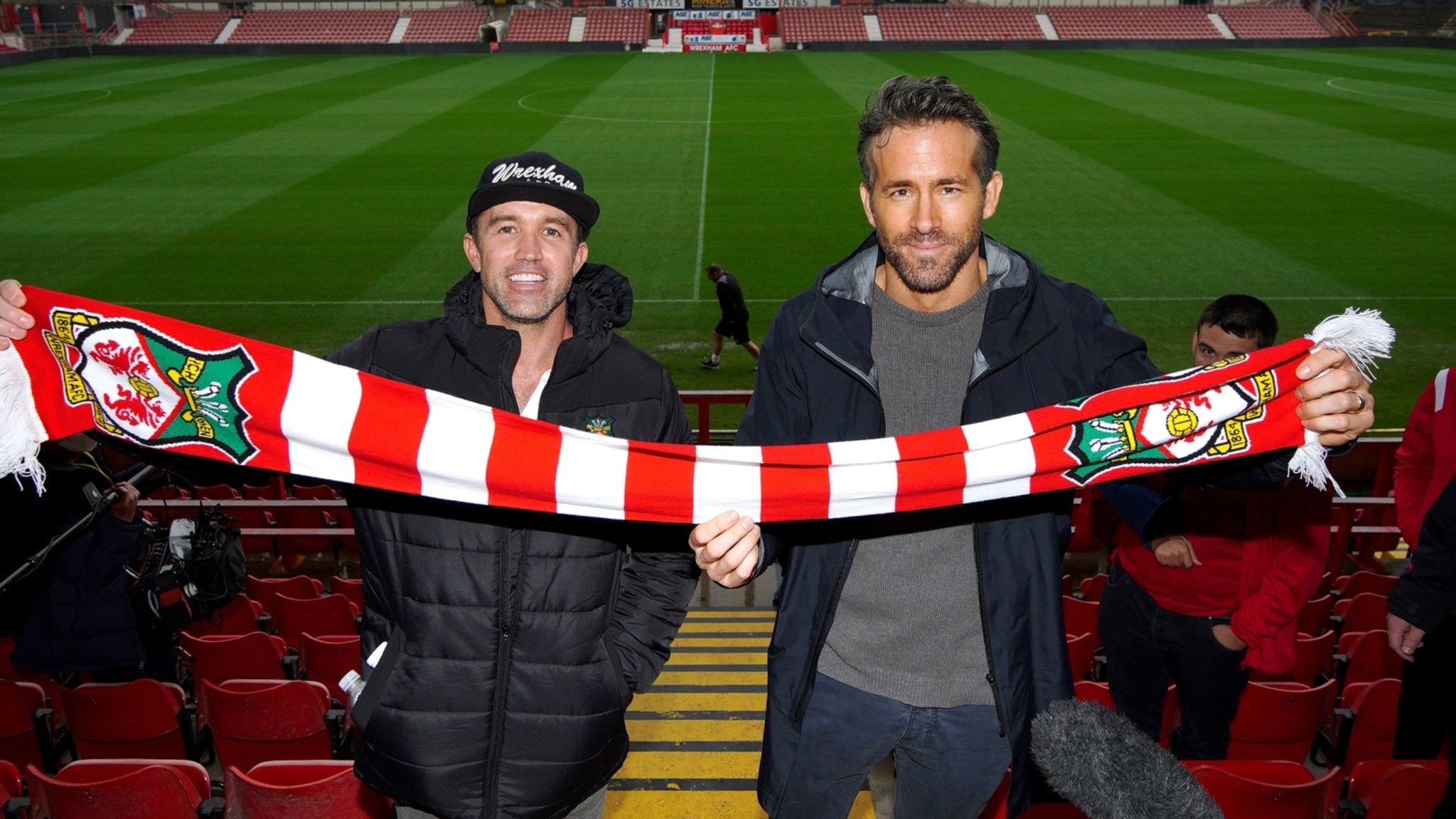
So, does Wrexham disprove the authenticity thesis? Not quite. What Reynolds and McElhenney did was manufacture authenticity through documentary storytelling. They made the town of Wrexham the protagonist, and fans across the globe responded with genuine loyalty. The community roots are real; the mechanism for scaling them was just radically different.
The Wrexham model introduces a new variable: celebrity as media company. The commercial value doesn’t flow from who Reynolds and McElhenney are to Wrexham. It flows from what they built around Wrexham. That distinction matters enormously for clubs trying to replicate it—because the content infrastructure (the documentary deal, the streaming platform, the Hollywood network) is just as hard to replicate as the organic fan bond of Elton John or the Gallaghers watching from the stands as teenagers.
The Authenticity Variable
Mapping these five cases together reveals a consistent pattern. The commercial value of a celebrity partnership is not a function of fame or club reach alone. It is a function of authenticity — specifically, how credibly the celebrity can claim the club as part of their genuine identity.
A club’s brand reach through celebrity alignment is shaped by three variables:
on-pitch performance (results still matter as a baseline)
regional loyalty (the fanbase that provides commercial infrastructure)
the celebrity halo.
But the halo only multiplies when it’s earned. When it’s Elton John watching from the Watford stands as a five-year-old, the multiplier is exponential. When it’s a celebrity hired because they’re available, the value collapses. This is why the model is not infinitely replicable — with one important exception.
Sheeran grew up supporting Ipswich. The Gallaghers are from Burnage in Manchester. Elton is from Watford. Robbie is from Stoke-on-Trent. In each case, the commercial value flows from the authentic connection, not toward it.
Wrexham is the exception that proves the rule — and the most cautionary tale. Reynolds and McElhenney succeeded not because they manufactured a connection, but because they built something genuinely compelling around the connection.
The Bottom Line
We are watching a structural shift in how small-to-mid-market clubs approach commercial sustainability. The gambling sponsor model — reliable, lucrative, and reputationally costly — is under regulatory and cultural pressure across Europe. Celebrity and lifestyle alignment is the credible alternative, and these five clubs are its most visible proof points.
The critical distinction is between brand equity and vanity capital. The clubs building durable value in 2026 have celebrities who were fans first, or — in Wrexham’s case — owners who had the commercial infrastructure to build genuine community investment from scratch. And that second path is viable. But it requires more than a famous face and a press release. It requires either a lifelong connection or a world-class content operation. Most clubs have access to neither.
The clubs that get this right could be more commercially resilient than their peers — less exposed to the reputational risk of gambling partners, and better positioned to attract the premium brands that now define top-tier sports marketing. That is not a small advantage. In a game where commercial revenue increasingly determines squad investment, which determines results, which determines commercial revenue — it compounds.
The only question left for every other club: which of these paths is actually open to you?
What do you think? Is the celebrity model a genuine structural shift, or does it still carry the same risks as any over-reliance on a single commercial relationship? Let’s discuss below.
Thank you for being part of this.
Carla | Off-Ball Logic
East Anglian Daily Times / Footy Headlines — Ipswich Town AGM, Chairman Mark Ashton on shirt sales and gambling sponsor replacement, December 2024. Link
Novuna Personal Finance / Centre for Economics and Business Research (Cebr) — Oasis Live ‘25 economic impact research, May 2025. Link
Republic.com — Watford FC equity offering prospectus: commercial revenue growth, social media following, equity raise. Link
The Wrexham Insider — Shaun Harvey confirms Welcome to Wrexham generates no direct revenue for the club, April 2024. Link
The Wrexham Insider / Goal.com — Wrexham record £26.7M annual turnover; sponsorship income £13.1M, March 2025. Link
Interesting Deepdive. Would love to see if this thesis holds up in the next couple of years.
great article