

World Cup Recap #2: AI's permission problem
Who gets to use AI at this World Cup, and on whose terms.

Hi everyone! I’m Carla, and this is Off-Ball Logic, the weekly newsletter where we step away from the 90 minutes on the pitch to dissect the business strategies, marketing mechanics, and economic engines really driving the modern sports world. Subscribe to get it in your inbox:

This week the World Cup ran its first real test of artificial intelligence, and it showed up as two different stories at once — controversies over consent on one side, and brands quietly building AI into how the tournament actually runs on the other.
This is a new section that runs for the length of the tournament — every Monday, the storylines that shaped the week, read through the commercial layer underneath them.
Whose Diego is it?
During this tournament’s hydration breaks, local ads in Argentina have been flooded with AI-made ads, from companies like Mostaza (fast-food) and Betano (betting apps). But the one that stood out for the wrong reasons was BetWarrior, current sponsor of Argentina’s national team, who has been running an ad built around an AI recreation of a young, 1986-era Maradona, voice and likeness intact, selling the betting platform straight to camera.
And with all things Diego, whose conditions of death are currently going through trial, the legal mechanism behind the ad matters as much as the technology. What has been confirmed off the record is that BetWarrior has received (and paid) authorization for the image to be used.
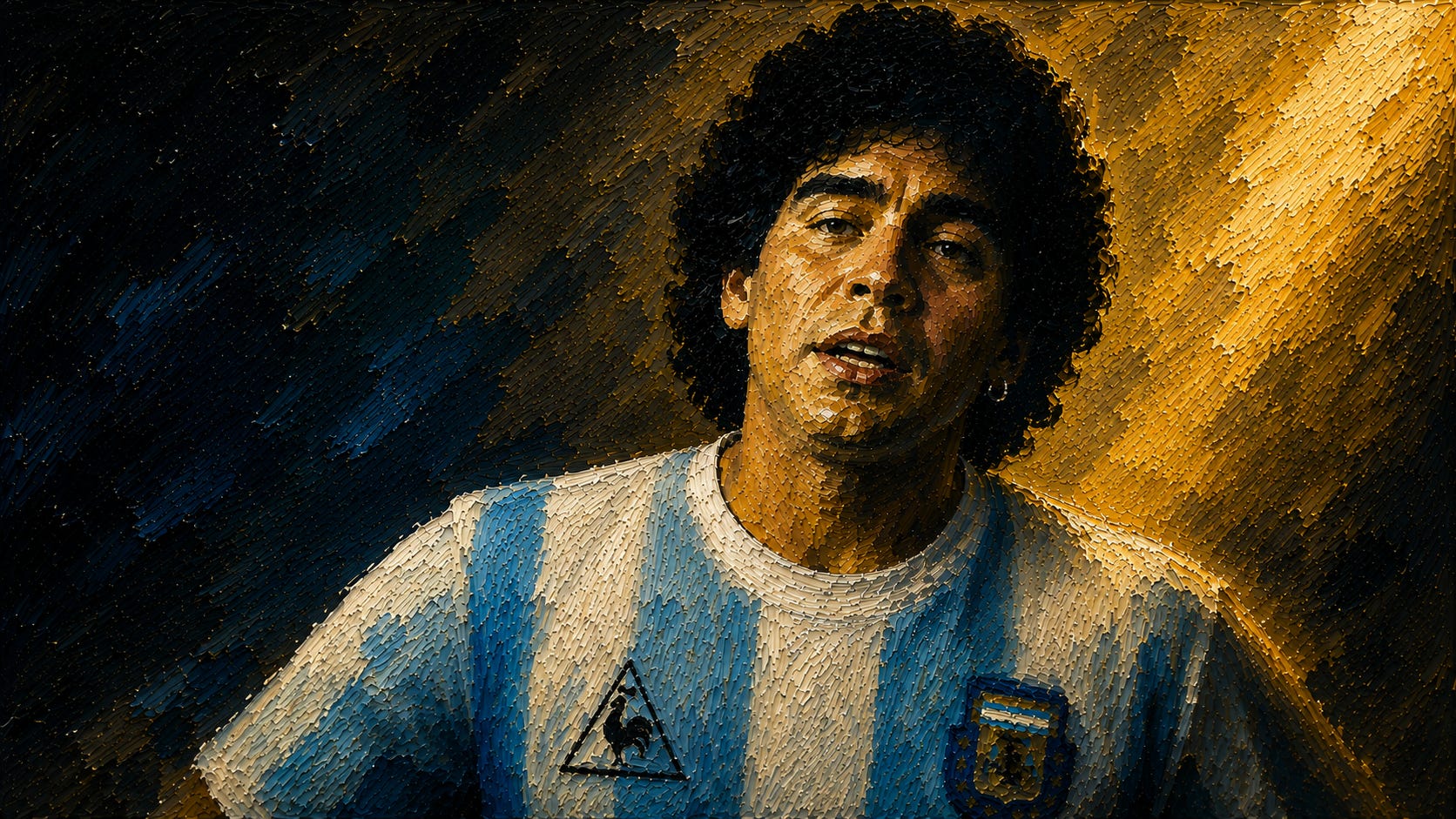
What has been said, but not confirmed by BetWarrior, is that a court ruling at the end of 2025 gave Maradona’s heirs definitive commercial control over his legacy (which has been confirmed in specific deals worldwide), and allegedly it was under that authority his heirs signed the deal.
I’ll flag my own bias here: in Argentina, Maradona isn’t a commercial estate the way a studio treats a dead actor’s likeness (which I also don’t agree fully) — he’s closer to national patrimony, which is part of why this landed harder here than it might have somewhere else. And it’s interesting to question if his family’s say is enough.
This Already Happened on Black Mirror, Right?
LATAM broadcaster DSports spent part of this week denouncing itself, in a sense—or rather, denouncing what AI had done to two of its own commentators in two separate matches. The network released a formal statement condemning a wave of manipulated clips, framing it not just as a one-off correction, but as a broader appeal to the public.
The first case involved Nicolás Haase. His real commentary during France–Senegal—a routine half-time sign-off—was spliced and replaced with a fabricated line using deliberately offensive terms. Chequeado’s1 analysis put the probability of the audio being AI-generated at 98%, but not before L’Équipe and Le Parisien had both run the clip as genuine and were forced to issue corrections.
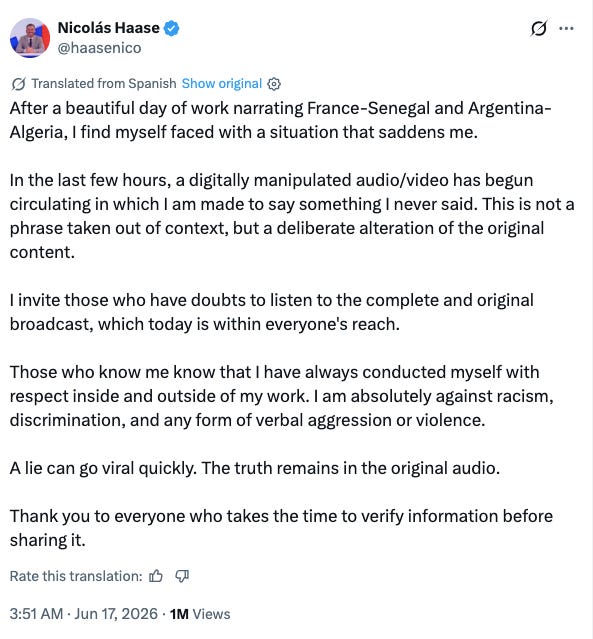
The second case hit during the USA–Australia match, when the broadcast cut to singer Ciara in the crowd. Shortly after, a manipulated clip began circulating, attributing a racially offensive remark to commentator Leandro Zapponi that he never actually said. Zapponi posted the real broadcast audio and denied it publicly.
I was watching the USA–Australia match live when the Zapponi clip started circulating. My first reaction was a kind of curious shock: I had just heard the real broadcast, so I knew immediately the clip was fake. It’s a comfortable position to be in.
But the harder question is what happens to the millions of fans who aren’t watching live, who have no original audio for comparison, and whose only option is to believe whichever version reaches their timeline first — and what that means for a broadcaster’s authority once the fake version is consistently faster than the truth.
Finally, a Grounded AI Story
While broadcasters are fighting deepfakes and the Maradona estate is fighting over image rights, a much quieter version of the same technology was running underneath almost every match—solving actual broadcast problems instead of creating them.
WSC Sports is automating the entire highlight pipeline: clipping, formatting, localization, and commentary across all 104 matches. Their personalized clips are hitting fans’ phones before the live TV replay even finishes.
Meanwhile, Pixellot’s2 automated cameras are doing the grassroots equivalent, recording over two million matches a year globally.
On the other hand, FIFA shows its work. Semi-automated offside calls now render full 3D avatars built from scans of all 1,248 players in the tournament, replacing the textureless mannequins that made the old system feel like a black box.
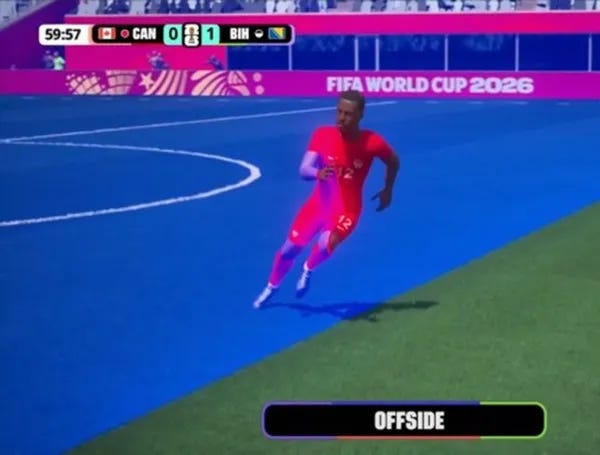
One of the engineers behind it put the logic plainly: when you can see the actual player — his build, his posture, his hair — the call lands as credible in a way a faceless figure never managed.
Referees are wearing body cameras for the first time too, and VAR footage is now shown live on the stadium screens instead of staying inside the review room.
The mechanics of the offside decision haven’t changed at all — what’s changed is that fans can finally watch how it gets made, which after years of complaints about flat blue-and-red lines was the actual grievance all along.
What Did AFA Sell Google? (Hint: Not a Logo)
Gemini became AFA’s main global sponsor back in March, which on its own would read as another jersey deal. The scope is what makes it interesting: the agreement put Gemini inside the coaching staff’s actual workflow — breaking down opponent tactics, monitoring player load alongside the team’s physios — rather than only onto the training kits of the men’s, women’s, and youth squads.
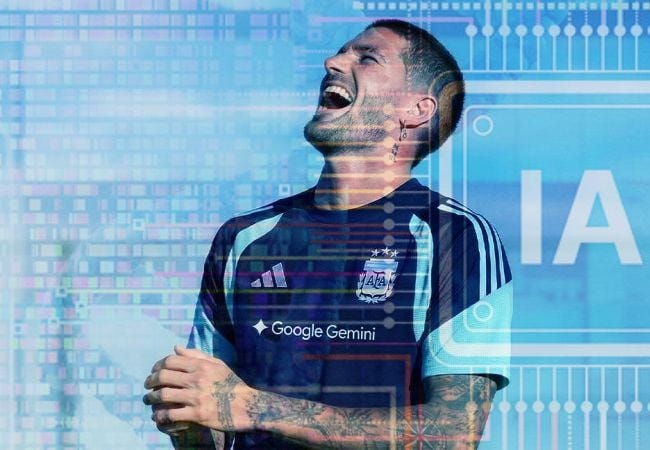
From a PMM seat that’s a very different thing to grant than a logo placement. AFA has made a habit of it, selling not just the team’s visibility but the team itself as proof that a product holds up under real pressure. Access like that is worth more to Google than a shirt front ever could be, which is the part worth asking about: what did AFA get back for handing it over?
Four stories in, the pattern holds:
the heirs license the dead man’s voice, and the family doesn’t get the vote that counts,
two different commentators get blamed for lines a voice clone put in their mouths, and even major European papers can’t always tell the difference,
the highlight reel that never pretends to be human draws no complaints at all,
FIFA finally explains a call instead of just making it,
and a sponsor pays its way not onto a shirt but into the room where the decisions get made.
AI showed up at this World Cup without asking. The thing worth tracking is who waved it through anyway — and who’s now left explaining why.
What do you think — let’s discuss below.
Carla | Off-Ball Logic
a non-profit Argentine fact-checking organization
a software development company focused on creation of automatic video and analytics for the sports market