


Hi everyone! I’m Carla, and this is Off-Ball Logic, the weekly newsletter where we step away from the 90 minutes on the pitch to dissect the business strategies, marketing mechanics, and economic engines really driving the modern sports world.
Subscribe to get it in your inbox:

This week, the tournament is asking a question that goes well beyond the scoreline: what does it actually take to build a brand at a World Cup — and what happens when you don’t?
This is a new section that runs for the length of the tournament — every Sunday, the storylines that shaped the week, read through the commercial layer underneath them.
The Best Goalscorer Nobody Is Selling
The Athletic ran a profile on Kane this week, and the numbers are genuinely historic. Thirteen World Cup goals have moved him past Pelé in the all-time scoring charts and level with France’s Just Fontaine — with only Gerd Müller, Ronaldo, Klose, Mbappé, and Messi still ahead. He captains England, plays for Bayern Munich, and is by most measures one of the greatest strikers of his generation.
His brand equity and commercial relevance remain limited.
His 18.7 million Instagram followers are less than a half of Haaland’s audience and less than a sixth of Mbappé’s 132 million. McDonald’s, one of FIFA’s largest commercial partners, chose Son Heung-min and David Beckham to represent their World Cup campaign — Beckham, who retired in 2013 and never made it past a quarter-final. Kane’s boot deal is with Skechers.
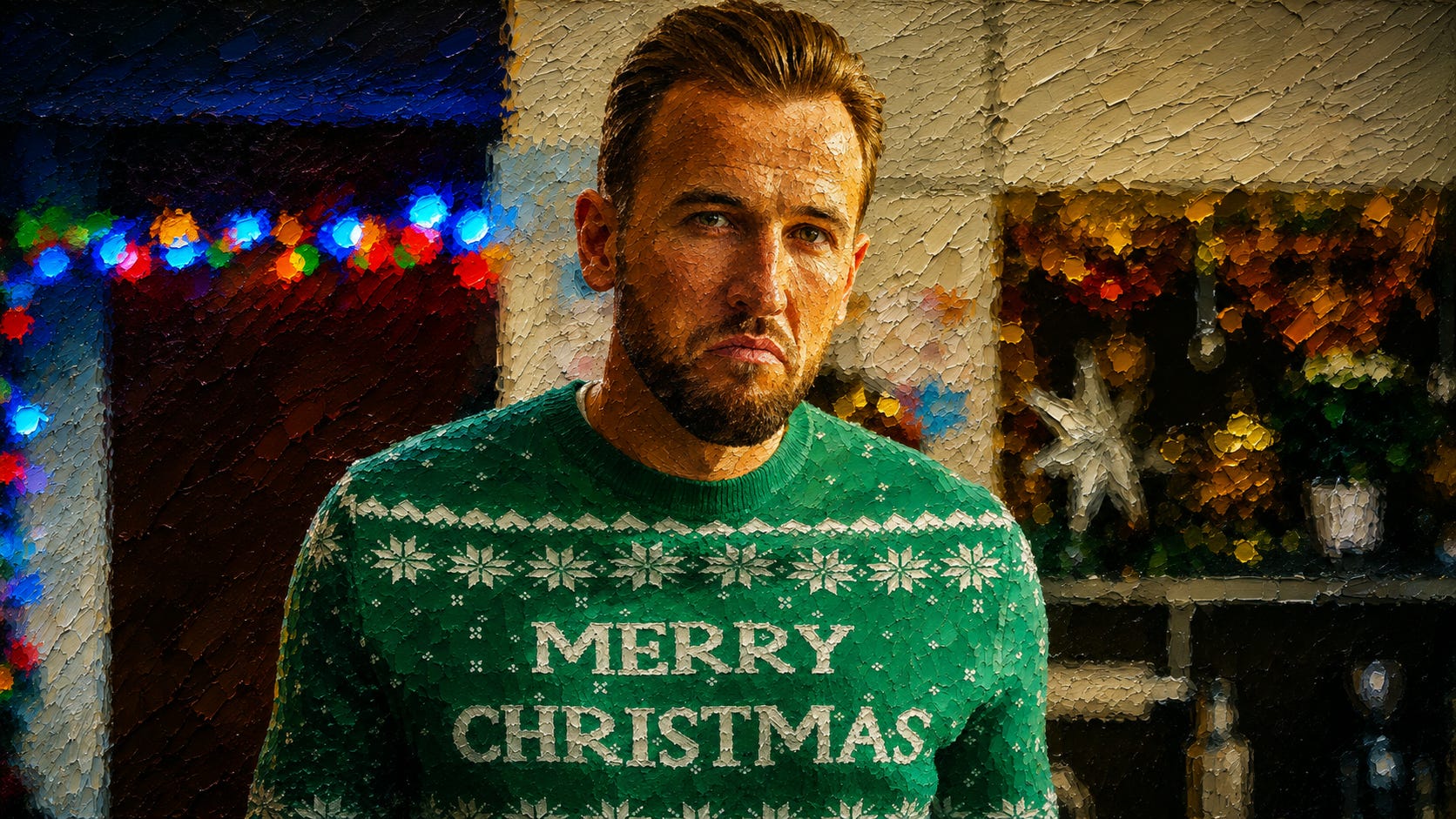
His active partnerships — Oura Ring, Google Gemini, Eveready, Allianz — are solid but modest for a player at his level, especially considering his longer-term commercial bets are equity plays lacking the heavyweight impact seen from his peers.
The Kane case is a useful illustration of a gap the sports marketing world rarely addresses directly: on-pitch performance and commercial marketability are not the same currency, and they don’t automatically convert into each other. Haaland has built an aesthetic identity — the Nordic archetype, Gen-Z content, Social collabs — that exists independently of his goal record.
Kane hasn’t built that equivalent, nor does he seem to want to, opting instead to build a more business-focused, long-term brand equity.
The strategic takeaway isn’t just about sponsor expectations—it’s about how athletes choose to navigate modern fame. Do you surrender to current marketing forces to capture every ounce of immediate momentum, or do you step back and build a brand based strictly on your own vision, accepting the quiet periods that come with it?
FIFA’s Brand Bible (That Nobody Was Supposed to Read)
A document circulating on social media this week appears to be FIFA’s internal brand guidelines for the 2026 World Cup — and if it’s genuine, it’s one of the more revealing commercial artifacts of the tournament. It hasn’t appeared on any official FIFA channel, so the caveat stands: we’ll treat it as likely authentic, not yet confirmed.
What it shows is a full brand architecture built around the idea that every national team is a sub-brand operating inside FIFA’s larger system. The guidelines lay out a brand pyramid with “Newfound Awareness, Unprecedented Unity” at the top, and below it, three distinct visual identity systems — one for the host nations, one for established footballing powers, and one for emerging federations making their first or second appearance. The tagline “Soccer meets fútbol” does a lot of work in a small space: it’s FIFA acknowledging, in its own brand language, that this tournament has two audiences it needs to hold simultaneously.
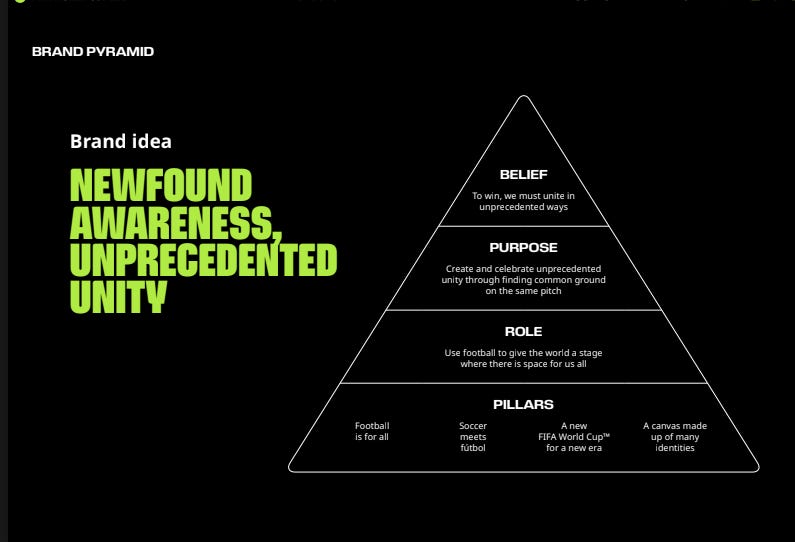
From a PMM seat, the more interesting question isn’t whether the guidelines are real — it’s that they exist at all in this form. FIFA building a tiered identity system for 48 national teams is an attempt to manage brand equity at a scale no tournament has tried before.
The risk is that a system designed to make everything coherent ends up making everything look the same. Identity that comes from a style guide is not the same thing as identity that comes from a culture.
The Playlist Nobody Planned
FIFA came into this tournament with a structured music strategy. According to The Athletic, the organization categorized all stadium music into four official buckets: pre-match atmosphere, goal celebrations, team walk-outs, and general crowd engagement. Every track was cleared, approved, and assigned.
And then Wonderwall happened. And Country Roads. Neither was on any official list — both spread through the stands organically, picked up by fans and amplified until they became part of the tournament’s sonic identity whether FIFA planned for them or not. The goal horn variations by country, the chants that started in one stadium and migrated to another — none of it came from the approved playlist.
This is the structural tension in any top-down brand system applied to a live event: you can control the inputs, but you can’t control what lands. The moments defining the sonic memory of this World Cup are the ones that escaped the framework.
For brands investing in official music partnerships and cleared audio assets, that’s a useful reminder — the fan behavior you can’t brief for is often the one that does the most work.
Belgium Builds, Italy Watches
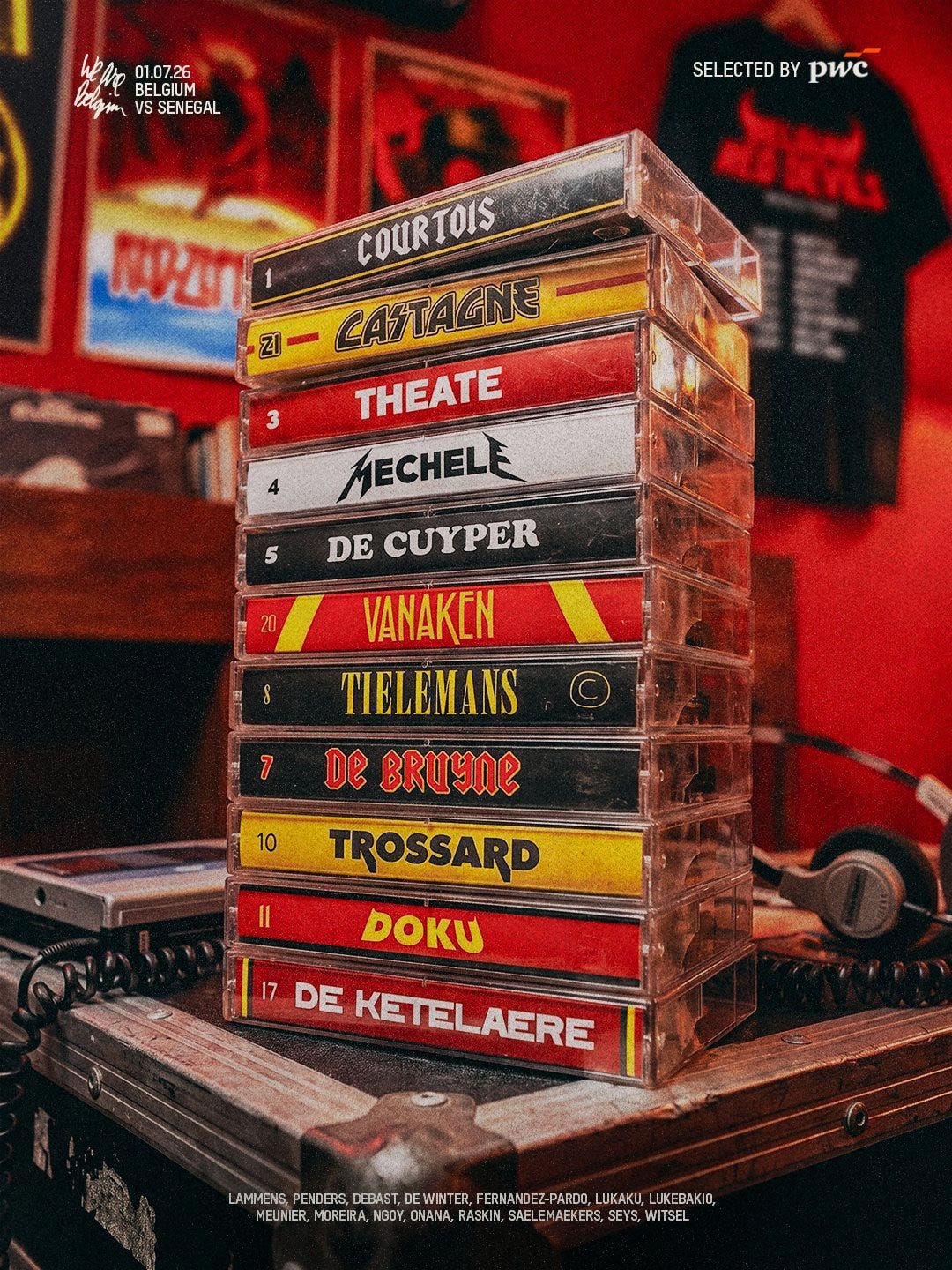
While most national federations treat squad announcements as administrative releases — a PDF, a press conference, a numbered list — Belgium has been doing something structurally different. Their announcement content for this tournament has been built around player-led creative: it relies on short-form imagery, individual framing, and deliberate aesthetic choices that carry through from the kit launch to the call-up reveal. The format itself is doing the brand work, entirely independent of results on the pitch.
Italy, meanwhile, is absent again. Three consecutive misses—even with 2026’s expanded 48-team format. The sporting failure is obvious, but the commercial one is staggering: three cycles without the Azzurri jersey in global retail or sponsor activations. The federations taking their place (like DR Congo and Bosnia) are now opening the commercial windows Italy abandoned.
The Belgium and Italy stories show the two extremes of football marketing. Belgium treats mandatory logistics (like a squad reveal) as premium content to maximize a guaranteed audience. Italy hasn’t even had a window to open in 12 years. You can’t build commercial equity in a tournament you’re not playing in, and you can’t reclaim it from the couch.
Four stories in, the identity pattern at this World Cup runs from individual to institutional:
England’s greatest ever goalscorer proves that elite performance doesn’t have to mean total commercial saturation.
FIFA built a tiered brand system for 48 teams, but it risks losing its identity.
the official music strategy was outrun by two songs nobody approved.
Belgium turned logistics into content while Italy watched its commercial window close for the third time running
The teams and players that understand their presence here is a limited window tend to do more with it. The ones that assume they’ll always be back tend to find out what it costs when they’re not.
What do you think — let’s discuss below.
Carla | Off-Ball Logic
I’d like to make a different argument about Kane. I think his limited commercial appeal is due to his long stint as a Spurs player. He’s never really had the story/personality of other greats around his level, and hasn’t been able to leverage the club appeal of the Arsenals, Real Madrids or Manchester Utd’s of the world.
That he was an overachiever there without any standout solo moments also hurt his stock. Even though he’s at Bayern now, his talent is only really starting to be recognized on the level it deserves to. Profiled against Haaland, Mbappe or other superstars, he’s starting from a long way behind.
Add his lack of personality to all that context and you get a mid commercial profile. Not sure we can say he chose a different path when the other was not available to him for so long.
Really appreciate the Kane callout. Not every athlete needs constant exposure or personality to build a strong portfolio and leverage their celebrity.