

A Short History of World Cup Mascots
How a stadium souvenir became FIFA's most durable piece of IP
Hi everyone! I’m Carla, and this is Off-Ball Logic, the weekly newsletter where we step away from the 90 minutes on the pitch to dissect the business strategies, marketing mechanics, and economic engines that are really driving the modern sports world.
Subscribe to get it in your inbox:

When I started my Business of the World Cup series, the first piece kicked off with this text:
“That tournament gave me Striker. Four years later, France 98 gave me Footix. At five, and then at nine, I wasn’t thinking about licensing deals or FIFA’s commercial strategy — I was just completely, irrationally obsessed.”

It’s hard to deny that one of my strongest connections to World Cup imagery is the mascots, and while I touched on them briefly in that piece as one part of how the tournament evolved as a product, they deserve their own dedicated treatment, breaking down how their commercial power has evolved across different eras and the strategy driving them today.
A quick note on scope before diving in: this is a wide-angle pass built around seven mascots and sixty years, tracking one argument about how their commercial function changed. A fuller picture of what mascots have done to the World Cup would need to bring in the ones left out here — Footix, La’eeb, Goleo, Zakumi, and others each carry their own version of this story. That’s a piece I’d like to do at some point, but for now, tell me if there’s appetite for it and I’ll take it on next.
The 1966 formula
Much of the World Cup’s commercial apparatus changes from one cycle to the next: hosts, active tournament identities, and the terms under which broadcast and sponsorship rights are sold. The mascot is the one piece of host-specific branding built to keep functioning as a character after the event ends.
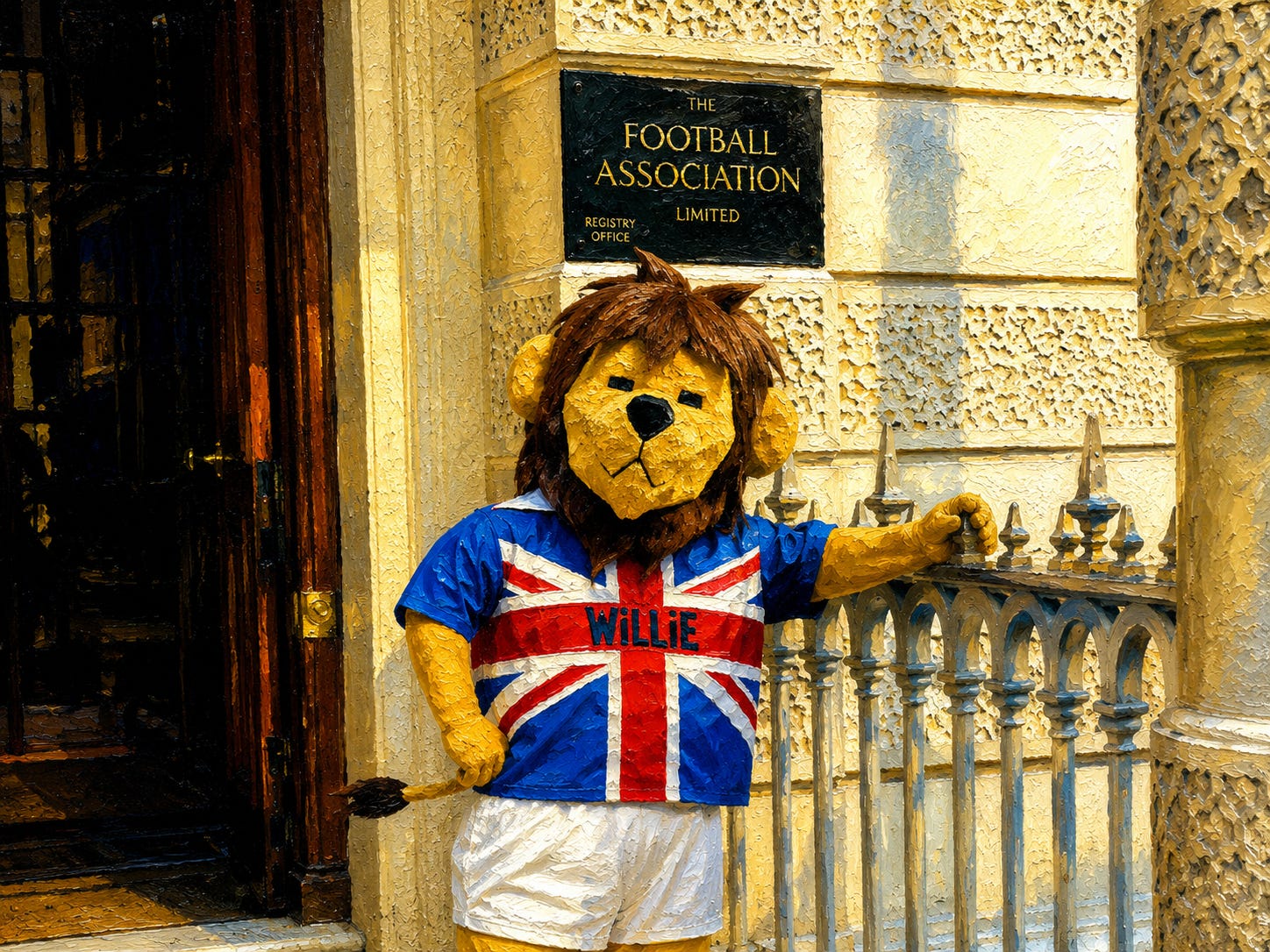
The baseline was set in 1966, almost entirely by accident. World Cup Willie was never meant to be a system — the grinning lion in a Union Jack shirt, drawn by illustrator Reg Hoye, became one anyway. He appeared across an unusually wide range of merchandise, with contemporary estimates placing the programme’s retail value at roughly £4 million, inspired his own pop song, and helped establish a model that soon reached other major sporting events, with Munich introducing Waldi the dachshund as the first official Summer Olympic mascot six years later.
What 1966 actually proved was a formula, not a character: wrap a cultural artifact in trademark law, and a host nation’s identity becomes part of the tournament’s IP.
But Willie carried more historical and identity weight rather than describing the political landscape of the time. Because the lion represented a broadly legible version of Britishness, what 1966 didn’t settle was how that formula would hold up once a government had a story it actually needed the mascot to tell.
1978 vs. 1982: When identity becomes a political asset
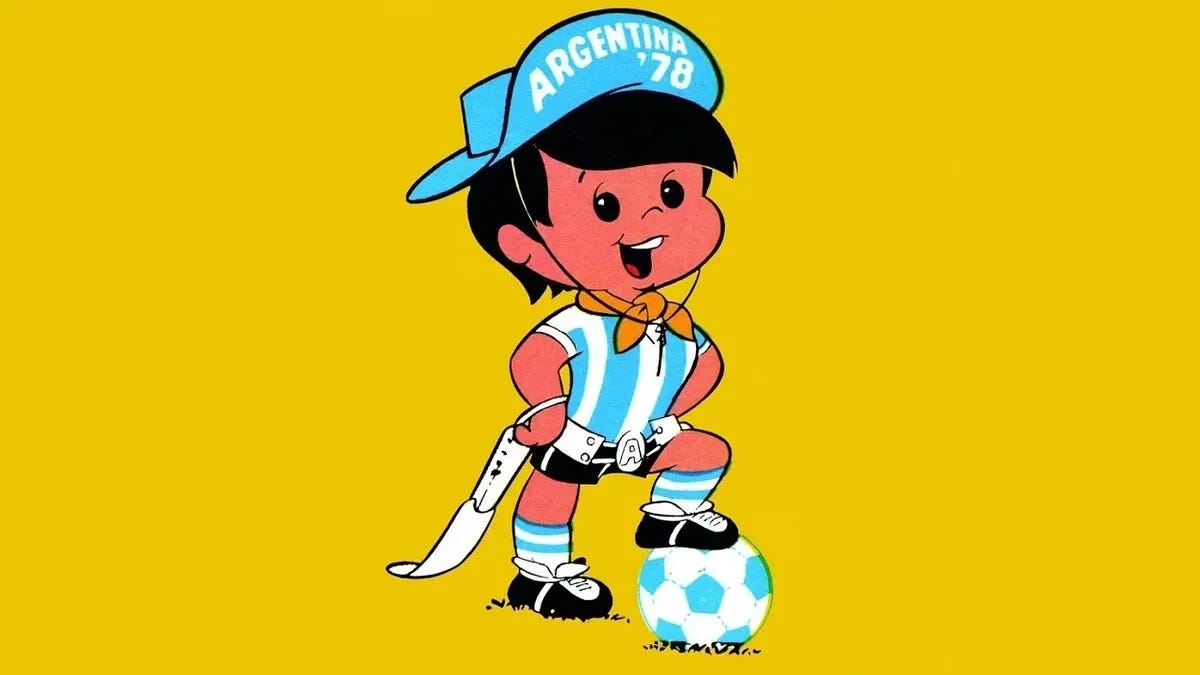
Argentina answered that question first, under the darkest conditions. When the 1976 coup installed a military junta, the regime didn’t invent a propaganda figure, it inherited a character that had originated in a 1972 Argentina’s FA design competition and was later selected and reworked for the tournament, putting an existing piece of folk imagery to political use. The gaucho is a deeply historical Argentine symbol, but here it was doing political labor its designers never intended.
Gauchito’s smile fronted a tournament built to project order and unity while repression continued off-camera. That was the whole of its political function: showcasing Argentine identity while portraying harmless imagery to the world, when reality was tragically the opposite.
Spain ran the same mechanism four years later under the opposite conditions. Naranjito, an anthropomorphic orange, was built specifically to avoid the bull, the flamenco dancer, and the familiar national shorthand that had been repeatedly used during the Franco era — a country building a new image. He went on to become durable Spanish pop culture, still tied today to the country’s democratic transition, not because he produced it but because he gave its optimism a form that could be licensed and remembered.
A mascot’s success as a national argument depends entirely on whether the host’s projected image survives contact with reality — Gauchito softened Argentina ‘78’s visual frame without ever separating the tournament from the dictatorship behind it, while Naranjito couldn’t manufacture Spanish democracy but embodied its new visual language convincingly enough to outlive the transition itself.
1994: the pivot
The break from that dependency arrived in 1994, and it remains the clearest indication that the mascot’s commercial function was changing. The United States did not commission a character whose value depended on a detailed piece of national folklore — it let the public choose Striker, a cartoon dog designed by Warner Bros., dressed him in red, white, and blue, and gave him the most immediate form of American identification available.
FIFA’s own retrospective describes the logic in almost exactly those terms: dogs were among the country’s most popular pets, and the colors supplied the national connection on top of that.
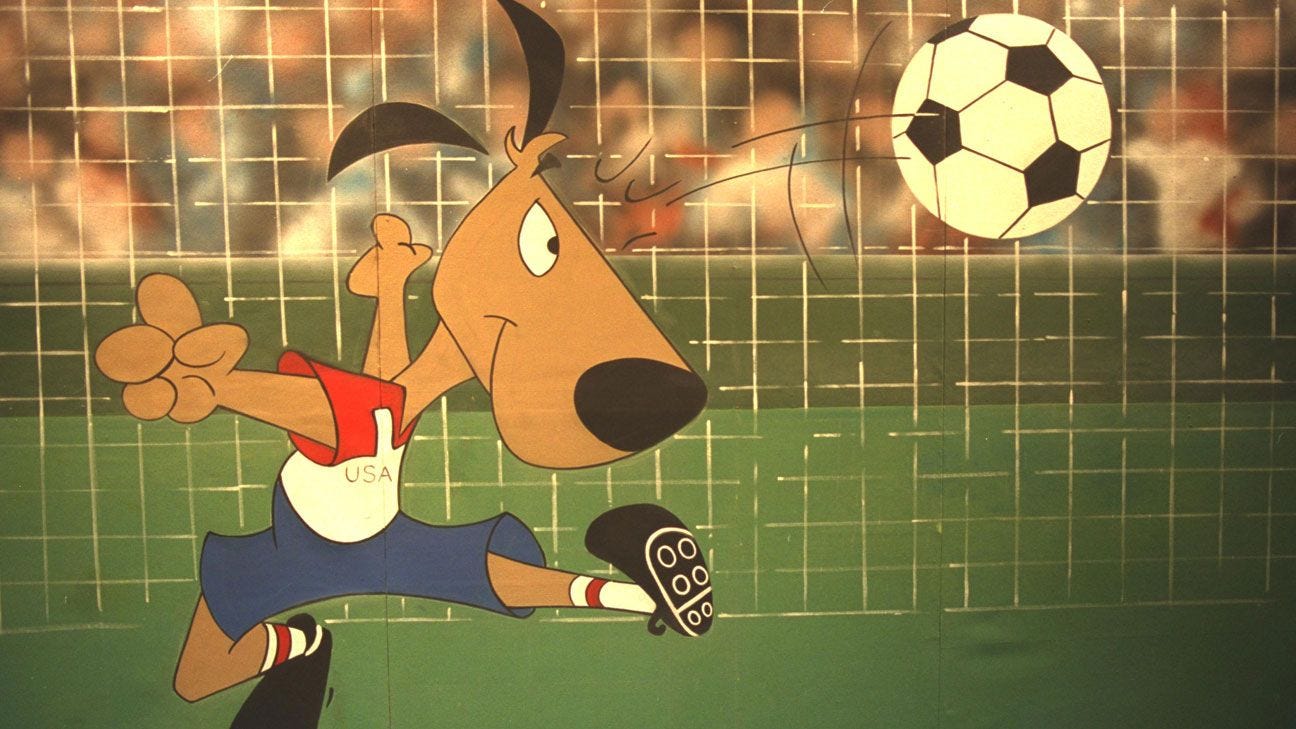
Striker carried regional identity, but only in compressed form. He required no knowledge of a historical figure, a local tradition, or a political transition to understand what he was — the audience only needed to recognize a friendly cartoon animal, a football uniform, and three national colours, which was enough to make the character readable before anyone had to understand the host.
FIFA hadn’t stopped asking the mascot to represent a country; it had simply reduced how much cultural information the audience needed to recognize that representation, replacing the density of Gauchito or Naranjito with a character built from visual conventions already familiar from international children’s media and merchandising.
2026: the formula at scale
The 2026 mascots run that same playbook at full industrial scale. Maple, Zayu, and Clutch are still national portraits — a moose, a jaguar, a bald eagle, each carrying a distinct national personality — but the infrastructure around them is what actually changed.
FIFA Heroes, developed by ENVER and unveiled by FIFA with Solace in October 2025, is a five-a-side arcade game in which Maple, Zayu, and Clutch have their own abilities and special moves alongside other FIFA mascots, football figures, and licensed entertainment characters.
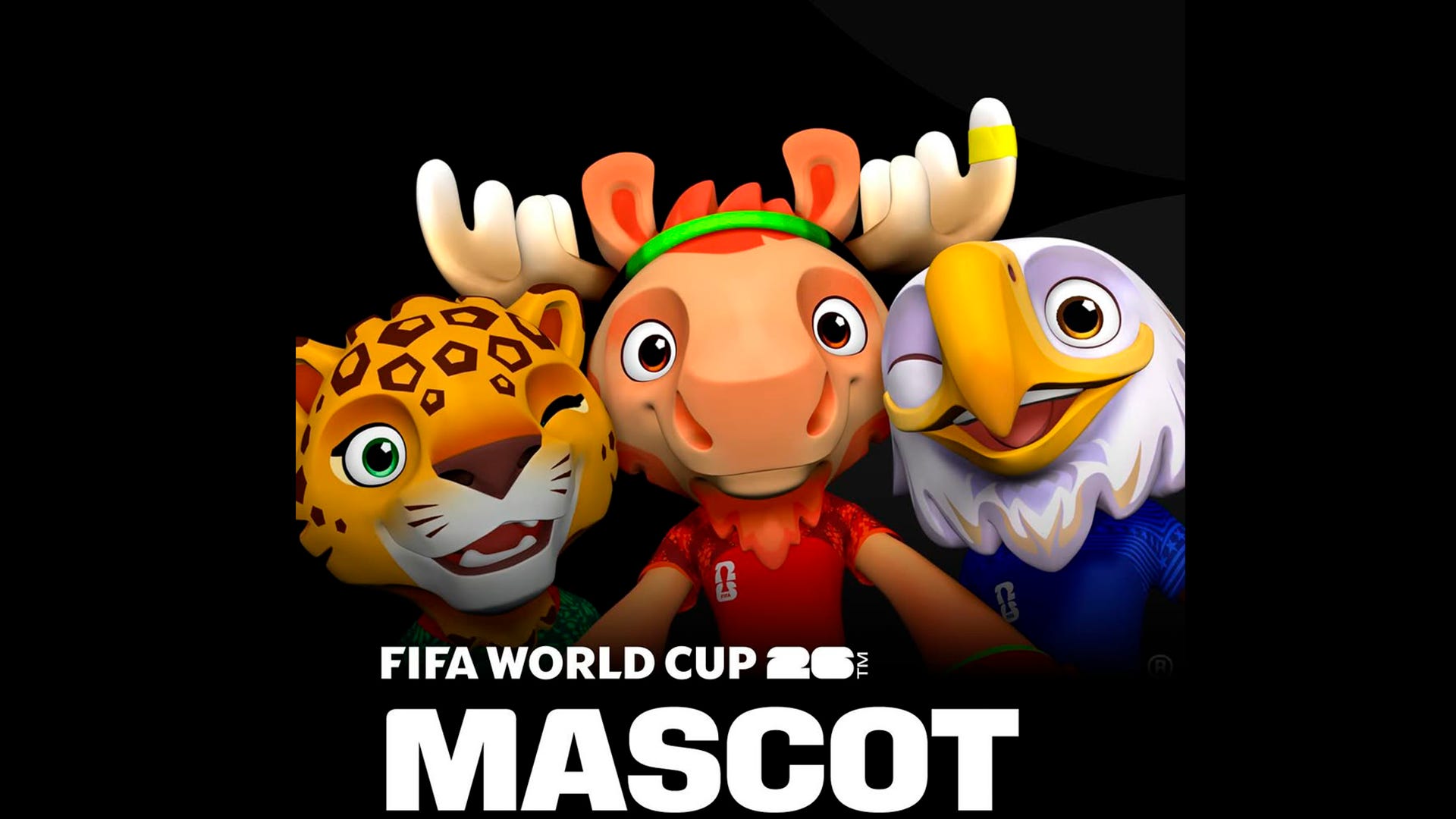
That’s the piece Warner Bros. had no way to build around Striker: a mascot no longer has to stay attached to the host or the tournament cycle that introduced it, because FIFA can now reactivate an older character whenever a new format makes it commercially useful again.
What the formula actually manufactures
Each era sits at a different point on the same trade-off.
Willie stood out for converting an immediately recognizable national symbol into an unusually large merchandise programme.
Gauchito and Naranjito carried real national weight, but their lasting meaning remained concentrated in the countries and historical moments that produced them.
Striker compressed that specificity into a cartoon character that required almost no cultural translation: a popular domestic animal, a football shirt and ball, and the national colours.
The 2026 mascots attempt to preserve national differentiation while operating inside a system built for portability. Maple, Zayu, and Clutch represent three distinct host countries, but FIFA Heroes gives them abilities, roles, and a commercial environment shared with mascots and characters from other properties.
That doesn’t make every mascot a permanent annuity (plenty will still spend their afterlife in childhood bedrooms and on resale listings, tied to nostalgia in many cases), but FIFA no longer has to leave them there. It now owns the infrastructure to pull any of them back out the moment they’re useful again.
The mascot began as a souvenir of the host. It’s become, instead, the part of the host that FIFA gets to keep.
What do you think? Let’s discuss below.
Carla | Off-Ball Logic
Fascinating.