

The 2026 World Cup Proves Technology Can't Fix Trust?
FIFA built a closed-loop system connecting VAR, broadcast AI, and fan data. Instead, it just exposed why precision isn't the same as legitimacy.


Hi everyone! I’m Carla, and this is Off-Ball Logic, the weekly newsletter where we step away from the 90 minutes on the pitch to dissect the business strategies, marketing mechanics, and economic engines that are really driving the modern sports world.
Subscribe to get it in your inbox:
This week’s piece is a collaboration with Dean, writer behind Regen Sports — a twice-weekly deep dive into the intersection of sports and technology. I’m a huge fan of his work; his knowledge and analytical perspective are incredibly sharp. His newsletter is excellent and definitely worth adding to your stack.

One of the most famous moments in World Cup history is undeniably the Hand of God. The image of Diego Maradona out-jumping Peter Shilton to score with his hand in the 1986 quarterfinal has echoed around the world for decades.
There are countless stories about why he did it, or what his teammates and opponents thought. But what matters today is what the officials said.
For years, referee Ali Bin Nasser maintained that he had not seen the handball and had looked to his assistant for guidance. Decades later, assistant referee Bogdan Dochev reportedly admitted that he had seen Maradona use his hand—but also said that he had not intervened. The two officials spent the rest of their lives disagreeing over who had failed to communicate.
The Hand of God remains one of the foundational cases in football’s debate over human judgment, sensory limits, and fairness. But the conversation has long since shifted toward what was supposed to be the ultimate fix: technology.
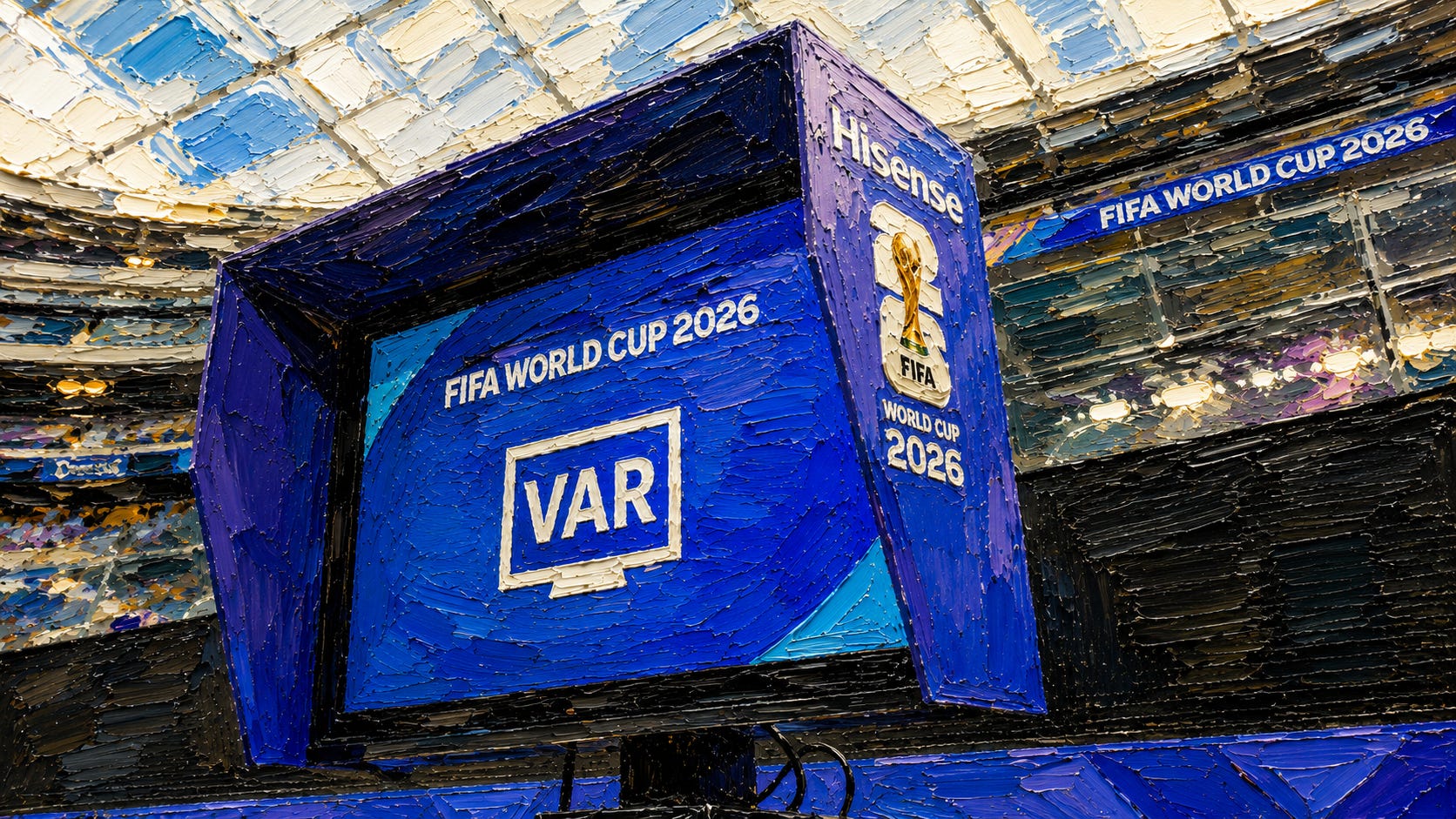
We are now in an era where VAR, semi-automated offside, connected-ball sensors, referee body cameras, and public VAR explanations are real parts of the game—not material from a sports science-fiction show. The question is no longer whether technology can provide more information: it clearly can.
The question is why a system built to reduce controversy has instead created new arguments about who interprets the evidence, when intervention is justified, and what fairness is supposed to mean.
The visible layer: officiating technology
Unlike several other major sports, football was slow to incorporate technology into live officiating. The 1992 back-pass rule changed how teams used the goalkeeper and built from defence, but technology entered later, first to answer narrow factual questions.
At the 2014 World Cup, goal-line technology gave officials an automated answer to whether the whole ball had crossed the line. In 2026, optical tracking went further: VAR can now use it to determine whether the ball crossed the touchline during the attacking phase before a goal.
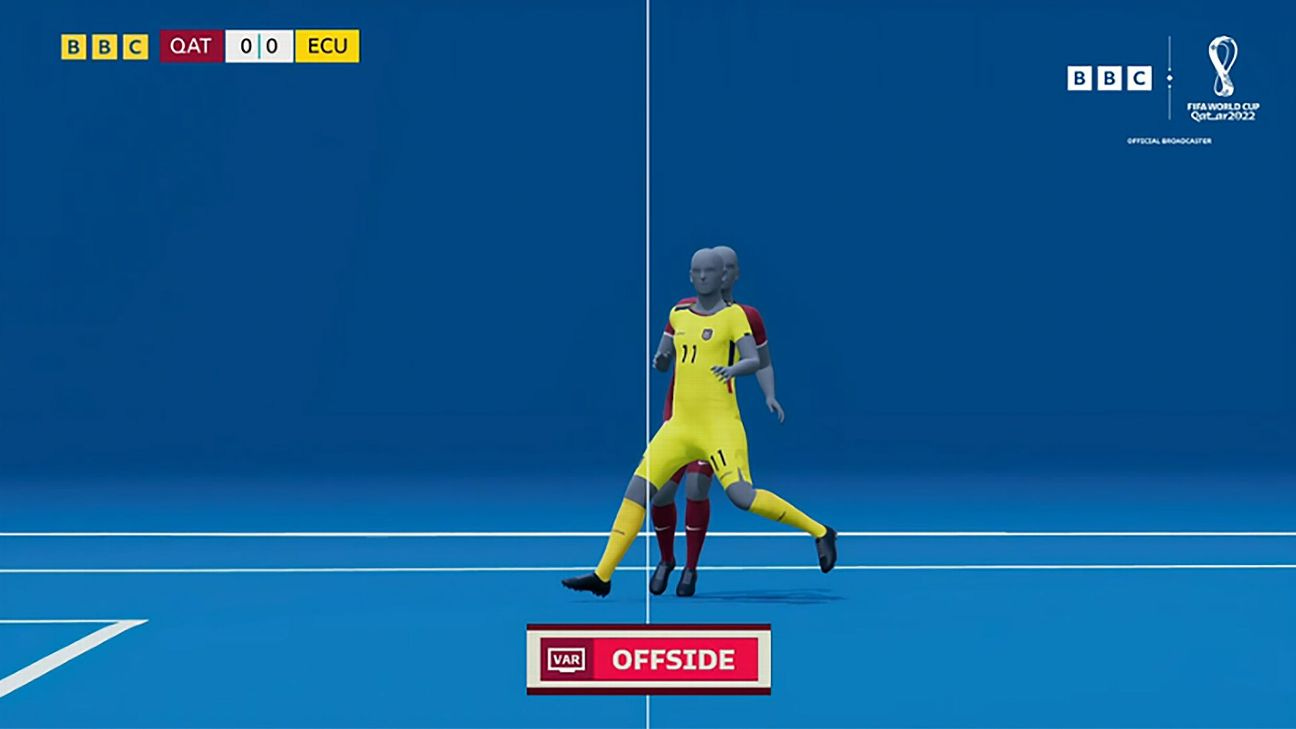
On June 3, FIFA announced two major additions. The advanced version of semi-automated offside technology made its World Cup debut after the earlier system was used at Qatar 2022. Clear positional offsides can now be sent directly to on-field officials, allowing a quicker flag. The limit remains human interpretation: the system can identify position, but not whether a player interfered with play.
Referee body cameras were also introduced for global audiences. Lenovo developed stabilisation software to reduce motion blur and improve the first-person footage. Unlike offside tracking, this is primarily a broadcast product.
It’s worth noting that referee cameras were framed as a broadcast innovation, giving fans the referee’s-eye view of contested contact. That framing undersells where the technology is heading. Body-worn footage does more than entertain: it humanizes officials by showing decisions in real time, but it also weaponises intimacy, so to speak. A missed touch or a hesitant glance can go viral within minutes, reshaping public judgment before any formal review. As leagues explore using this footage as disciplinary evidence, questions of privacy, for players and referees alike, become unavoidable. The camera does not just show the game; it puts the officiating itself on trial.
These systems deliver information unavailable to the naked eye. But they have not removed controversy. The argument has shifted from whether the referee saw an incident to whether technology was applied correctly and consistently.
And just as importantly: VAR does not eliminate subjectivity. Criticism has ranged from charges of over-reach to conspiracy theories that VAR is used to determine match outcomes.

That tension was visible in Egypt’s 3–2 round-of-16 defeat to Argentina. VAR disallowed an Egypt goal for a foul earlier in the attacking possession. Egypt also appealed for a penalty on Mohamed Salah, but FIFA Referee Committee Chairman Collina said the referee and VAR had assessed the contact and judged it normal football contact. He defended the disallowed goal by arguing that there is no fixed distance or time limit within the reviewable attacking phase.
A different controversy happened before that match, when the United States faced Bosnia and Herzegovina in a round-of-32 match. Folarin Balogun was sent off after VAR identified a challenge missed in real time, showing his boot making contact with Tarik Muharemovic’s ankle. The decision became politically amplified when Donald Trump questioned the referee’s integrity.
The paradox is clear: greater physical precision has not removed disputes over relevance, thresholds or consistency. The 2026 World Cup is less a laboratory for entirely new technologies than a global stress test for their expanded use. The question is whether technology remains a supporting actor or has become, in several matches, the game’s central protagonist.
The connected ball as invisible infrastructure
If officiating technology is the visible layer of contested judgment, the ball is the layer working underneath it. The match ball has quietly migrated from equipment to instrument, embedded sensors turning it into an autonomous data source feeding officiating, broadcast graphics, and player analytics. That shift matters because it relocates authority from human sight and camera angles to instrumented measurement.
For refereeing, ball telemetry promises clearer determinations: speed, spin, and the exact moment a ball crosses a line, reducing reliance on interpolation from cameras and human judgment. But precision doesn’t equal neutrality. Sensor calibration, sampling rates, and environmental interference such as mud or impact forces, all shape the “truth” the system reports.
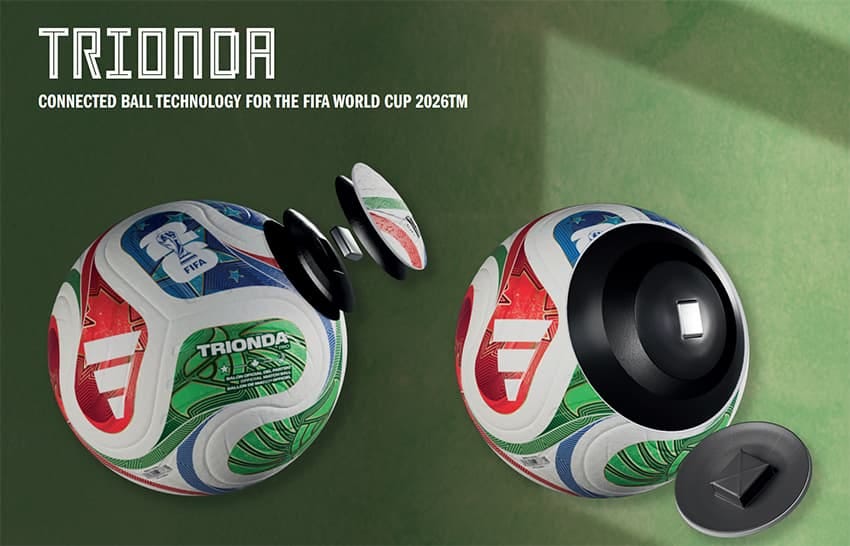
For broadcasters and fans, the ball becomes a storytelling device. Instant speed tags, spin vectors, and trajectory overlays create richer narratives and new expectations about what should be knowable in real time. That visibility can deepen engagement, but it also compresses tolerance for ambiguity: when a graphic shows a ball “100% over the line,” audiences expect officials to agree.
Commercial and competitive implications follow. Who owns the raw ball data? FIFA, manufacturers, broadcasters, or clubs determine who can build performance products, scouting models, or monetized viewer features. Access inequality risks creating new competitive edges and limiting independent verification of contentious calls.
Finally, embedding measurement into the object centralizes failure risk. A malfunctioning ball can silently distort the record of a match, and detection often happens only retrospectively.
The ball used to carry the game. Now it also carries the data layer of the game, and that layer needs the same standards of calibration and transparency as any other officiating tool.
AI as a broadcast product
After exploring AI’s chaotic side—like deepfaked commentators and betting ads—this section tracks a quieter shift: the moment AI stops supporting the broadcast and becomes the product.
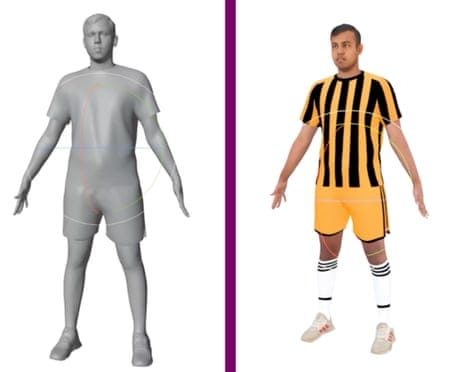
Start with the players. All 1,248 athletes were 3D-scanned to generate digital avatars for the semi-automated offside system, replacing the old, featureless mannequins. FIFA’s Innovation Director, Johannes Holzmüller, was blunt about why this matters beyond officiating:
“This is helpful for officiating, but in the end, also exciting for football fans since we will also improve the broadcasted 3D replays.”
An officiating tool doubles as a broadcast upgrade. It’s telling which feature FIFA emphasizes in interviews.
Football AI Pro extends the same logic to team analysis, giving all 48 federations generative AI analysis, replacing FIFA’s static 60-page PDFs. Add Lenovo stabilized ref cams and 16 tracking cameras generating 150 million data points per match, and the picture is clear. These systems feed both VAR and media packages. Officiating tools are now shipped as broadcast content.
FIFA claims this drives transparency. But accountability and broadcast value are the same investment. If the footage must be credible, it must also be watchable. Once a system is built for both, the two goals become inseparable.
The England–Norway quarterfinal exposed this tension. Replays suggested a goal kick clipped a camera cable before Bellingham’s equalizer. FIFA relied entirely on the connected ball’s sensor: no “heartbeat” spike meant no contact. Norway and the audience disagreed. The technology produced a defensible reading, not agreement.
This is the underlying limit. 3D avatars and sensor readings are broadcast products first, and their job is to be believed. When data and human eyes disagree, pointing to a sensor isn’t an explanation. That gap defines this World Cup’s AI story.
The tournament as a command center
The expanded World Cup is a complex live operation across three countries and 16 host cities. The technology story here is as much about logistics as it is about the pitch.
For the first time, according to FIFA officials, the organisation is operating a dedicated Technology Command Center from its Miami headquarters. Teams monitor applications, networks, and cybersecurity, supported by stadium specialists. Its systems register 300–400 million attempted cyberattacks daily, coordinating directly with the FBI to manage the threat environment.
That technology centre sits alongside FIFA’s Tournament Operations Center in Miami, where Lenovo’s Intelligent Command Center provides a single live view of the tournament. Security, ticketing, and live camera feeds are monitored through one shared environment rather than fragmented systems. Lenovo’s digital venue representations also help FIFA interpret alerts and identify bottlenecks before they escalate.
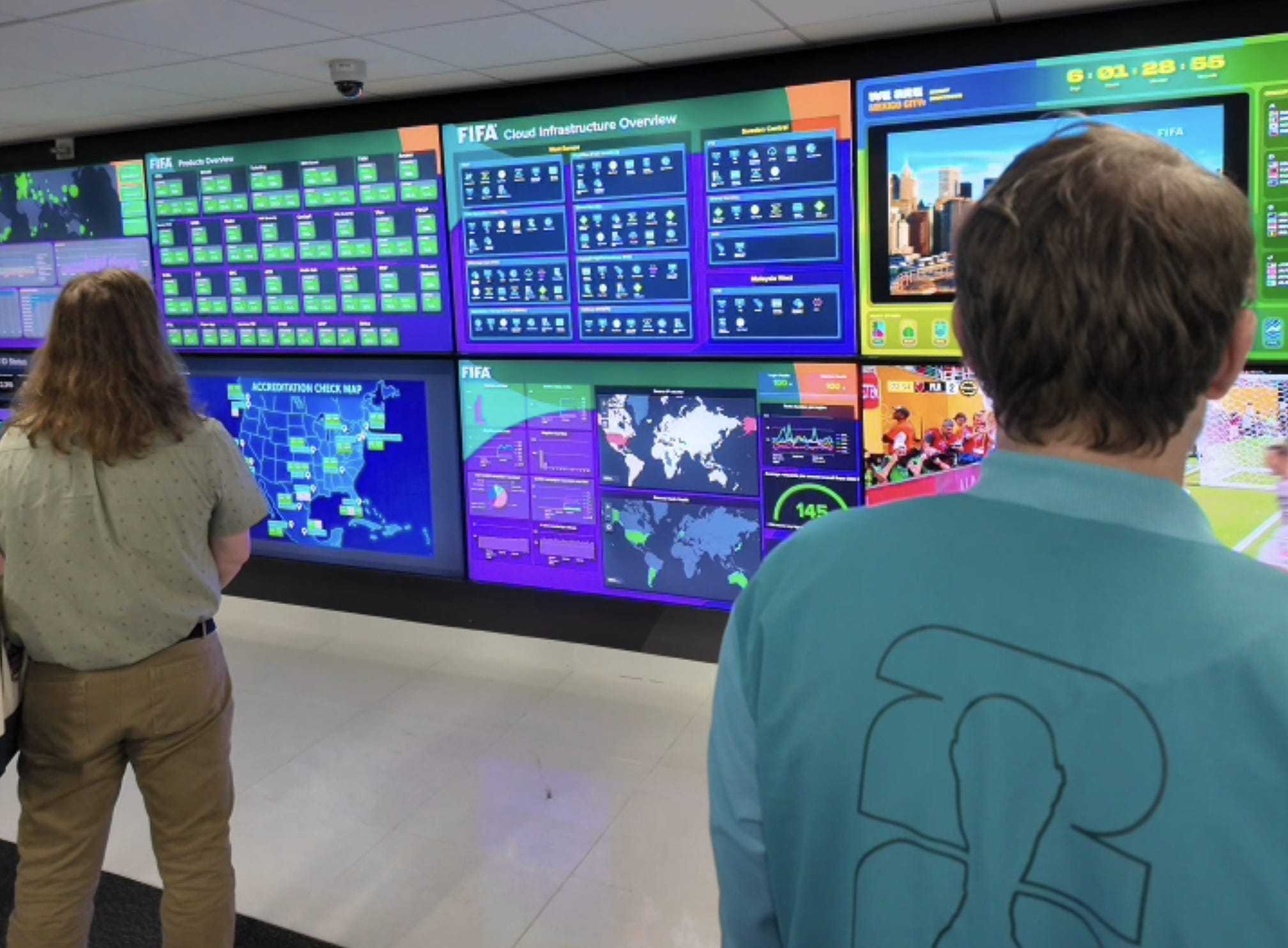
The International Broadcast Centre in Dallas adds another layer. The 45,000-square-metre facility serves as the tournament’s broadcast hub. It anchors a technology estate that includes over 17,000 Lenovo and Motorola devices deployed across venues, supported by more than 200 engineers. At that point, the picture stops looking like a stadium tour and starts looking like a distributed control room with a pitch attached.
Is the World Cup a sporting event or a temporary smart-city? It runs on the same logic: integrated systems and centralized live data. It is a compressed, tri-national laboratory for other industries.
Fans see stadium screens and referee cameras. They don’t see command centers neutralizing security alerts or gate bottlenecks. Most of that infrastructure becomes noticeable only when something fails, and becomes the center of attention.
FIFA must track real-time crowd conditions, 16-stadium network loads, and millions of daily cyber threats. These functions aren’t new, but integrating them across three national jurisdictions is unprecedented. The tournament is now entirely monitored, modeled, and managed in real time.
Fan experience and commercial design
If the command center is where FIFA manages the tournament from behind the scenes, fan experience is where that management becomes visible, repackaged as convenience. Digital ticketing, wayfinding apps, queue management, cashless payments, and personalized content combine to sculpt the visitor journey into a data-generating service. That orchestration improves flow: shorter lines, faster concessions, tailored offers. It also converts everyday friction into monetisable signals. Every tap, turn, and delay becomes fodder for dynamic pricing, targeted sponsorships, and operational optimisation.
The practical benefit is real. Fewer missed minutes of play, safer crowds, smoother logistics across stadiums and host cities. The commercial payoff, though, is concentrated. Whoever controls the identity layer (ticketing and payments) and the integration layer (the stadium app or concierge) can sell audience segments to advertisers, refine premium experiences for high-value fans, and license insights to clubs and brands.

That concentration raises competitive and ethical questions. Do federations outsource core fan relationships to tech vendors and payment platforms, or retain ownership of behavioral data? When a host-city AI concierge steers fans toward partner venues, is the purpose service or conversion? Privacy and consent frameworks are often an afterthought during event rollouts, yet the data aggregated during a single tournament builds profiles valuable long after the final whistle. Reliance on digital systems also introduces exclusion risk: cash-reliant or offline visitors may face a downgraded experience, turning seamless design into a source of inequity.
The modern fan journey is becoming a data journey and, like the ball on the pitch, it will need its own standards for consent, ownership, and access if convenience isn’t to quietly outpace legitimacy.
Team analytics and competitive equity
AI-assisted analytics can genuinely democratise insight. Standardised tracking feeds and shared post-match tools give every federation, regardless of budget, access to the same raw material: player loads, pressing patterns, expected-goals models. For teams that previously relied on a single analyst with a spreadsheet, that’s a real upgrade.
But a shared baseline is not a shared advantage. What separates federations now is not access to data but capacity to interpret it. Wealthier teams hire dedicated data scientists, build proprietary models on top of FIFA’s public feeds, and run extensive private training camps where bespoke hardware such as GPS vests, biometric sensors, custom simulation tools generate insight no rival federation can see. Coaching staff size compounds the gap: a team with three analysts translates data into tactics faster than one with none.
Shared infrastructure raises the floor. It doesn’t lower the ceiling. The next competitive frontier isn’t who has data, but who has the staff, hardware, and money to turn it into an edge before kickoff.
The trust problem: explainability as product
Every layer of World Cup technology, from officiating, the ball, broadcast AI, the command center, fan-facing systems, to team analytics, follows the same pattern. Each promises more precision, more information, more control. None of them, on their own, produce more trust. And in some cases, it actually resulted in less trust than the game had to begin with.
The Hand of God opens the piece on a failure of communication, not sensing. Two officials who each saw part of the truth and never reconciled it. Every section since has restated that same gap in a modern form: semi-automated offside is precise but still needs a human to judge intent; the ball can measure exactly where it crossed a line but fans still need to be convinced; ref cams generate emotional truth that competes with procedural truth; command centers make decisions no fan ever sees; fan-data systems trade convenience for consent most visitors never read; shared analytics infrastructure looks like equity but hides where the real advantage still lives.
FIFA is building a completely closed commercial loop. Every sub-product is connected and entirely controlled, allowing them to manage both integrity and revenue. But FIFA isn’t just building systems that decide things, it’s building systems that have to justify themselves, in real time, to an audience that doesn’t trust the decision just because it’s technically correct. The real product being built across all seven sections isn’t accuracy. It’s legitimacy. And legitimacy has to be designed and communicated, not just computed.
If FIFA’s infrastructure succeeds at manufacturing trust, the model spreads. Other leagues will build the same closed loop: control the offside call, the broadcast frame, the fan data, the analytics feed. If it fails, it exposes something deeper: that legitimacy can’t be engineered, only earned. Either way, the next decade of sports governance will be defined by which outcome FIFA’s 2026 tournament proved possible.
What do you think? Let’s discuss below.
 | A guest post by
|