


Hi everyone! I’m Carla, and this is Off-Ball Logic, the weekly newsletter where we step away from the 90 minutes on the pitch to dissect the business strategies, marketing mechanics, and economic engines that are really driving the modern sports world.
Subscribe to get it in your inbox:
A few months ago, when Ruben Amorim left Manchester United, I made a note with a question that has since remained with me: why are managers hired and paid with so little regard to what they actually achieve on the pitch?
I can say that I had a clue but never had a definite answer back then, but after having seen the new Mourinho documentary, I have now found one.
The documentary isn’t essentially concerned with football; it’s about a man who, earlier than almost anyone else, realised that being regarded as special was an advantage and came with a commercial benefit.
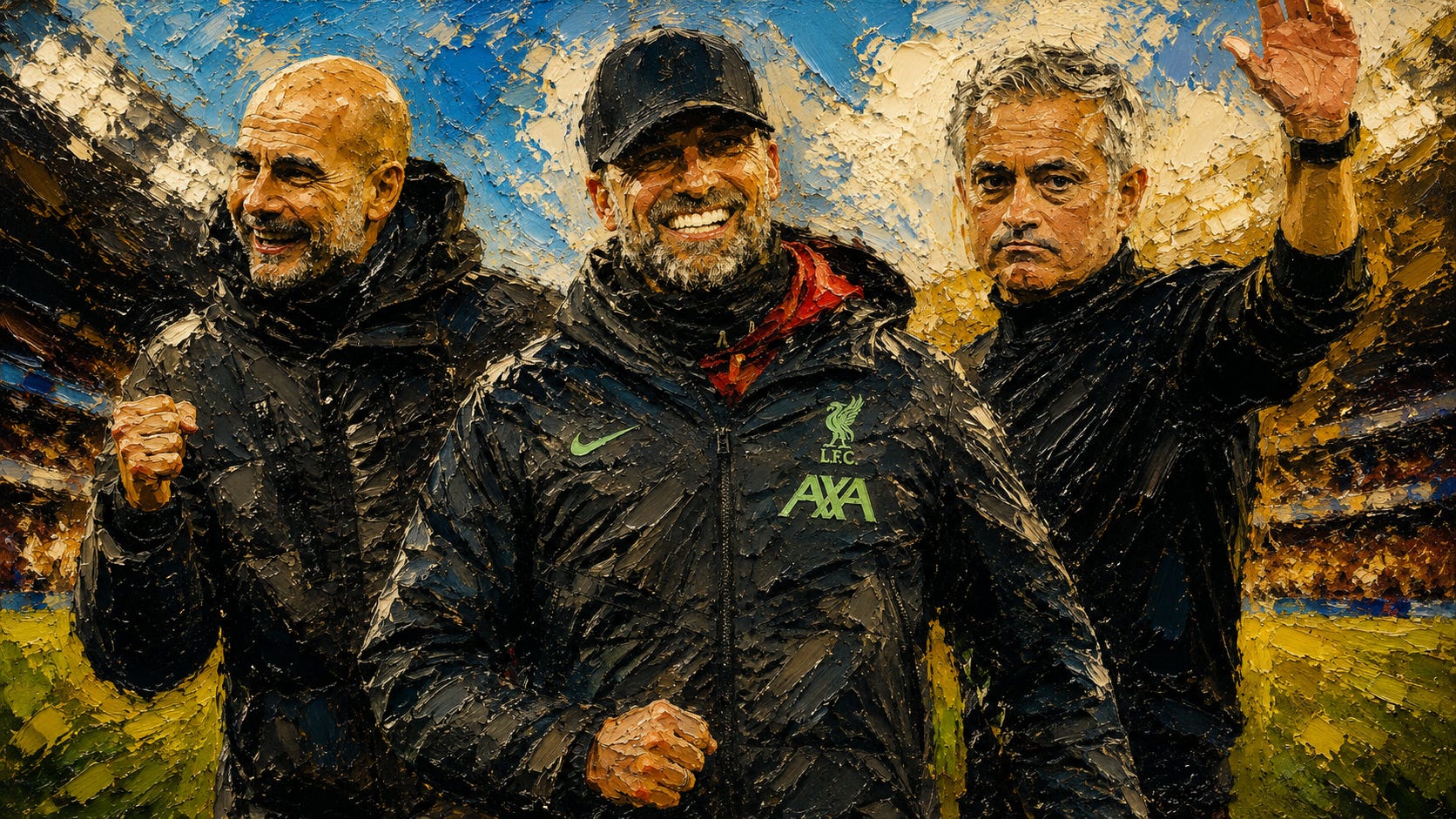
After you’ve acquired that reputation, its value extends well beyond that of a single season’s performance. He invented his own name before the press did and has since been collecting the benefits for twenty years.
Now, managers act as the public face of their clubs, serve as their principal spokesperson, and are often their most important brand asset. That covers the obvious aspect.
The underlying reality is that the dynamic has reversed:
earlier, when football was still regarded as a sport, winning was what brought about visibility, and visibility was the reward for having won trophies.
Now, visibility is what is bought as an asset, and it often continues to exist beyond the sporting success that originally justified it.

Before the brand
To be clear, managers have not just become dominant in the football narrative, nor have they only recently become well-known. Managers are essential to understanding 150 years of football history and how tactics, victories, and decisions have shaped the game.
What’s new is that they have become brands in their own right. Back in the early to mid-1900s, people like Herbert Chapman at Arsenal (who helped develop and popularize the W-M formation), Jimmy Hogan in Europe, and Viktor Maslov in the Soviet Union helped create the modern manager role. However, they were mainly known within football as thinkers, not public celebrities.
Things changed in the mid-to-late 20th century when managers started seeking media attention and building unique public images. They realized that their influence went beyond the team and into the public eye, even before the idea of a personal brand existed.
The first performers
Why managers changed from behind-the-scenes tacticians to brand-focused celebrities can be explained by major shifts in league football dynamics, along with overall commercialization, standardization, and individualism (something we explored in the 2nd era of World Cup history).
Here are some examples of this phenomenon:
Helenio Herrera is widely regarded as one of the first “superstar” managers in the 1950s and 1960s. At Inter Milan, he brought in new defensive tactics and was one of the first to use media and personal branding in football. He was strict, used motivational psychology, and became a media figure to earn more money and influence.
Brian Clough, who followed Herrera and worked mainly in the 1970s and 1980s, was a perfect example of a manager for the television era. He was successful on the field and had a big, charismatic media presence. His humor, controversies, and bold statements made him a pop-culture icon. He knew how to use storytelling, controversy, and memorable quotes, setting an example for today’s managers, who use press conferences as stages to influence public opinion and apply psychological pressure.
Malcolm Allison, who was a contemporary of Herrera, shows both the upsides and downsides of personal branding: his flashy style and media stunts brought attention and glamour to his clubs, but too much celebrity can hurt stability and success.
Anatomy of a manager brand
Before looking at how the shift evolved, I need to establish a framework from previous analysis. Research on football managers’ brand personas identifies three main dimensions within the brand: performance in the managerial role, the person and their public expression, and the context in which the manager operates1.
Performance: This covers the manager’s main tactics, how they manage players, their approach to discipline, and their overall sporting values. These form the base of their brand. For example, a manager who always uses an attacking, possession-based style builds a brand known for entertaining, innovative football (which is why people might say in some other cases, “X style of play is boring”).
Expression and Emotion: This is about how the manager presents themselves, how they speak at press conferences, what they wear on the sidelines, and how they show emotion during games. These traits set them apart in the global job market and influence how the media covers them.
Context: This involves how the manager strategically interacts with the club’s specific historical culture, the local community, supporters, owners, and broader footballing authorities.
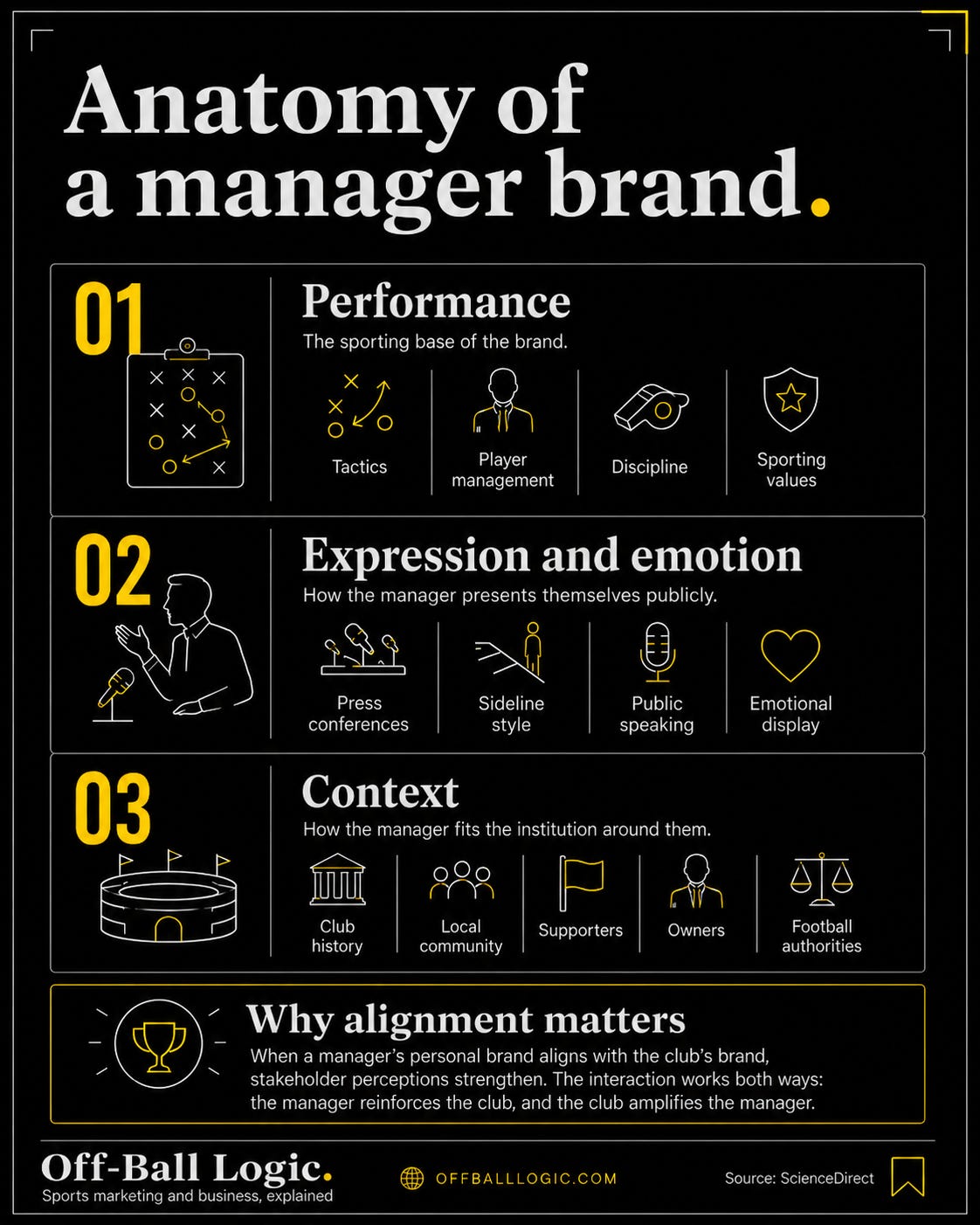
When a manager’s personal brand aligns with the club’s brand, research suggests it can strengthen stakeholder perceptions and the interaction between the manager’s and the club’s brands.
Here are three examples of this framework in action, and how these three components shape their commercial value inevitably, influencing which clubs want to hire them.
The meticulous architect: Pep Guardiola
Pep Guardiola is known worldwide for high performance, stylish football, and tactical control. His brand is built on a strong commitment to an attractive, attacking style called “juego de posición,” which he developed early in his career at Barcelona. When he joined Manchester City, his image fit perfectly with the owners’ goal to make the club look modern, elite, and well-managed.
Guardiola’s calm, thoughtful, and respectful approach in press conferences gives Manchester City strong global credibility and a sense of stability. Under his leadership, the club’s brand value grew, and in 2023 Brand Finance ranked Manchester City as the world’s most valuable football club brand at €1.51 billion. By 2024, its Brand Strength Index had risen to 92.8/100, earning an AAA+ rating.
This was partly because people saw City, with Guardiola, as playing the “right” way, which attracted top sponsors who wanted to be linked with excellence. Undeniably, sporting success accompanied and influenced this outcome.
The emotional connector: Jurgen Klopp
In contrast to Guardiola’s reserved style, Jurgen Klopp built his brand on being genuine, passionate, and humble. When he joined Liverpool, Klopp stood out by calling himself “The Normal One” (opposing narratively clearly against the “Special One” naming we’ll explore in a bit). This was a smart move, as it matched Liverpool’s culture of community, with its distinctive positioning (YNWA), teamwork, and strong emotions.
The intense, almost religious emotional connection that Klopp’s style of high-octane “heavy metal football” generated among a worldwide fanbase—along with his enthusiastic celebrations, his customary bear hugs, and his empathetic and relatable way of communicating—turned him into a major commercial force and made him very appealing not only to football fans but also to mainstream, consumer-oriented brands looking for an approachable, trustworthy, and highly authentic brand ambassador.
The divisive protagonist: Jose Mourinho
It’s hard to forget the moment when Jose Mourinho joined the English Premier League and immediately branded himself as “The Special One” (or “A Special One”, as he would say in his recent documentary) and achieved this by employing deliberate arrogance, telling stories based on a siege mentality, and engaging in continuous and intentional media warfare to build an unshakeable personal brand2. His entire approach is based on tension; he does best when he is seen as the opponent of the football establishment, the referees, and his rival managers.
This narrative is incredibly effective because it guarantees unparalleled, continuous media attention, a tendency that has grown strongly in recent years in every industry, beyond football. Even as his teams adopt pragmatic or defensive tactics (something he has been criticized for), his press conferences remain mandatory viewing. This makes him a highly lucrative asset for global broadcasters and sponsors who value absolute visibility and engagement metrics.
Mourinho proves that a brand built on polarization is highly durable; it keeps him culturally relevant and commercially viable regardless of fluctuations in his tactical success.
Certainly, there is always a risk involved, as the manager functions as the main public spokesperson and therefore their actions carry huge reputational risk for the club that employs them. This is something that happens with owners or stakeholders, something we explored before here:
The Manchester United Brand Conundrum

Hi everyone! I’m Carla, and this is Off-Ball Logic, the weekly newsletter where we step away from the 90 minutes on the pitch to dissect the business strategies, marketing mechanics, and economic engines that are really driving the modern sports world.
The manager brand portfolio
Something we’ve been analysing during the World Cup, and it’s something we talked about when tackling Harry Kane’s positioning in the athlete branding world, is how the athlete’s (in today’s thesis, the manager) “life philosophy” acts as a differentiation. It matches and illustrates their positioning and status as a standalone global franchise. This obviously impacts the actual brand portfolio and partnerships/sponsorships.
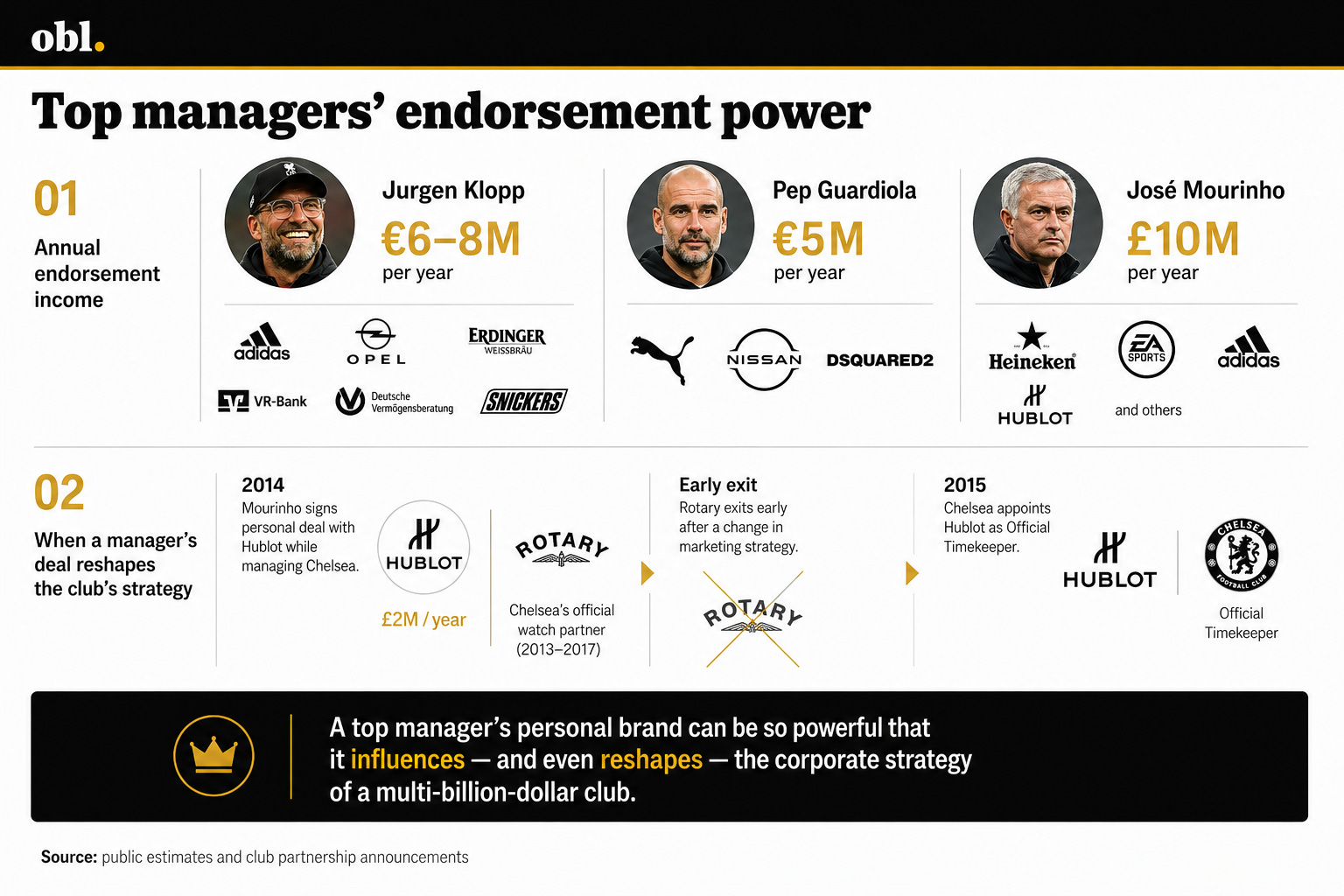
Jurgen Klopp signed highly lucrative ambassadorial deals outside his club salary with Adidas, Opel, Erdinger, VR-Bank, and Deutsche Vermögensberatung, among a largely German sponsorship portfolio, alongside exceptions such as Snickers. Contemporary estimates placed Klopp’s endorsement income at roughly €6–8 million annually during his Liverpool years.
Klopp’s specific commercial appeal lies in his perceived integrity; corporations utilize his relatable charisma to sell everything from family automobiles to retail banking services. Similarly, Pep Guardiola commands significant independent commercial revenue through personal partnerships with Puma, Nissan, and luxury fashion brand Dsquared, with 2020 estimates placing his endorsement income at around €5 million annually. Furthermore, at his commercial peak, Mourinho was estimated to earn roughly £10 million annually from endorsement deals with brands including Heineken, EA Sports, Adidas, Hublot and others.
But being able to sign deals outside the club salary doesn’t mean there isn’t a need for coherence and approval from the club’s perspective. We must not forget that clubs have their own sponsorship portfolio, with long-term relationships and a positioning strategy tied to what sponsors represent and how strong those relationships are for the club.
In 2014, while he was manager of Chelsea during his second term at the club, Mourinho entered into a personal ambassadorship agreement with the high-end watch company Hublot, worth an estimated £2 million per year.
His personal Hublot deal overlapped with Chelsea’s existing sponsorship with Rotary, which had signed a four-year agreement in 2013 but exited early after a change in marketing strategy. Chelsea subsequently appointed Hublot as its Official Timekeeper in 2015, while Mourinho was already a Hublot ambassador.
These events show that there has been a big and lasting change in the power relationship in the commercial aspect of football:
the personal brand of a top manager can be so powerful and have such strong media influence that it causes the corporate strategy of a multi-billion-dollar club to be influenced by the manager’s partnerships.
The salary paradox
Because the manager’s profile has grown as a brand, and the overall football market has become more and more lucrative (as it happens with players), managers are paid far more.
Today, elite managers can command salaries comparable to high-profile players, although the very highest-paid footballers still generally earn considerably more.
The table below shows the estimated annual salaries of the world’s top managers, highlighting the value attached to well-known names and transformative individuals3.
When the highest-earning managers are examined, their pay is determined not just by recent trophies, but by a mix of tactical reputation, historical legacy, the changes they have brought about within the institution, and marketability.
In this scenario, Simeone has consistently been the highest-paid manager worldwide.
The severance economy
One surprising part of modern football is the “Severance Economy.”
Clubs want quick results and offer long, protective contracts to attract top managers. This means managers are often fired but still get paid the rest of their contract.
These huge payouts happen for several reasons4. First, manager contracts have strong protections, and depending on the contract, dismissing a manager can leave the club liable for some or all of the remaining guaranteed compensation, often subject to negotiated settlements or mitigation clauses.
Jose Mourinho is the top example of the Severance Economy. Public estimates place Mourinho’s cumulative compensation from managerial exits in the tens of millions of pounds, with some estimates approaching or exceeding £80 million depending on which settlements are included.
When Tottenham let him go just before a League Cup final in 2021, reports estimated his Tottenham exit package at around £16 million. One media calculation estimated that Mourinho earned roughly £42,000 per day across his periods working in English football.
This system rewards managers for their strong brand and contract terms more than for meeting job expectations. And in many cases it makes sense: it’s been said enough for his own players that The Special One’s talent is redirecting the spotlight onto himself instead of the team roster and its performance. And for many teams, this is more than necessary.
In other cases, it’s tied to specific managerial skills needed to “loosen the knot” and then lead to future success. That’s why many examples of managers have been through tense moments and were instrumental in changing the culture and behavior, but couldn’t land trophies and sports success.
The bottom line
The shift from managers being behind-the-scenes tacticians to global commercial figures is one of the biggest changes in modern sports. Today, this model is fully developed. Managers like Pep Guardiola and Jurgen Klopp are key to their clubs’ brands, shaping culture and attracting top sponsors. Others, like Diego Simeone, create huge value by building new identities for their clubs, and are handsomely rewarded for it.
But at the same time, modern football is a complex entertainment business where public attention matters most. In today’s game, consistent tactics might win matches, but a strong, well-crafted personal brand builds lasting success.
What do you think? Let’s discuss below.
Carla | Off-Ball Logic
About this article:
The core concept, structure, and original drafting are entirely my own. I used Gemini for deep source research (as a complement to my own information gathering), Grammarly for baseline syntax, and Claude for occasional rephrasing when an idea needed sharper delivery (affecting roughly 15% of this piece).
As a non-native English speaker, I use these tools as a sounding board to help me find the most precise way to express my analysis.
According to Pangram, 73% of my article is AI-generated. As stated before, this does not reflect my actual work, so I have disabled the tool until it proves more accurate. I've read several articles explaining how AI detectors often falsely flag non-native English writing at higher rates, which I assume is the case here. Ultimately, I prefer to be fully transparent about my methods to avoid any misunderstandings.
I also use ChatGPT as a secondary fact-checking layer—even when pulling primary sources myself, it helps flag rebutted news or evolving narratives I might have missed.
All infographics and the cover image were generated using ChatGPT, and tables were made using Datawrapper (not an AI tool).
https://www.sciencedirect.com/org/science/article/pii/S1464666821000436
Although throughout this essay he will be portrayed as a polarizing figure, in completely subjective terms, I need to say that I've been a big fan of his persona since his early years at Chelsea—truth be told, I've got a picture with his statue at Porto's museum in Portugal.
Note that the salary figures come from various public sources and differ slightly because of currency fluctuations (between USD, EUR, and GBP), the inclusion of performance bonuses, and different tax systems.
1 and 2: Includes broader club-reported costs associated with the manager’s departure rather than compensation paid exclusively to the manager. From 3 to 10: Reported estimate; exact settlement terms were not publicly disclosed.
Really great read, Carla. On the flip side, you can see how exhausting being the " face" of a club can be for managers. It's one of the reasons why Pep said he'll never return to Barça.
I wonder if we're going to see a shift in manager culture once we begin to have a heavy crop of managers who are millennials